

More news on this day
A rapidly intensifying Nor’easter is unleashing blizzard conditions across the eastern United States, forcing airlines including Republic, JetBlue, American, Delta and United to cancel thousands of flights and stranding passengers from New York and Boston to Chicago, Orlando and Washington D.C.
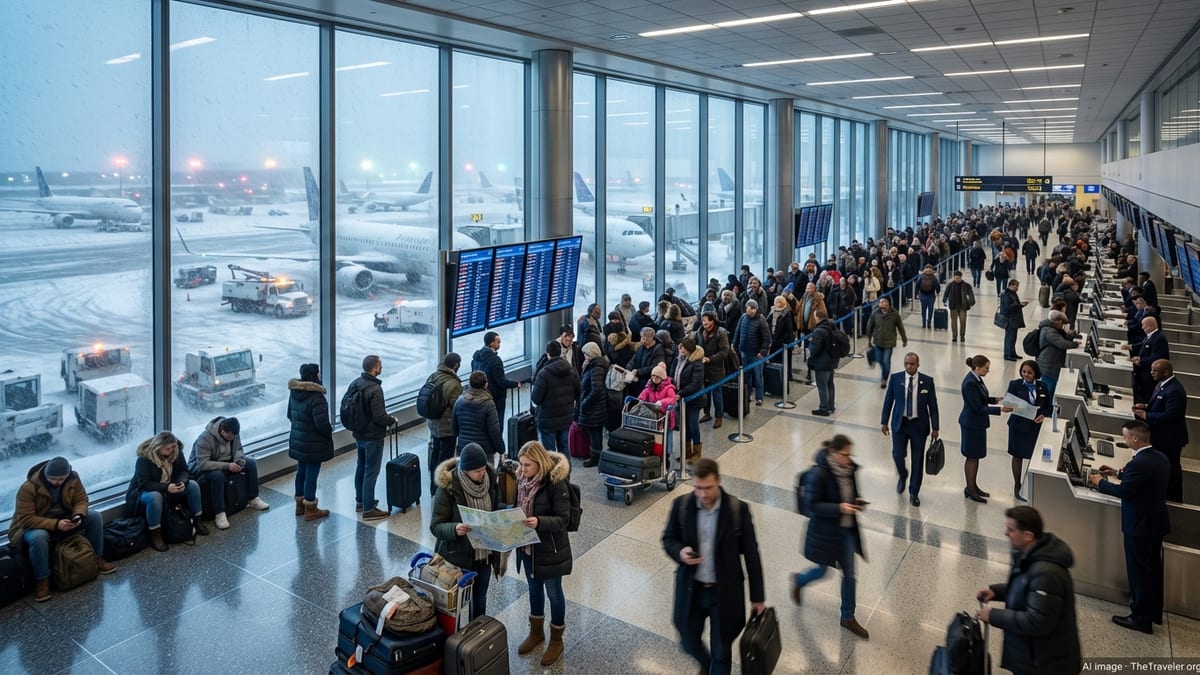
Flight Cancellations Surge Past 3,000 as Storm Strengthens
As of Sunday morning, February 22, more than 3,000 flights within, into or out of the United States had been canceled ahead of the powerful winter storm, according to flight-tracking data. The total number of disrupted flights, including delays, climbed well above 7,000, underscoring the sweeping impact of the system on the nation’s air network.
New York’s three major airports, John F. Kennedy, LaGuardia and Newark Liberty, along with Boston Logan, Philadelphia International, Reagan National in Washington D.C., and Chicago’s O’Hare and Midway airports reported the heaviest concentration of cancellations. Orlando International, a key gateway for leisure travelers, also reported mounting disruptions as airlines repositioned aircraft and crews away from the storm’s projected path.
Carriers have been steadily expanding their list of preemptive cancellations as the forecast has sharpened. By midday, many of Monday’s schedules at the largest Northeast hubs were already heavily reduced or effectively wiped out, with some airports projecting that a majority of departures and arrivals would not operate during the height of the blizzard.
Major Airlines Scrap Schedules and Waive Fees
Major U.S. airlines moved aggressively over the weekend to pare back operations, describing the cuts as necessary to protect safety and allow a faster recovery once conditions improve. American Airlines, Delta Air Lines, United Airlines and JetBlue Airways all issued travel alerts and waived change fees for a broad swath of affected airports stretching from Washington D.C. through Boston and inland to Chicago.
Operationally, the Nor’easter is hitting some carriers harder than others. JetBlue, with a network heavily concentrated in the Northeast, has canceled a significant portion of its Sunday flights and a notable share of Monday’s schedule, particularly at its New York and Boston bases. American has suspended most flying at New York’s JFK and LaGuardia airports and at Philadelphia, with limited operations expected to resume only after crews can safely reach aircraft and runways can be cleared.
Delta and United are likewise trimming schedules at their key hubs, including New York-area airports, Boston and Chicago, while regional partner Republic Airways has scrapped many feeder flights that connect smaller cities to those larger hubs. The result is a cascading effect in which cancellations in the storm zone ripple across the national network, affecting passengers far beyond the immediate path of the storm.
Blizzard Warnings from Washington to Boston
The wave of cancellations follows increasingly dire warnings from forecasters about the scale and intensity of the Nor’easter. Blizzard warnings are in effect for major population centers from the Mid-Atlantic to New England, including New York City, Boston, Philadelphia and coastal stretches of New Jersey, Connecticut, Rhode Island and Massachusetts. Washington D.C. and Baltimore, while closer to the southern edge of the storm’s core, are bracing for disruptive snowfall, gusty winds and hazardous travel.
Meteorologists expect the storm to rapidly intensify off the Atlantic coast, drawing in moisture and cold air to produce heavy, wet snow and powerful winds. Forecasts call for one to two feet of accumulation in many locations, with localized higher amounts possible and wind gusts that could reach 55 to 70 miles per hour along parts of the I-95 corridor.
The National Weather Service has warned that whiteout conditions will make road travel dangerous or impossible at times, particularly late Sunday into Monday. Coastal communities are also on alert for minor to moderate flooding as high winds push water inland during high tide cycles, adding another dimension of risk for transportation infrastructure along the shoreline.
Major Hubs Crippled from New York to Chicago
The backbone of the U.S. aviation system runs directly through the region most affected by the storm, amplifying the disruption. New York’s three airports, Boston Logan, Philadelphia and Washington-area airports function as critical connecting points for both domestic and international traffic. When those hubs are forced to curtail operations, flights across the country feel the impact.
By early Sunday, more than half of all flights scheduled at JFK and LaGuardia had been canceled, with similar patterns emerging at Boston Logan and Philadelphia. Airlines have also thinned schedules at Chicago’s O’Hare and Midway, both of which are dealing with the storm’s expansive circulation and associated snow and wind, even if blizzard conditions are focused further east.
These cutbacks have immediate knock-on effects for travelers in the Midwest, the South and even the West Coast, who may not experience winter weather themselves but are nonetheless reliant on flights that typically pass through Northeast hubs. With aircraft and crews displaced, carriers are juggling equipment, reassigning staff and, in some cases, parking jets until the worst of the weather passes.
Orlando and Sun Destinations Feel the Ripple Effect
The disruption is not confined to traditional snowbelt cities. Orlando International Airport, one of the world’s busiest leisure gateways, has reported a rising tally of cancellations and delays linked to the Nor’easter as airlines suspend or reroute flights that would normally bring passengers south from northern cities now in the storm’s crosshairs.
Many of the cut Orlando flights originate in or connect through New York, Boston, Philadelphia, Chicago and Washington D.C. With those routes slashed or heavily delayed, travelers headed to Florida theme parks, cruises and beach destinations are unexpectedly grounded. Some are finding themselves stuck in origin cities, while others are stranded mid-journey at connecting hubs where their onward flights no longer exist.
Similar patterns are appearing at other warm-weather airports that depend on Northeast-origin traffic during the winter months. While the skies above Florida remain clear, the logistical web tying the region to snowbound cities is fraying, a stark reminder of how closely intertwined U.S. air travel has become.
International Links Severed as Carriers Adjust
The storm has also disrupted international travel, with several overseas airlines suspending services into the storm zone. Carriers serving New York and Boston from Europe, the Middle East and Asia have announced cancellations or schedule adjustments, citing safety concerns and the difficulty of operating into airports facing runway closures, ground stops or limited staffing.
Some foreign airlines have opted to cancel all flights to and from New York or Boston on Monday, anticipating that conditions will remain too hazardous for reliable operations. Others are consolidating services, combining multiple flights into a single departure once weather allows, leaving travelers to navigate rebookings and extended layovers.
For transatlantic and transpacific travelers, the result is a wave of missed connections and unexpected overnight stays. With large numbers of hotel rooms near major airports already booked by stranded passengers and crew, local hospitality sectors are seeing a sudden, storm-driven surge in demand that could last several days.
Passengers Face Long Lines, Limited Options
Inside terminals from New York to Chicago, weary travelers are contending with long lines at check-in counters and customer service desks as they try to salvage disrupted itineraries. Airlines are urging passengers to use mobile apps and websites where possible, both to rebook and to receive real-time status alerts, in an effort to reduce congestion at airports.
For many, options are limited. With entire blocks of flights canceled, the next available seat may be days away, especially for families or groups traveling together. Some passengers are choosing to abandon air travel altogether, turning to trains, long-distance buses or rental cars, though those alternatives are also being affected by the storm and by high demand.
Airlines have issued broad travel waivers, allowing customers whose flights are affected by the Nor’easter to change dates without incurring usual penalties. While these policies can ease the financial burden of rebooking, they cannot conjure new capacity in a system where most flights were already expected to be full during a busy winter weekend.
Authorities Warn of Prolonged Disruptions
Local and state officials across the Northeast have warned that the storm’s impacts on transportation could extend well beyond the last snowflake. Snow removal teams are preparing for a round-the-clock effort to clear runways, taxiways and access roads once winds subside, but heavy, wet accumulation and drifting snow may complicate the process.
Power outages pose an additional risk for airports and air traffic control facilities. While critical systems have backup generators, widespread utility disruptions could limit staffing, hamper ground operations and slow the resumption of full schedules. Authorities are urging travelers with flights early in the coming week to keep a close eye on updates, noting that even if skies clear, flight operations will not return to normal immediately.
In major cities such as New York, Boston and Philadelphia, officials have declared emergencies and advised residents to avoid nonessential travel during the peak of the storm. That guidance extends to airport trips: passengers are being told to confirm that their flight is operating before attempting to reach terminals that may themselves be difficult to access due to snow-clogged roads or suspended public transit.
Airlines Look Ahead to Recovery
Even as the Nor’easter continues to develop, airline operations teams are already planning for the recovery phase. Once conditions allow, carriers will need to reposition aircraft parked outside the storm zone, reassemble flight crews working under strict duty-time regulations and gradually rebuild complex schedules that have been torn apart over multiple days.
Industry analysts note that the decision to cancel flights preemptively, while disruptive in the short term, can ultimately shorten the duration of chaos. By preventing aircraft and crews from becoming trapped at closed airports, airlines can restart more systematically, rather than trying to untangle a backlog of stranded planes and personnel.
For travelers, however, that strategy means accepting significant uncertainty in the near term. With cancellations already numbering in the thousands and likely to climb as the storm peaks, many passengers will not be able to complete their journeys on their original dates. The next several days will test both the resilience of the U.S. air travel system and the patience of those who depend on it, as the industry works to dig out from yet another powerful winter blow.