

More news on this day
Thousands of passengers were left sleeping in terminals and queuing for hours at New York’s LaGuardia Airport after a powerful nor’easter crippled operations, triggering 449 flight cancellations and 119 delays across Republic Airways, Endeavor Air, Delta, Southwest, American Airlines and several other carriers.
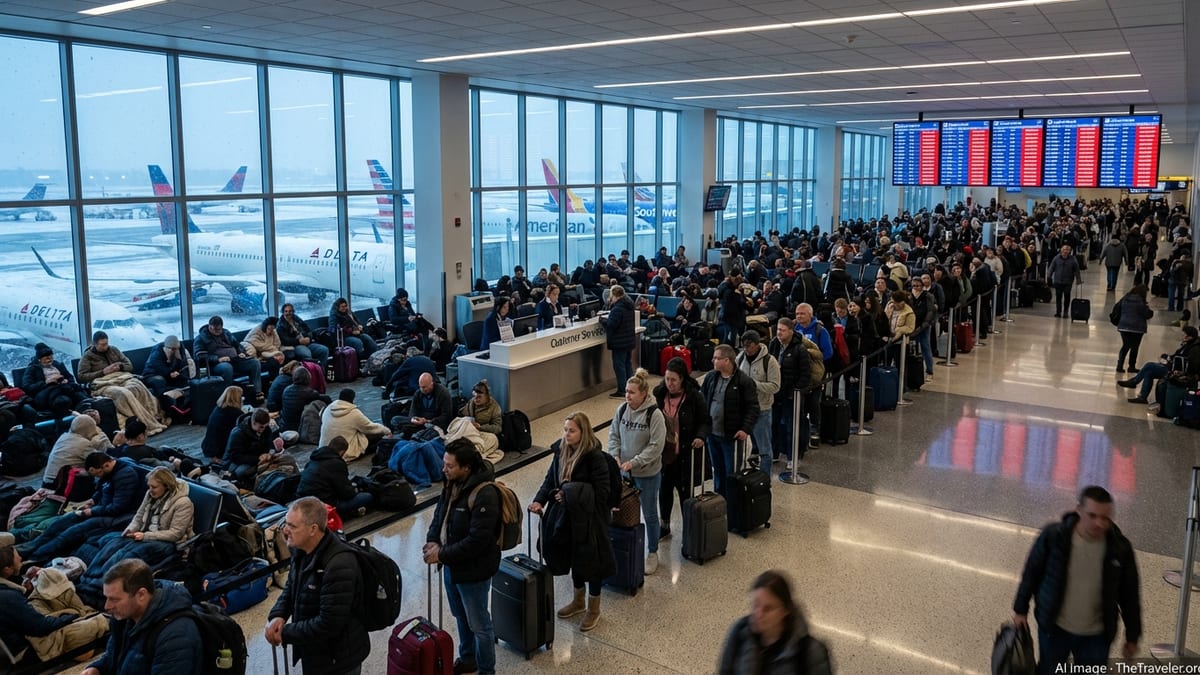
LaGuardia at a Standstill After Record Snowfall
The nor’easter, part of Winter Storm Hernando, buried New York City in heavy snow and high winds, snarling transport across the Northeast and turning LaGuardia into one of the hardest hit hubs. The National Weather Service reported whiteout conditions and near-record accumulations in parts of the city, while local authorities imposed temporary travel bans that effectively cut off the airport from much of the region.
Although the storm’s core has now moved offshore, its impact on LaGuardia is still unfolding. Airlines preemptively scrubbed large portions of their schedules, with hundreds of departures removed from boards before passengers even arrived at the terminal. Those who did make it to the airport found long lines at check-in counters, crowded seating areas and limited options to rebook as the system absorbed days’ worth of disruption.
Inside the terminals, announcements about cancellations and gate changes continued into Tuesday, as ground crews worked to clear taxiways and de-ice aircraft amid lingering gusty winds and sub-freezing temperatures. Airport officials said they were coordinating with airlines to gradually rebuild the schedule, but warned that normal operations may not resume for at least another day.
Regional Carriers Bear the Brunt of Cancellations
Regional operators serving LaGuardia absorbed some of the heaviest operational blows. Republic Airways logged the largest number of cancellations, with more than 160 flights scrubbed as the storm made it impossible to maintain tight regional rotations. Endeavor Air, a key Delta Connection carrier, followed closely with just over 100 cancellations, reflecting the difficulty of keeping smaller aircraft and shorter-haul routes running in severe winter weather.
Major mainline airlines were also deeply affected. Delta Air Lines recorded around 74 cancellations at LaGuardia along with more than 20 delays, while American Airlines dropped over 30 flights and reported roughly 20 delayed departures and arrivals. Low-cost carriers were not spared either, with Southwest, Spirit and JetBlue all canceling and delaying multiple flights as snow piled up on runways and visibility deteriorated.
Operational data from flight-tracking services indicates that airlines opted for large-scale preemptive cancellations instead of allowing disruptions to cascade through their networks. With ground operations limited and air traffic flows sharply reduced across the Northeast corridor, carriers prioritized safety and predictability, even if that meant thousands of passengers would be forced to spend an unexpected night at the airport or in nearby hotels.
Northeast Aviation Network Under Extreme Strain
LaGuardia’s woes are part of a broader regional meltdown. Across New York, New Jersey, Massachusetts and the wider Northeast, thousands of flights were canceled or delayed as Winter Storm Hernando barreled up the coast. Newark Liberty International and Boston Logan saw comparable levels of disruption, while Philadelphia, Washington Reagan National and other key hubs also slashed schedules, creating a domino effect felt nationwide.
Industry data shows that, between Sunday and Tuesday, airlines canceled more than 10,000 flights in the United States, with Monday alone accounting for well over 5,000 cancellations. The impact extended beyond air travel: long-distance trains were halted on key corridors, and governors in several states urged residents to stay off the roads, further limiting passengers’ ability to find alternative routes.
The scale of the cancellations at LaGuardia underscores the vulnerability of dense regional networks when a major hub is effectively shut down. With so many short-haul flights connecting to and from New York, even a brief closure can ripple outward for days, disrupting business trips, family visits and international connections far beyond the storm’s immediate footprint.
Stranded Passengers Face Long Lines and Limited Options
Inside LaGuardia’s terminals, the human cost of the storm was visible in every concourse. Rows of travelers tried to sleep on the floor or across chairs, families clustered around power outlets to keep phones charged, and food concessions stayed busy as people waited for updates that often brought more bad news. Many passengers described spending several hours in customer service lines, only to learn that the next available seat out of New York might not be until midweek.
Airlines encouraged customers to use mobile apps and websites to rebook or request refunds, but high demand and shifting schedules meant seats on remaining flights disappeared quickly. Some passengers chose to abandon air travel altogether, renting cars or booking intercity buses once road conditions allowed, while others opted to stay with friends or in hotels and hope for a smoother departure once the backlog begins to ease.
Airport staff and airline employees worked extended shifts to manage the crowds, provide updates and assist vulnerable travelers, including the elderly and families with young children. Despite those efforts, frustration levels rose as the scale of the shutdown became clear and travelers realized that getting home or onward to their destinations would be a multi-day challenge rather than a brief inconvenience.
What Travelers Should Expect in the Coming Days
With the storm’s most intense phase over, attention is now turning to recovery. Airlines have started to rebuild their LaGuardia schedules, but industry analysts say the system will remain fragile in the short term. Aircraft and crews are out of position across the country, and any secondary disruptions, such as lingering de-icing delays or minor technical issues, could trigger further cancellations.
Travel advisors are urging passengers scheduled to fly to or from LaGuardia in the next 24 to 48 hours to check their flight status repeatedly, even if their itinerary still appears on time. Carriers have issued weather waivers that allow passengers to change travel dates without typical penalties, and many are proactively rebooking customers on later flights to reduce congestion at the airport.
For now, the advice to travelers is to build in extra time, remain flexible and be prepared for last-minute schedule shifts. As New York digs out from the nor’easter and clears runways, taxiways and access roads, LaGuardia is expected to gradually resume more normal operations, but the thousands of passengers stranded this week serve as a stark reminder of how quickly winter weather can bring one of America’s busiest aviation hubs to a standstill.