

More news on this day
A fast-intensifying winter storm battering the northeastern United States has triggered widespread flight disruption nationwide, with Southwest Florida’s already fragile schedules hit by scores of cancellations and delays that are isolating passengers in major hubs from Boston and Newark to Atlanta, Dallas and Detroit.
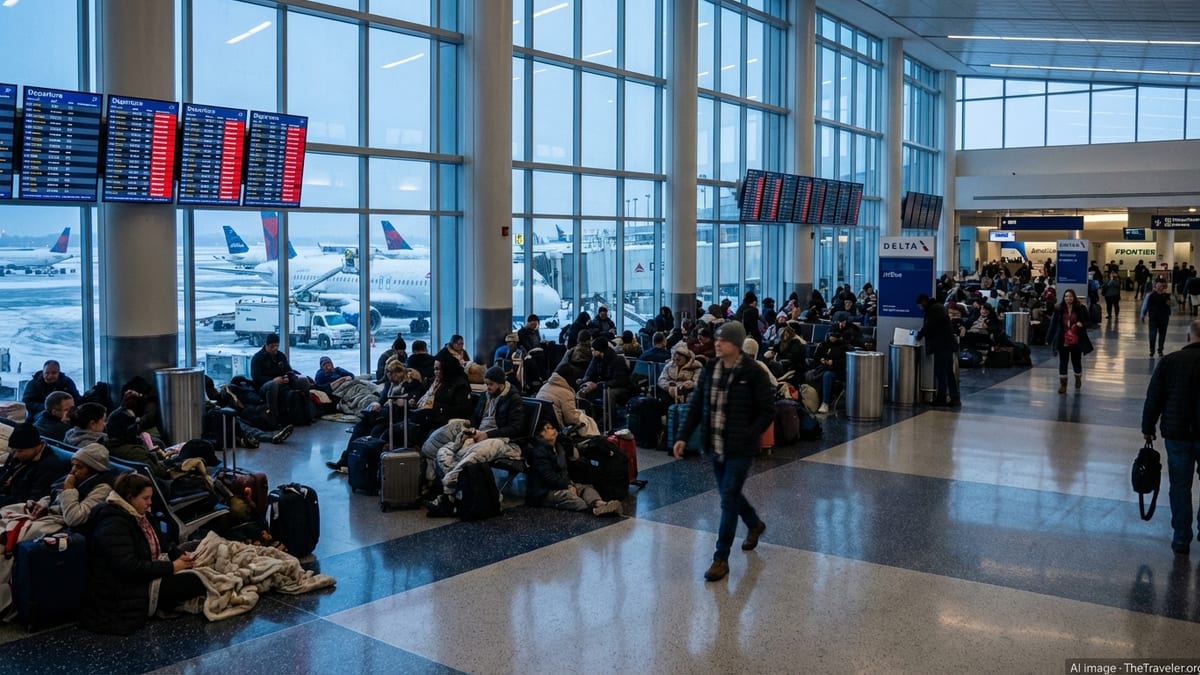
Storm-Driven Chaos Reaches Deep Into the U.S. Network
As the February 2026 blizzard pounds the Northeast with hurricane-force gusts and whiteout snow, its impact on aviation is radiating far beyond the storm’s core. Tracking data on Monday shows more than 5,300 flights canceled within, into or out of the United States, alongside hundreds more delays, as airlines slash schedules to protect crews and aircraft from dangerous conditions.
While the focus has been on New York and New England, the knock-on effects are increasingly severe in Florida. At Southwest Florida airports, roughly 90 flights have been canceled and at least two dozen delayed on Monday, according to real-time aviation data, as carriers preemptively trim routes tied to storm-stricken hubs in Boston, Newark and Philadelphia. JetBlue, Delta Air Lines, United Airlines, Frontier Airlines, American Airlines and Spirit Airlines are among the hardest hit, with many of their flights to or from the Northeast scrubbed.
With so much of the country’s air traffic flowing through a handful of major coastal and mid-continent hubs, every grounded plane in Boston and Newark reverberates into Florida, the Midwest and Texas. The result is a patchwork of stranded travelers across the country, some facing long-haul rebookings or forced overnight stays far from home or destination.
“We are essentially watching the network seize up,” one aviation analyst said, pointing to data showing cancellation percentages approaching or exceeding 70 percent at some key airports. “When you lose that much capacity in Boston and New York in a single day, cities like Fort Myers, Tampa and Orlando feel the shock almost immediately.”
Southwest Florida Cancellations Mount as Northeastern Hubs Go Dark
In Southwest Florida, the disruption is most evident on routes threaded into the storm-battered Northeast corridor. JetBlue’s evening service from Fort Myers to Boston was listed as canceled on Monday, alongside additional northbound departures that normally funnel winter-weary visitors back to New England. Other carriers, including Delta, United, American and low-cost operators such as Frontier and Spirit, have scrubbed or retimed flights connecting Southwest Florida to New York-area airports, Philadelphia and Boston.
These cancellations come on top of a broader nationwide reduction in flying as airlines respond to the Nor’easter. Industry data show that Boston Logan International Airport alone has seen cancellation rates around 80 percent for Monday, with LaGuardia, Newark Liberty and Philadelphia also losing the majority of scheduled operations. Every scrapped departure in those cities typically means at least one missing arrival in Southwest Florida, and often more when aircraft and crew rotations are tightly sequenced.
For Florida-bound travelers, the timing could hardly be worse. Late February is peak season for snowbirds and vacationers seeking warm weather getaways, and Southwest Florida’s airports are operating close to capacity even under normal conditions. With aircraft and crews now stuck in New England and the Mid-Atlantic, seats out of the region have become scarce and expensive, and some passengers are finding that alternative itineraries route them through distant hubs or stretch into multi-day journeys.
Airport officials in Southwest Florida say they are working to manage crowds and communicate updates, but acknowledge that much hinges on when operations in the Northeast can safely resume. “We are monitoring the situation closely and coordinating with our airline partners,” one spokesperson said. “However, given the severity of the weather in the Northeast, there are limits to what can be done until conditions improve there.”
Passengers Stranded from Boston and Newark to Dallas and Detroit
The disruption is most dramatic at the storm’s epicenter, where key hubs have seen most flights wiped from departure boards. By Monday morning, thousands of travelers at Boston Logan and New York-area airports were camping out on gate-side seats and terminal floors, as airlines canceled outbound flights and delayed the few remaining departures.
But the ripple effects are also stranding passengers far from the snow line. In Atlanta, a critical hub for Delta, connections to the Northeast have been sharply reduced, leaving travelers bound for cities like Boston, Providence and Hartford with limited options. Some have been rebooked onto flights days later, while others are being routed through alternative airports with longer ground transfers once they arrive.
In Dallas and Detroit, hubs for American and Delta respectively, disruption is more subtle but still painful. Flights to affected Northeastern cities are heavily curtailed, leading to a backlog of passengers waiting for open seats. Misaligned aircraft rotations are causing delays on routes that, on paper, are unrelated to the storm, as jets and crews are out of position after multiple days of weather-related schedule adjustments.
For many travelers, the sense of isolation is heightened by the storm’s impact on ground transportation and power in the Northeast. With roads closed or hazardous across parts of New England and power outages affecting hundreds of thousands of customers, even those who manage to reach the region face uncertain last-mile journeys home. That uncertainty is prompting some passengers in hub cities like Atlanta, Dallas and Detroit to voluntarily postpone trips altogether, hoping to rebook when the system is under less strain.
Airlines Slash Schedules and Activate Flexible Rebooking
Major U.S. carriers began trimming their schedules well before the worst of the snow arrived, issuing travel waivers that allow customers to change flights without fees in affected regions. JetBlue, with large operations in Boston and New York, appears to be among the hardest hit, with a substantial share of its schedule canceled as it parks aircraft and focuses on safety-critical operations. Delta, United and American have also posted significant cancellations, though many of these are concentrated in the Northeast corridor.
Low-cost carriers, including Spirit and Frontier, are not immune. Their point-to-point model, which often connects secondary airports, can leave passengers especially exposed when a single link in the chain fails. Flights from Florida to smaller Northeastern cities have been scrubbed in large numbers, and in some cases, the next available departure may be days away rather than hours.
Across the industry, operations teams are working around the clock to re-accommodate affected travelers. Standard measures include waiving change fees, allowing same-city rebooking within a certain date range, and authorizing refunds for customers whose flights are canceled outright. Some airlines are also expanding call center staffing and using app-based notifications to keep passengers informed, though long wait times and overloaded digital channels remain common complaints.
Airline executives stress that safety is paramount when making cancellation decisions, especially with a storm that has produced near hurricane-force gusts and rapidly changing visibility conditions. However, the scale of the disruption is raising renewed questions about how well U.S. airlines are equipped to handle increasingly volatile winter weather and whether further investments in resilience, such as additional spare aircraft or more flexible crew basing, are needed.
Ground Stops, Blowing Snow and the Limits of Resilience
At the heart of the current disruption is a classic Nor’easter that rapidly intensified off the East Coast, creating a bomb cyclone that has hammered New England and the Mid-Atlantic since the weekend. Forecasters report snowfall rates of one to three inches per hour in some locations, paired with strong winds that have turned runways and taxiways into rapidly shifting snowfields.
Under such conditions, the Federal Aviation Administration and airport operators have little choice but to impose ground stops or sharply reduce arrival and departure rates. Clearing snow from runways and deicing aircraft becomes a race against time and temperature, with even brief breaks in precipitation quickly erased by new squalls. In Boston and Providence, authorities have at times suspended operations entirely, prioritizing safety over schedule integrity.
These realities expose the limits of the aviation system’s resilience. While airlines and airports have dramatically improved their ability to manage winter operations in recent decades, there remains a threshold beyond which flying simply is not safe or practical. The current storm appears to have pushed portions of the network past that threshold, especially at coastal airports more vulnerable to wind, coastal flooding and blowing snow.
As the blizzard moves northeast into Atlantic Canada, conditions in the Mid-Atlantic are expected to improve earlier than in New England. That could allow some airports to gradually ramp up operations while others remain constrained, creating uneven recovery patterns and continuing to complicate network planning for several days.
Stranded Travelers Navigate Long Lines and Limited Options
Inside terminals from Florida to New England, travelers caught in the disruption are facing a familiar but no less frustrating ordeal. Airline check-in counters and customer service desks have been crowded with passengers seeking new itineraries, refunds or hotel vouchers. Lines at car rental agencies have stretched through concourses as some attempt to complete their journeys by road, despite hazardous conditions in the Northeast.
In Southwest Florida, some outbound passengers decided to remain in place rather than risk being stranded in a snowbound city. Others, already en route from the Midwest or West Coast, discovered upon landing that their onward connections to Boston, Newark or Providence had been canceled, leaving them scrambling for scarce hotel rooms near hub airports.
Digital tools have become both lifeline and source of anxiety. Airline apps and websites provide real-time updates and self-service rebooking options, yet they can quickly become overloaded in a mass disruption event. Social media channels are filled with images of departure boards dominated by the word “canceled,” as well as frustrated accounts of multi-hour waits to speak with an agent by phone.
Travel experts advise passengers to act quickly when disruption hits, checking for alternative airports, accepting longer routings when necessary and considering train or bus options in regions where those are available. For now, though, many travelers have little choice but to wait out the storm and its aftermath, hoping that improving weather will translate into a steadier flow of flights.
Recovery Timeline: What Travelers Can Expect Next
Even as snow begins to taper off in parts of the Northeast, the aviation system will need time to recover. Airlines must reposition aircraft and crews, clear backlogs of stranded passengers and re-synchronize tightly choreographed schedules that have been thrown off by days of irregular operations. Industry analysts say it could take several days for flight levels to normalize, particularly on heavily affected routes to and from Boston and New York.
For Southwest Florida, that means the current day’s cancellations and delays may only be the beginning. Flights that do operate in the coming days may be fully booked with passengers re-accommodated from earlier disruptions, making same-day changes difficult. Travelers with flexible plans are being encouraged to monitor forecasts and airline advisories closely and, where possible, to shift their itineraries out of the worst-affected period.
Looking ahead, the Nor’easter is likely to reignite debate over how airlines and regulators plan for extreme weather events that are becoming both more frequent and more intense. Whether through updated scheduling practices, more robust deicing and snow removal infrastructure, or expanded passenger protections during mass disruptions, the current crisis is certain to be scrutinized in the weeks to come.
For now, winter-weary passengers scattered from Boston and Newark to Atlanta, Dallas, Detroit and Southwest Florida are left to count cancellations and watch the weather maps, waiting for the moment when the country’s busiest air corridors finally reopen and the long chain of delayed journeys can resume.