

More news on this day
Hundreds of passengers traveling through Norfolk International Airport in Virginia faced unexpected overnight stays and missed connections as 16 flights were delayed and 6 were canceled, disrupting operations for American Airlines, Delta Air Lines, United Airlines and several smaller carriers on Thursday.
Get the latest news straight to your inbox!
Ripple Effects Across Norfolk and the East Coast Network
Flight tracking data and public airport status boards for Norfolk International showed a tightly clustered series of disruptions affecting both arrivals and departures, with delays stretching beyond two hours on some routes. The problems were concentrated in regional connections to major hubs, where even short schedule slips triggered missed onward flights and cascading rebookings.
American, Delta and United all appeared among the most affected carriers at Norfolk, reflecting their broader exposure to weather and congestion along the East Coast. Several delayed flights were scheduled to feed into larger hubs such as Atlanta, Charlotte, New York and Washington, where earlier storms and traffic management initiatives had already thinned schedules and reduced flexibility.
Because Norfolk relies heavily on those hub connections for onward domestic and international travel, the disruption quickly extended beyond Virginia. Passengers reported being rebooked via alternate routings through airports as far away as Chicago and Dallas, while others were advised to return the following day due to limited remaining seat capacity late in the evening.
Regional jets operating shorter routes were particularly vulnerable, as tight turnaround times left little margin for recovery once delays mounted. Publicly available information indicated that several of the canceled departures would have operated as inbound flights later in the evening, effectively compounding the number of stranded travelers on both ends of the route.
Weather, Congestion and System Constraints Combine
The disruptions in Norfolk came amid a broader pattern of intermittent weather and airspace constraints impacting East Coast operations in March. Recent thunderstorms and strong frontal systems across the Mid Atlantic and Southeast have prompted periodic ground stops and traffic flow programs at larger hubs, reducing throughput and forcing airlines to trim or reschedule flights.
Industry data from the U.S. Department of Transportation and recent air travel consumer reports highlight how quickly operational reliability can deteriorate when multiple hubs face weather issues at the same time. Once delays build, later flights are often held for connecting passengers and crews, which can push aircraft and staff beyond duty limits or into maintenance windows, increasing the likelihood of cancellations.
Norfolk’s role as a spoke airport feeding several major hubs leaves it particularly exposed to such shocks. Even when local conditions remain relatively stable, a bottleneck at a key connection point can result in long outbound delays from Norfolk or last-minute flight cancellations when inbound aircraft fail to arrive.
Airlines have also been navigating tighter fleet and crew utilization as they respond to changing travel patterns. Publicly available scheduling and performance data suggests that major carriers continue to balance strong demand with constrained resources, which can magnify the impact of any localized disruption on specific days.
Stranded Passengers Face Long Lines and Limited Options
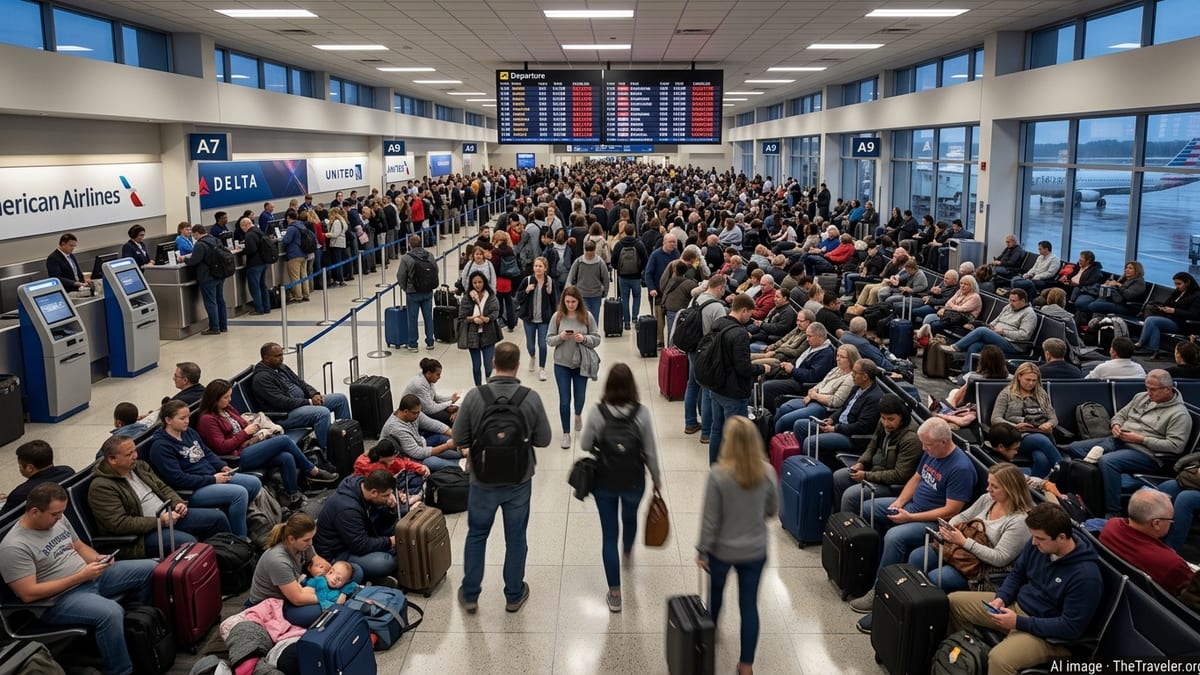
For travelers caught in Thursday’s disruptions at Norfolk International, the operational details translated into long lines at check in and customer service counters, with many passengers seeking hotel vouchers, meal assistance or alternative itineraries. Airport terminal images and social media posts from the evening period depicted crowded gate areas and departure boards dominated by red delay and cancellation notices.
Late day cancellations created particular challenges for travelers needing to reach smaller destinations with limited daily service. In several cases, the final flights of the day were scrapped or pushed to the following morning, effectively forcing an unplanned overnight stay for those unable to secure seats on the few remaining departures.
Families traveling with children and military personnel departing from the Hampton Roads region, a key naval and defense hub, were among those most visibly impacted in the terminal. With hotels near the airport filling quickly, some travelers reported turning to friends, family or ride share services to reach accommodations in nearby cities including Virginia Beach and Chesapeake.
At the same time, passengers already airborne during the height of the disruption experienced diversions and extended holds before landing in Norfolk. Inbound flights from congested hubs arrived significantly behind schedule, contributing to further missed connections and uncertainty for those with onward tickets on other carriers.
Airlines Issue Waivers and Adjust Schedules
In response to the operational strain, major airlines serving Norfolk issued flexible rebooking options tied to broader East Coast weather advisories and traffic management programs. Publicly posted travel waivers allowed affected customers to reschedule flights over a several day window without change fees, subject to availability in the same cabin.
American, Delta and United all adjusted their late evening flight banks at Norfolk and key hubs, trimming some frequencies and combining lightly booked services where feasible. These schedule changes, designed to restore network stability, also meant that some passengers who initially expected short delays ultimately saw their flights removed from the schedule.
Low cost and regional carriers serving Norfolk similarly modified their operations, in some cases substituting larger aircraft on surviving flights or shifting departure times to better align with available connections. While these measures helped move a portion of stranded travelers, they did not fully absorb the backlog created by the 16 delays and 6 cancellations.
By early Friday, flight status boards showed gradual improvement, though residual delays persisted on several morning departures as crews and aircraft were repositioned. Travelers with tight same day plans, including cruise departures and time sensitive business engagements, continued to face elevated risk of disruption despite the improving picture.
What Travelers Through Norfolk Should Expect Next
With springtime weather patterns remaining active across the Mid Atlantic and southeastern United States, aviation analysts caution that further pockets of disruption are possible in the coming days. Forecasts point to additional storm systems capable of triggering delays and ground stops at large hubs that directly influence Norfolk’s connectivity.
Travel experts generally advise passengers flying through Norfolk to build extra buffer time into connections, especially when itineraries involve tight turns through frequently congested hubs. Monitoring flight status closely via airline apps and airport information screens can provide early warning of rolling delays or creeping departure time changes.
Publicly available guidance from consumer advocacy organizations also emphasizes the importance of understanding airline policies on rebooking, vouchers and overnight accommodations. Regulations differentiate between disruptions caused primarily by weather or air traffic control constraints and those linked to mechanical issues or crew availability, which can influence what support is offered.
As operations normalize, Norfolk International and its airline partners are expected to continue refining schedules and contingency plans to better absorb future shocks. For travelers, the events surrounding the 16 delayed and 6 canceled flights serve as another reminder of how interconnected the national air network has become, and how quickly local plans can be upended by events unfolding hundreds of miles away.