

More news on this day
Norfolk Southern is accelerating its transformation of freight rail operations through an expansive locomotive upgrade partnership with Progress Rail, signaling one of the most ambitious modernization drives currently underway in North America’s rail industry.
Get the latest news straight to your inbox!
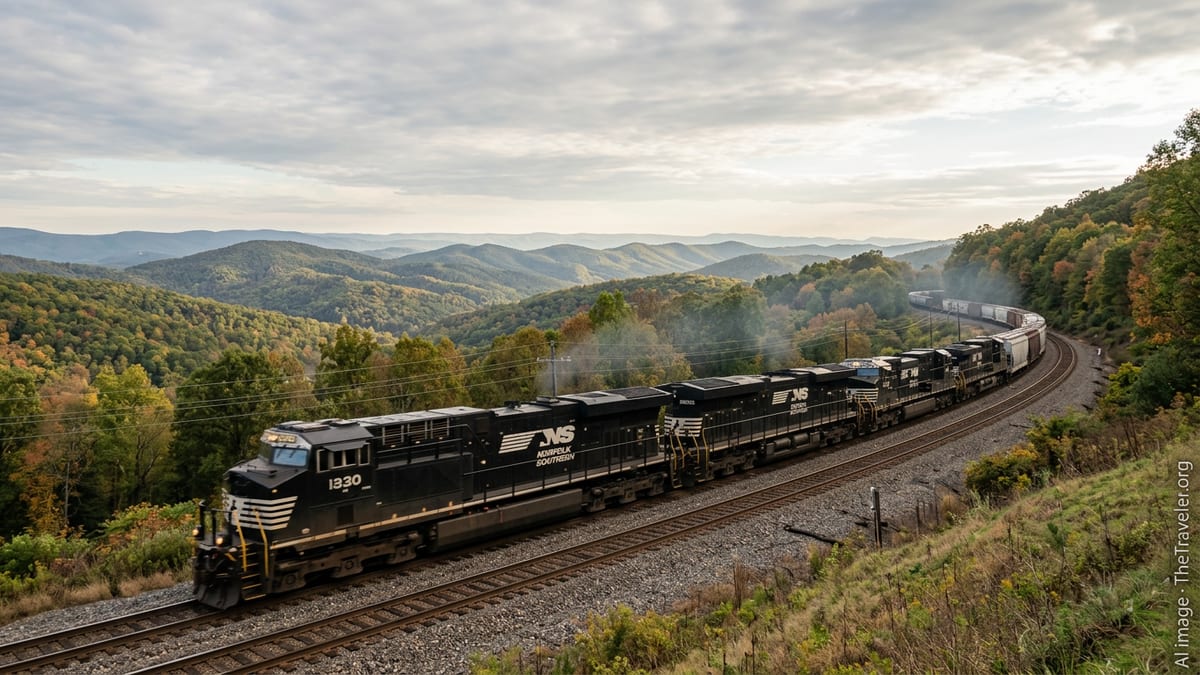
A High-Stakes Modernization Race on America’s Rails
Across the United States, a quiet but consequential technology race is unfolding as major freight railroads invest heavily in modern locomotive fleets. Publicly available corporate filings and trade coverage indicate that Norfolk Southern has emerged as one of the most aggressive players, pursuing large-scale rebuilds and upgrades in parallel with selective purchases of new power. Industry analysts note that this strategy is designed to boost reliability and efficiency while preserving the railroad’s extensive roster of heavy-duty mainline locomotives.
Progress Rail, a Caterpillar company, sits at the center of this shift. Known for its EMD locomotive platforms and comprehensive remanufacturing services, the company has positioned itself as a key partner for railroads seeking to extend the life of existing locomotives while bringing them closer to the performance of newer models. Public reports on Progress Rail’s decarbonization work describe a growing portfolio that ranges from hybrid concepts to advanced control systems and fuel-saving technologies.
For travelers and shippers across the Norfolk Southern network, which stretches from the industrial Midwest to key Atlantic and Gulf ports, these upgrades are reshaping how freight is moved behind the scenes. Modernized locomotives are intended to pull longer trains more efficiently, reduce fuel burn over long-distance corridors, and support more reliable schedules on routes that connect major population centers and tourism gateways along the East Coast.
While Union Pacific and Wabtec have drawn attention with what has been billed as the largest single locomotive modernization program in rail history, Norfolk Southern’s sustained focus on upgrades with Progress Rail and other suppliers places the carrier among the leaders of a broader North American fleet renewal wave.
Inside Progress Rail’s Ambitious Upgrade Capabilities
Progress Rail’s locomotive upgrade programs bring together heavy mechanical work with digital-era enhancements. According to technical material the company has shared publicly, typical modernizations can involve overhauling prime movers, installing new traction systems, refining control electronics, and integrating energy management tools that optimize how locomotives apply power on grades and through varying terrain.
In addition to conventional diesel overhauls, Progress Rail has publicly highlighted hybrid diesel-battery concepts and mainline hybrid locomotives that blend battery power with traditional engines. These projects are being advanced with multiple railroads and are often cited in policy reports on low-emission rail technology. The same engineering expertise and components developed for experimental low-carbon platforms are increasingly informing upgrade packages for existing fleets.
Reports on decarbonization planning for the rail sector point to upgraded locomotives as a practical near-term tool for reducing emissions intensity. Rather than retiring entire fleets, railroads can modernize key systems to improve fuel efficiency and reduce pollutants, while preparing for future low- or zero-emission technologies. Progress Rail’s role in this space, including high-profile hybrid and battery initiatives, provides a technological backdrop for the large-scale refurbishment work it performs for customers such as Norfolk Southern.
For Norfolk Southern, tapping into this expertise through structured programs helps align long-range sustainability goals with the operational realities of running thousands of freight trains each year. Upgraded locomotives can be slotted into existing operations with relatively little disruption, supporting both environmental and service reliability objectives.
Norfolk Southern’s Fleet Strategy and Competitive Position
Norfolk Southern’s modernization efforts span several platforms and suppliers, but locomotive upgrades occupy a central position in the railroad’s broader transformation strategy. Public sustainability and climate-transition reports outline a focus on improving locomotive fuel efficiency through targeted modernizations and by raising more units to higher emissions tiers. That approach is intended to complement infrastructure investments and operational changes such as distributed power and network optimization.
The railroad has gained attention in recent years for its extensive program to rebuild older General Electric locomotives into more capable AC-traction models, significantly expanding its modernized fleet. Industry coverage indicates that by combining large-scale rebuilds with a more selective purchase of new high-horsepower units, Norfolk Southern has steadily refreshed the backbone of its long-haul motive power while controlling capital costs.
More recently, rail media reports have highlighted Norfolk Southern’s order of new ES44AC locomotives from Wabtec, described as an important step in advancing its fleet modernization strategy. These brand-new units are expected to work alongside upgraded power emerging from shops and partner facilities, forming a mixed but increasingly modern fleet designed for heavy freight corridors serving ports, manufacturing hubs, and major intermodal terminals.
Within this context, Progress Rail’s upgrade capabilities give Norfolk Southern additional flexibility. By extending the life and performance of existing EMD-based locomotives and yard or local units, the railroad can reserve new locomotive purchases for priority corridors and the most demanding assignments, while still delivering noticeable improvements in reliability and efficiency across the wider network.
Environmental Pressures and Technology Innovation
Pressure to reduce greenhouse gas emissions and local air pollutants is a powerful driver behind today’s locomotive upgrade programs. Federal reports on rail energy and emissions innovation emphasize that modernizing existing fleets can deliver meaningful climate and air-quality benefits well before entirely new propulsion technologies scale up. This perspective has encouraged railroads and suppliers to fast-track solutions that squeeze more performance out of current diesel-electric platforms.
Progress Rail’s publicly described hybrid diesel-battery designs, near-zero emissions engine concepts, and advanced control systems illustrate how upgrade work is evolving beyond simple overhauls into more holistic reengineering. While many of these technologies are still being tested or demonstrated, elements such as smarter energy management, refined cooling systems, and upgraded auxiliary controls can be built into current modernization packages.
Norfolk Southern’s own climate transition planning documents echo this trend, citing locomotive modernizations and emissions-tier upgrades as key contributors to improved fuel productivity. For travelers, this kind of behind-the-scenes innovation is rarely visible, but it supports more dependable rail corridors that keep freight on steel wheels instead of shifting to highways, indirectly easing congestion on key routes that many leisure travelers use.
Industry observers suggest that as more upgraded locomotives enter daily service, rail corridors linking ports, inland terminals, and major city clusters will benefit from incremental but accumulative gains in reliability. Over time, those improvements can support stronger intermodal offerings, making rail a more attractive option for shippers that serve tourist destinations and consumer markets throughout the eastern United States.
What This Means for Travelers and the Rail Landscape
While locomotive upgrades may seem far removed from the experience of a traveler boarding a passenger train or driving to a vacation spot, freight rail performance exerts a significant influence on the wider transportation ecosystem. Modernized Norfolk Southern locomotives hauling heavy intermodal and merchandise trains help keep freight off highways, relieving pressure on congested interstates and key surface routes into major cities and resort areas.
Improved fleet reliability also supports smoother operations at ports and inland logistics hubs that interface with cruise terminals, airports, and long-distance coach networks. When freight trains run more predictably, it becomes easier for terminals and connecting carriers to manage schedules and equipment, indirectly reducing delays that can ripple across multiple travel modes.
For rail enthusiasts and travelers who seek out rail hubs and historic corridors as part of their journeys, the modernization wave offers an evolving backdrop. Classic locomotive silhouettes remain familiar on the landscape, but under the hood, upgraded traction systems, refined engines, and smarter controls are quietly redefining how Norfolk Southern moves freight across its network.
As Progress Rail continues to sharpen its upgrade offerings and Norfolk Southern presses ahead with its modernization and sustainability plans, the result is a rail system that is more fuel-efficient, technologically advanced, and resilient. Those changes may unfold largely behind freight yard fences and shop doors, but their impact will be felt on the main lines and corridors that knit together many of the United States’ most important travel and tourism regions.