

More news on this day
More than 150 passengers and crew aboard Princess Cruises’ Star Princess reported gastrointestinal illness consistent with norovirus during a recent Caribbean sailing, prompting heightened sanitation measures and renewed scrutiny of health protocols in the cruise industry.
Get the latest news straight to your inbox!
Outbreak Reported on Caribbean Itinerary
Publicly available information indicates that at least 150 people, including both guests and crew members, experienced vomiting, diarrhea and other gastrointestinal symptoms during a recent Star Princess voyage in the Caribbean. Coverage from national news outlets describes the cases as mild to moderate, with no reports of life-threatening complications.
The outbreak occurred on a sailing that departed from a Florida port in early March, with the illness emerging partway through the itinerary. Reports indicate that several hundred additional passengers remained unaffected and continued with scheduled activities as the ship completed its route.
Norovirus, a highly contagious pathogen often associated with enclosed settings and shared dining spaces, is widely considered the likely cause of the outbreak based on symptom patterns and the speed of transmission. Cruise health incident summaries and media coverage describe the event as one of the more substantial gastrointestinal clusters on a major cruise line so far this year, though still involving a relatively small percentage of the total number of people on board.
Response Measures and Onboard Controls
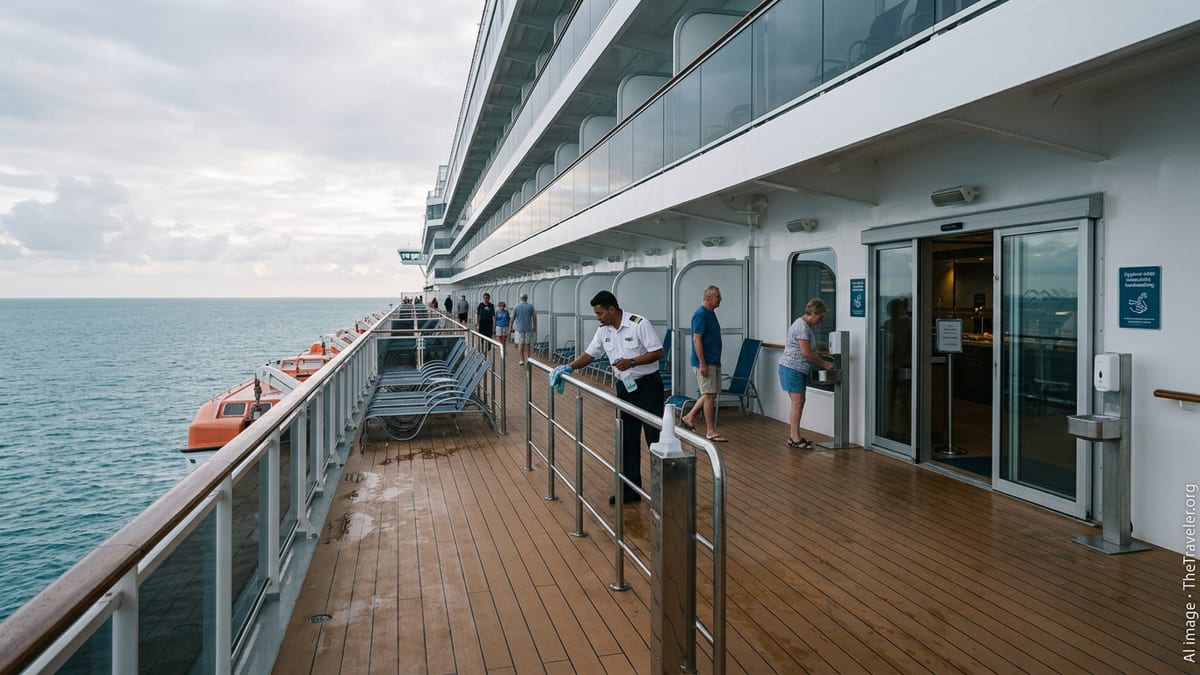
According to published coverage and passenger accounts shared publicly, the ship intensified cleaning and disinfection procedures once the pattern of gastrointestinal illness became clear. These measures reportedly included more frequent sanitation of high-touch surfaces such as railings, elevator buttons, door handles and public restrooms.
Buffet operations, already operating with crew service on many large ships, were further adjusted to reduce the number of shared contact points. Self-service options were limited where possible, and staff were positioned at entrances to encourage hand hygiene before guests entered dining areas.
Publicly available information suggests that symptomatic passengers were asked to remain in their cabins for a period consistent with standard isolation practices used for suspected norovirus. Meal delivery to cabins and access to onboard medical services were extended to affected guests, with crew instructed to minimize unnecessary contact while maintaining essential support.
Industry health guidance commonly emphasizes a rapid escalation of cleaning protocols when gastrointestinal cases surface on board, and the Star Princess response appears broadly aligned with those expectations based on the reports now available.
Norovirus and Cruise Travel Risk
Norovirus is frequently associated with cruise travel in public discussion, though cruise health data compiled by agencies and academic researchers indicates that only a small fraction of total norovirus cases occur on ships. The close living quarters, shared buffet areas and high degree of social interaction at sea, however, can make outbreaks highly visible when they occur.
Typical symptoms include sudden-onset nausea, vomiting, diarrhea and stomach cramps, often accompanied by low-grade fever and fatigue. In most healthy adults, the illness is self-limiting and resolves within one to three days, though dehydration can be a concern, especially for older travelers and those with underlying health conditions.
Experts commonly highlight that the virus is easily spread through contaminated hands, surfaces, food and water. It can withstand some standard cleaning products and may persist on surfaces for extended periods, which is why cruise operators rely on specific disinfectants and structured sanitation protocols when outbreaks are suspected.
Recent years have seen intensified monitoring of gastrointestinal illness on cruise ships, with lines expected to report case numbers above defined thresholds and to document their cleaning and response actions. The Star Princess incident fits into a broader pattern of norovirus outbreaks periodically affecting ships across multiple brands.
Impact on Passengers and Future Sailings
Passenger posts on public forums describe a mixed experience on the affected Star Princess sailing. Some travelers reported spending much of the voyage in isolation due to illness, missing port calls and onboard activities, while others indicated that they remained healthy and that entertainment and dining largely continued with additional precautions.
When clusters of gastrointestinal illness occur, cruise lines typically conduct an intensive sanitation effort between sailings, often referred to as a deep clean. Publicly available information suggests that subsequent voyages of Star Princess are proceeding with added cleaning, communication about hygiene and continued monitoring of illness reports.
Travel industry analysts note that such incidents can briefly unsettle prospective cruisers, particularly those new to ocean travel, but that demand historically tends to rebound as lines emphasize health protocols and affected sailings recede into the background of overall operations. The current outbreak arrives as the broader cruise sector continues to expand Caribbean capacity and introduce new ships to the market.
For travelers with upcoming reservations, the Star Princess episode serves as a timely reminder of both the potential for illness in crowded settings and the layers of response that large cruise ships have developed to manage such events.
Health Advice for Cruise Passengers
Public health recommendations for cruise passengers consistently stress frequent and thorough handwashing with soap and water, particularly before meals and after using restrooms or touching shared surfaces. Alcohol-based hand sanitizer can provide an additional layer of protection, but it is not considered a complete substitute for handwashing against norovirus.
Travel medicine guidance commonly suggests that guests avoid touching their faces with unwashed hands, decline shared bowls or utensils when possible, and promptly report any gastrointestinal symptoms to onboard medical staff. Early reporting can help crew identify patterns more quickly and apply targeted cleaning in the areas most likely to be affected.
Passengers are often advised to review their travel insurance coverage before departure, paying attention to provisions related to trip interruption or medical care at sea. While most norovirus cases resolve without hospitalization, consultation with a medical professional can be important for older travelers, young children and those with chronic illnesses.
As cruise lines continue to refine their health management strategies, the Star Princess outbreak highlights the ongoing importance of collaboration between operators and guests. Strong shipboard protocols, combined with individual hygiene habits, remain central to reducing the impact of norovirus and similar infections in the cruise environment.