

More news on this day
More than 150 people on the cruise ship Star Princess have reported gastrointestinal illness consistent with norovirus as the vessel returns to Fort Lauderdale’s Port Everglades on March 14, drawing fresh attention to disease risks at the height of Caribbean cruise season.
Get the latest news straight to your inbox!
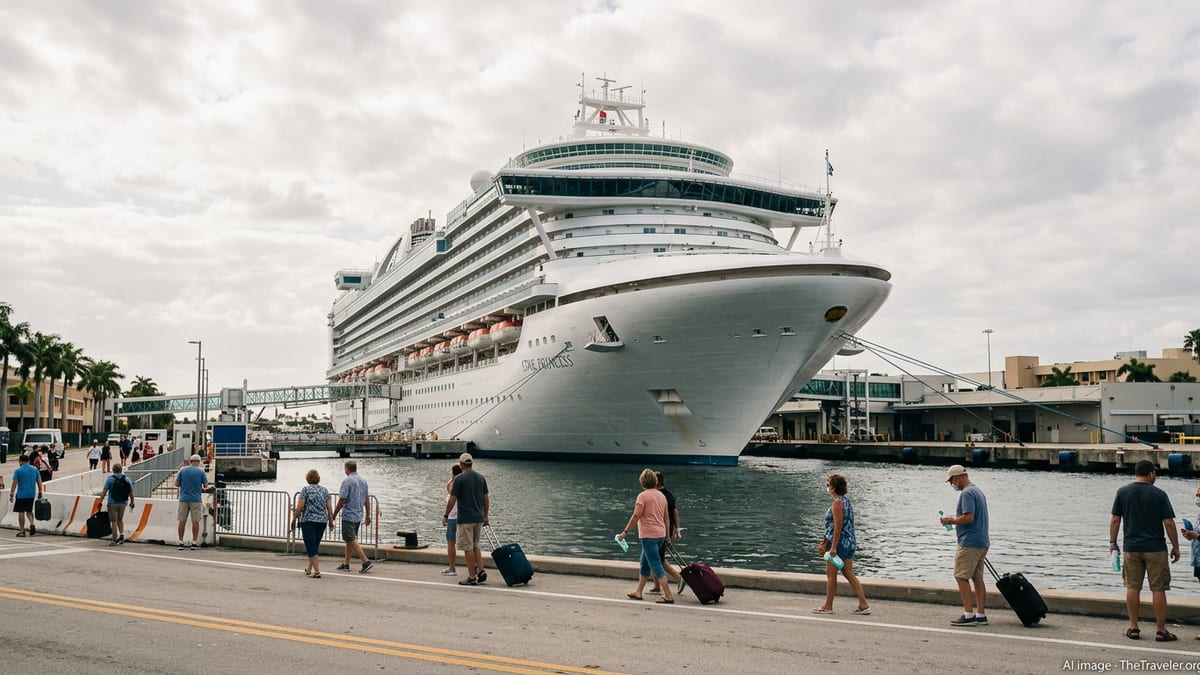
Illness Reported Among Guests and Crew on Caribbean Sailing
Publicly available data from the Centers for Disease Control and Prevention’s Vessel Sanitation Program indicate that over 150 guests and crew on the Star Princess experienced symptoms compatible with norovirus during its current Caribbean voyage. The ship has been sailing with just over 4,300 passengers on board, meaning only a small percentage of travelers have been affected, but the total number of cases places the incident among the more sizable cruise-related outbreaks reported in recent months.
Reports indicate that approximately 104 passengers and 49 crew members reported illness during the sailing, with predominant symptoms including vomiting and diarrhea. The pattern of cases and symptom profile align with norovirus, a highly contagious pathogen that frequently causes gastrointestinal outbreaks in closed and semi-closed environments such as cruise ships, schools, and long-term care facilities.
The voyage, which began in early March, included multiple Caribbean ports before its scheduled return to Fort Lauderdale on March 14. As case numbers rose, the situation drew interest from cruise passengers following the sailing online, as well as from travelers preparing to embark on upcoming Star Princess departures out of Port Everglades.
Heightened Cleaning and Containment Efforts on Board
According to published coverage and passenger accounts shared publicly, crew on Star Princess implemented enhanced cleaning and sanitation measures as gastrointestinal cases were identified. These measures commonly include increased disinfection of high-touch surfaces, adjustments to food service practices, and visible cleaning rotations in public areas such as dining rooms, lounges, and elevator lobbies.
On other recent cruises affected by norovirus, cruise lines have temporarily restricted self-service at buffet venues, with staff serving food directly to limit the number of people touching shared utensils. While specific step-by-step protocols on this sailing have not been fully detailed in public reports, the response on Star Princess appears broadly consistent with standard industry practices when illness levels reach defined thresholds.
The CDC’s Vessel Sanitation Program generally considers an outbreak to be underway when at least 3 percent of passengers or crew report symptoms during a voyage that includes a US port. Once a ship is under active investigation, the program typically requests ongoing case counts and outlines additional control measures that operators are expected to follow throughout the remainder of the sailing.
Fort Lauderdale Again in Focus Amid Cruise Illness Reports
The Star Princess incident adds to a series of gastrointestinal outbreaks linked to cruises sailing to or from Florida ports over the past two years. Previous Vessel Sanitation Program summaries show multiple norovirus events involving ships departing from or calling at Fort Lauderdale, Miami, and other Florida cruise hubs, underscoring the state’s central role in the global cruise market and the heightened visibility of any public health issue that emerges there.
Recent seasons have seen increases in reported norovirus activity on cruise ships worldwide, according to trend analyses compiled from federal and industry data. Health-focused outlets highlight that the uptick coincides with a broader resurgence of norovirus in communities following the relaxation of pandemic-era distancing and masking practices, which had temporarily suppressed circulation of many common respiratory and gastrointestinal viruses.
Fort Lauderdale’s Port Everglades serves as a key turnaround port for Caribbean and transatlantic itineraries, with multiple large vessels embarking thousands of passengers on peak weekend changeover days. Publicly available information shows that when a ship experiencing an outbreak disembarks there, operators typically conduct intensive cleaning between sailings to reduce the risk of residual contamination affecting the next group of guests.
What Travelers Should Know About Norovirus on Cruises
Norovirus is one of the most common causes of acute gastroenteritis and is particularly known for rapid person-to-person spread. The virus can be transmitted through direct contact with an infected individual, consumption of contaminated food or water, or touching surfaces that harbor viral particles and then touching the mouth. Symptoms often include sudden-onset vomiting, watery diarrhea, stomach cramps, nausea, and occasionally low-grade fever or body aches.
Public health guidance consistently emphasizes that alcohol-based hand sanitizers alone are not considered fully effective against norovirus. Frequent and thorough handwashing with soap and water, especially before eating and after using the restroom, remains the primary recommended protective measure. Travelers are also advised to avoid touching their face, to use serving utensils carefully at buffets, and to stay away from shared food or drink items when illness is circulating on board.
If symptoms develop during a cruise, standard health advisories encourage passengers to self-isolate in their cabins when possible, report symptoms to the ship’s medical center, and follow instructions regarding hydration and supportive care. Cruise lines generally request that guests who become ill remain in their cabins for a defined period after their last symptoms in order to limit onward transmission.
Ongoing Monitoring as Star Princess Returns to Port Everglades
As of March 14, the Star Princess is scheduled to complete its current itinerary and return to Fort Lauderdale, where passengers will disembark and new guests are expected to board for subsequent voyages. Publicly available cruise-tracking data suggest that the ship will maintain its planned schedule, with the norovirus outbreak managed under existing Vessel Sanitation Program protocols.
Travel industry analysts note that while any outbreak that sickens more than 150 people attracts attention, the proportion of affected travelers on this sailing remains relatively low compared with the total number of passengers and crew on board. Norovirus incidents on cruise ships also represent a small fraction of the thousands of outbreaks that occur each year in land-based settings, although they tend to receive outsized coverage because of the concentrated environments and the visibility of the cruise sector.
Prospective passengers booked on upcoming Star Princess cruises out of Fort Lauderdale are closely watching developments, including any further updates from public health agencies and the cruise operator’s published statements. For now, available information points to a familiar cycle in modern cruising: an illness outbreak that tests onboard sanitation systems, prompts renewed attention to hygiene among travelers, and reinforces the importance of straightforward steps such as diligent handwashing and prompt reporting of symptoms.