

More news on this day
More than 150 passengers and crew aboard Princess Cruises’ Star Princess have fallen ill with norovirus during a Caribbean voyage, prompting intensified sanitation measures as the new mega-ship sails back toward Fort Lauderdale.
Get the latest news straight to your inbox!
CDC Confirms Norovirus Cases Aboard New Flagship
The U.S. Centers for Disease Control and Prevention has confirmed a gastrointestinal illness outbreak consistent with norovirus on the Star Princess, one of Princess Cruises’ newest and largest vessels. According to the agency, 104 of the 4,307 guests and 49 crew members reported symptoms including vomiting and diarrhea during the current sailing, bringing the total affected to 153 people.
The ship is operating under the CDC’s Vessel Sanitation Program, which tracks and investigates outbreaks of gastrointestinal illness on cruise ships calling at U.S. ports. Under program rules, cruise lines must notify authorities when at least 2 percent of passengers or crew report symptoms. The case count on Star Princess has surpassed that threshold, triggering heightened oversight and detailed public reporting.
Health officials said stool samples from ill passengers have tested positive for norovirus, a highly contagious virus that spreads easily in close quarters such as cruise ships, schools and nursing homes. While symptoms are typically short-lived, lasting one to three days, the illness can be particularly serious for young children, older adults and those with underlying health conditions.
Despite the outbreak, the ship has continued its itinerary in the Caribbean and is scheduled to return to Port Everglades in Fort Lauderdale on March 14. Princess Cruises has not announced any itinerary changes or early termination of the voyage.
Enhanced Cleaning, Isolation and Service Changes Onboard
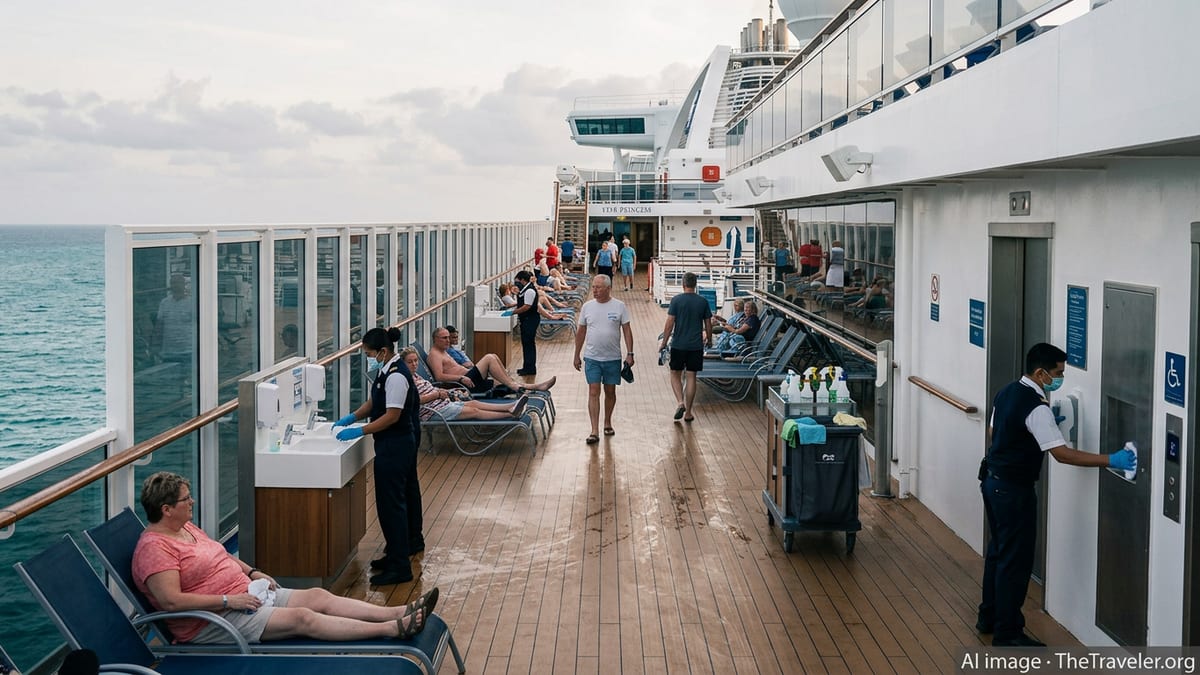
In response to the outbreak, Princess Cruises has implemented what it describes as enhanced sanitation protocols across Star Princess. These measures include more frequent disinfection of high-touch surfaces such as handrails, elevator buttons and door handles, along with intensified cleaning in public restrooms, dining rooms and buffet areas.
Passengers reporting symptoms have been asked to remain in their cabins until at least 24 to 48 hours after symptoms subside, in line with standard cruise industry practice. Cruise lines typically provide complimentary room service, medical monitoring and sometimes goodwill credits for guests placed in isolation due to illness traced to onboard outbreaks.
Onboard accounts shared by recent guests describe crew members repeatedly reminding passengers to wash their hands before entering dining venues and positioning handwashing stations and sanitizer dispensers at key locations. Some passengers also report that crew have assumed more of the food service duties in buffet-style areas to limit the number of people handling shared utensils.
Princess Cruises has not disclosed any hospitalizations tied to the outbreak, and norovirus infections are more commonly managed in cabins with rest, hydration and simple medications to control nausea or fever. The line has emphasized cooperation with federal health authorities and says protocols remain in place to reduce further transmission for the remainder of the voyage.
Princess Cruises Faces Renewed Scrutiny on Shipboard Illness
The norovirus cases on Star Princess arrive at a time when cruise operators are working to reassure travelers about onboard health standards following the COVID-19 pandemic. Princess Cruises, in particular, has been under a sustained spotlight because of high-profile health incidents in recent years across several ships in its fleet.
Public health experts note that norovirus outbreaks on cruise ships receive outsized media attention compared with land-based incidents, even though only a small fraction of total global cases are linked to cruising. Still, the closed environment of a large vessel and the density of passengers can provide ideal conditions for the virus to spread once it is introduced by an infected individual embarking or boarding in port.
Past outbreaks on various cruise lines have led to calls for even stricter pre-boarding screening and more aggressive mid-cruise interventions when the first clusters of illness appear. Industry observers will be watching how Princess handles disembarkation in Fort Lauderdale, including communication with incoming guests and any decision to delay or modify the next sailing while additional cleaning is carried out.
Analysts say the handling of the current incident will be an early test for the operational playbook on one of Princess’s newest ships, launched as a next-generation flagship for the brand. The line has promoted Star Princess as offering expanded outdoor spaces, large dining venues and family-friendly amenities, all of which present both opportunities and challenges for infection control.
What Travelers Should Know About Norovirus at Sea
Norovirus is one of the most common causes of gastrointestinal illness worldwide, transmitted primarily through contact with contaminated surfaces, food and water or through direct person-to-person spread. On cruise ships, it can move quickly through the population when guests share dining areas, elevators, theaters and pool decks.
Public health authorities consistently stress that frequent, thorough handwashing with soap and water is the single most important step passengers can take to protect themselves. Alcohol-based hand sanitizers can provide added benefit but are not considered a complete substitute for soap and water when it comes to norovirus, which has a durable outer shell that can withstand some sanitizing agents.
Travel medicine specialists advise cruise passengers to wash hands before eating or drinking, after using restrooms, after touching railings and other common surfaces, and upon returning to cabins. Travelers are also encouraged to avoid sharing drinks and utensils, and to report any sudden onset of vomiting or diarrhea to the ship’s medical team promptly so that isolation and cleaning measures can begin.
For those concerned about sailing on ships that have recently experienced an outbreak, experts note that cruise lines typically carry out deep cleaning and disinfection between voyages and may maintain stepped-up protocols for several days after an incident. Prospective passengers may review publicly available Vessel Sanitation Program reports to understand recent illness trends on specific ships calling at U.S. ports.
Next Steps for Star Princess and Upcoming Sailings
As Star Princess heads back to Port Everglades, attention is turning to what comes next for the ship’s schedule and for guests booked on upcoming voyages. Princess Cruises has not announced any cancellations or major itinerary adjustments, but the cruise line is expected to brief passengers prior to embarkation about the measures taken following the outbreak.
Standard practice after a reportable gastrointestinal outbreak includes a combination of intensive cleaning, additional staff training refreshers on hygiene protocols and heightened monitoring during at least the next cruise. In some cases, boarding may be slightly delayed to allow extra time for disinfection, and certain self-service elements such as buffets may remain modified while the situation is closely watched.
Travel agents say they are beginning to field questions from clients about the Star Princess outbreak, particularly from families traveling with young children or older relatives. Many are advising guests to build in extra pre-cruise health precautions, such as staying home if feeling unwell in the days before sailing and packing oral rehydration solutions, fever reducers and disinfecting wipes.
While the total number of sick passengers and crew represents a small percentage of those on board, the incident underscores how quickly a common virus can disrupt a vacation at sea. For Star Princess, the coming days in port and on subsequent sailings will be crucial in demonstrating that elevated hygiene measures can restore traveler confidence without overshadowing the ship’s appeal as a major new player in the Caribbean cruise market.