

More news on this day
Norse Atlantic Airways is adding extra flights between London Gatwick and Bangkok as emergency demand surges on Europe–Asia routes, offering United Kingdom and Thailand a vital nonstop travel lifeline while airspace closures and hub shutdowns across the Middle East continue to fracture global aviation networks.
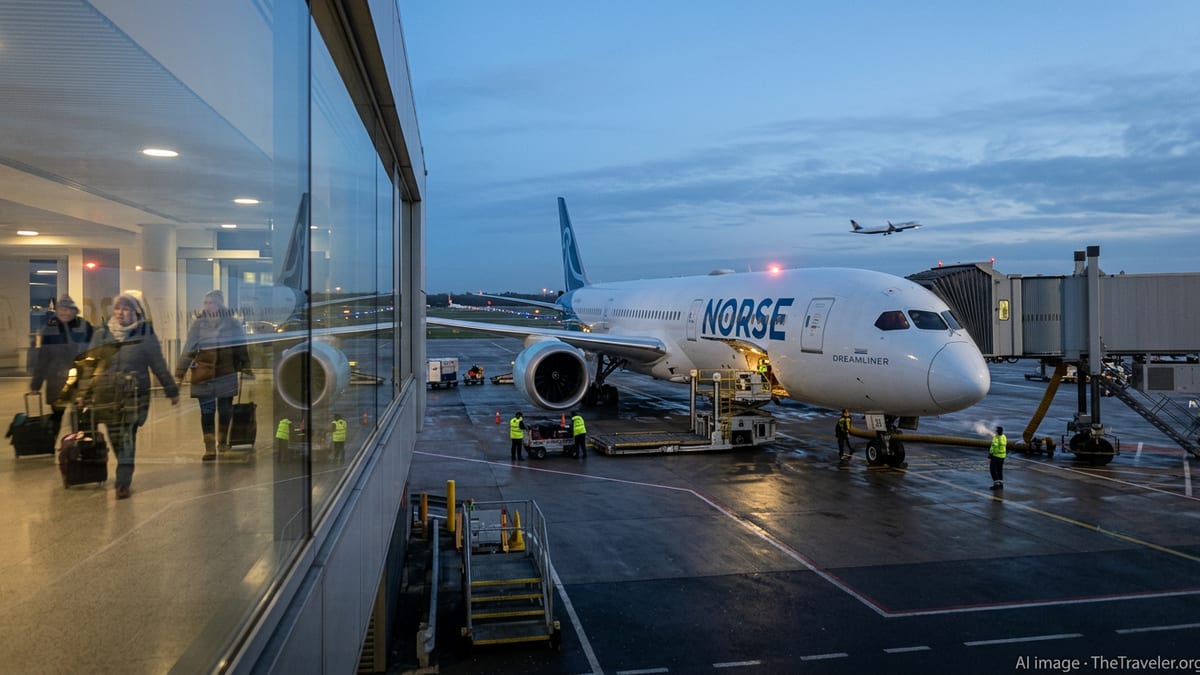
Emergency Capacity Boost on a Key UK–Thailand Corridor
The long-haul low-cost carrier confirmed on March 5 that it will introduce additional London Gatwick–Bangkok services in the coming weeks, expanding a route it only launched at the start of the 2025–26 winter season. The move comes as travelers struggle to find seats between Europe and Southeast Asia following the effective closure of major Gulf hubs and swathes of Middle Eastern airspace.
Norse Atlantic said the extra flights would operate as supplemental rotations to its existing schedule, using Boeing 787 Dreamliner aircraft and focusing on peak travel days where demand has spiked most sharply. While precise frequencies and dates are being fine-tuned in response to ongoing operational constraints, the airline stressed that the added capacity is designed to be immediate and tactical rather than a long-term structural change.
The carrier cited “recent developments affecting airspace in parts of the Middle East” and “shifts in global travel patterns” as primary drivers, noting that Bangkok has rapidly emerged as one of the main alternative gateways for passengers who would previously have connected via Dubai, Doha, or Abu Dhabi. With many full-service rivals forced to cancel or reroute services, a nonstop option from London has become significantly more attractive.
For UK travelers looking to reach Thailand, and for Thai nationals trying to return to Europe without transiting war-affected areas, Norse Atlantic’s announcement represents one of the first concrete capacity injections on the corridor since the crisis intensified at the end of February.
Middle East Conflict Upends Europe–Asia Aviation Flows
The decision by Norse Atlantic to scale up London–Bangkok flying is rooted in a sweeping aviation disruption triggered by the escalation of conflict involving Iran, Israel, and the United States. Since February 28, large sections of airspace over Iran, Iraq, Israel, Kuwait, Qatar, Bahrain, and other neighboring states have been closed or heavily restricted to civilian aircraft, forcing airlines to cancel flights or divert to longer, more circuitous routes.
Key hubs in Dubai, Abu Dhabi, and Doha, traditionally among the busiest connecting points for Europe–Asia itineraries, have seen schedules dramatically curtailed or limited to evacuation and repatriation operations. Hundreds of thousands of travelers have been stranded or forced to rebook in recent days, while global aviation analytics show an abrupt drop in capacity on Middle East–dependent routes and several hours of additional flying time on many long-haul sectors.
The ripple effects have been felt across the network. European airlines that once relied on efficient overflight of Iranian and Gulf airspace are now navigating narrow northern corridors via Turkey and the Caucasus or swinging south across the Arabian Sea and East Africa. These detours increase fuel burn, crew costs, and scheduling complexity, eroding profitability and reducing the number of flights carriers are able or willing to operate.
Against that backdrop, point-to-point services that bypass the Gulf entirely have gained strategic importance. Routes such as London–Bangkok, which can be operated using southern or central Asia routings without touching the conflict zone, are suddenly at the center of crisis-era contingency planning for both airlines and national aviation authorities.
UK and Thai Travelers Turn to Nonstop Options
Before the latest round of airspace closures, a substantial share of UK–Thailand traffic flowed via one-stop connections in the Gulf, with Emirates, Qatar Airways, and Etihad among the dominant players carrying British holidaymakers and Thai workers between the two countries. With those hubs now constrained and some European carriers suspending services into the region altogether, the market has quickly reoriented toward nonstop or Gulf-free alternatives.
Bangkok’s main airport has remained operational throughout the crisis, and Thai authorities have urged travelers to avoid itineraries routed through affected Middle Eastern hubs where possible. Tour operators in both countries report a surge of inquiries from customers seeking to switch to direct flights, despite higher prices and limited seat availability during the initial days of the disruption.
Norse Atlantic’s additional Gatwick–Bangkok services will not fully replace the lost capacity from the Gulf carriers, but they do provide an urgently needed pressure valve on one of the most popular leisure and visiting-friends-and-relatives markets linking Europe and Southeast Asia. Travel agents say the extra seats are likely to be snapped up quickly by passengers rebooking cancelled connections and by those who had postponed travel in the immediate aftermath of the first strikes.
For Thailand, which counts the UK among its most valuable long-haul tourism source markets, any incremental lift from Europe is welcome. Tourism officials have been closely monitoring booking data and airline responses, conscious that prolonged constraints on air connectivity could weigh on high-season arrivals and spending.
Fares Soar as Capacity Tightens Across Europe–Asia Routes
The sudden loss or rerouting of services through the Middle East has had a predictable impact on airfares. With aircraft flying longer distances, burning more fuel, and spending extra time in the air, airlines have been quick to adjust pricing to reflect higher operating costs and severely reduced capacity on core corridors linking Europe with South and Southeast Asia.
Early fare data from major online travel agencies this week showed sharp increases on many Europe–Asia city pairs, with some long-haul economy tickets priced at three to four times their typical off-peak levels for near-term departures. Routes that previously relied heavily on Gulf hubs for competitive one-stop itineraries have been particularly affected, as passengers compete for seats on the limited number of flights still operating on safe, non-conflict routings.
In that environment, Norse Atlantic’s move to upgauge Bangkok capacity is as much a commercial opportunity as it is a public service. As a low-cost long-haul operator, the airline can undercut some legacy rivals while still charging significantly more than the launch fares it used to stimulate demand when the route was first announced. For price-sensitive travelers, even a modest injection of new seats may help temper the most extreme spikes.
Nonetheless, industry analysts caution that as long as airspace closures persist and key hubs remain constrained, structural capacity shortages will keep fares elevated on many Europe–Asia routes. Leisure travelers to Thailand may need to plan further ahead, travel outside peak dates, or accept higher ticket prices in the months ahead, even with airlines like Norse Atlantic stepping in to absorb some of the displaced demand.
Operational and Strategic Implications for Airlines
While the immediate focus is on getting stranded passengers moving again, the crisis is also forcing airlines to reassess how they structure their long-haul networks. For Norse Atlantic, which operates a lean point-to-point model with a small fleet of long-range aircraft, the ability to flex capacity quickly onto resilient leisure routes illustrates the agility of newer, asset-light carriers compared with large, hub-dependent incumbents.
Industry observers note that the London–Bangkok expansion could be a template for how airlines respond to future geopolitical shocks: rapidly boosting nonstop services on corridors that can be operated safely and efficiently, while trimming or suspending exposure to vulnerable hubs and overflight zones. The ongoing conflict has underscored just how concentrated global aviation has become around a handful of Middle Eastern gateways.
For the United Kingdom and Thailand, the additional flights also have broader diplomatic and economic dimensions. Maintaining robust air links at a moment of regional instability is critical not only for tourism, but for trade, education, and people-to-people ties. UK officials have already been urging citizens to avoid non-essential transit through the Gulf, and any move that strengthens direct connectivity to key partners in Asia aligns with that advice.
How long Norse Atlantic maintains the extra Gatwick–Bangkok capacity will depend on the trajectory of the conflict and the reopening of Middle Eastern airspace. For now, however, its added services stand out as one of the few bright spots in a week dominated by cancellations, diversions, and uncertainty for travelers trying to bridge the gap between Europe and Southeast Asia.