

More news on this day
As winter loosens its grip on the Northern Plains, North Dakota is rapidly emerging as an under-the-radar spring escape, where world-class bird migration, small-town festivals and newly accessible wild landscapes converge into one compact season.
Get the latest news straight to your inbox!
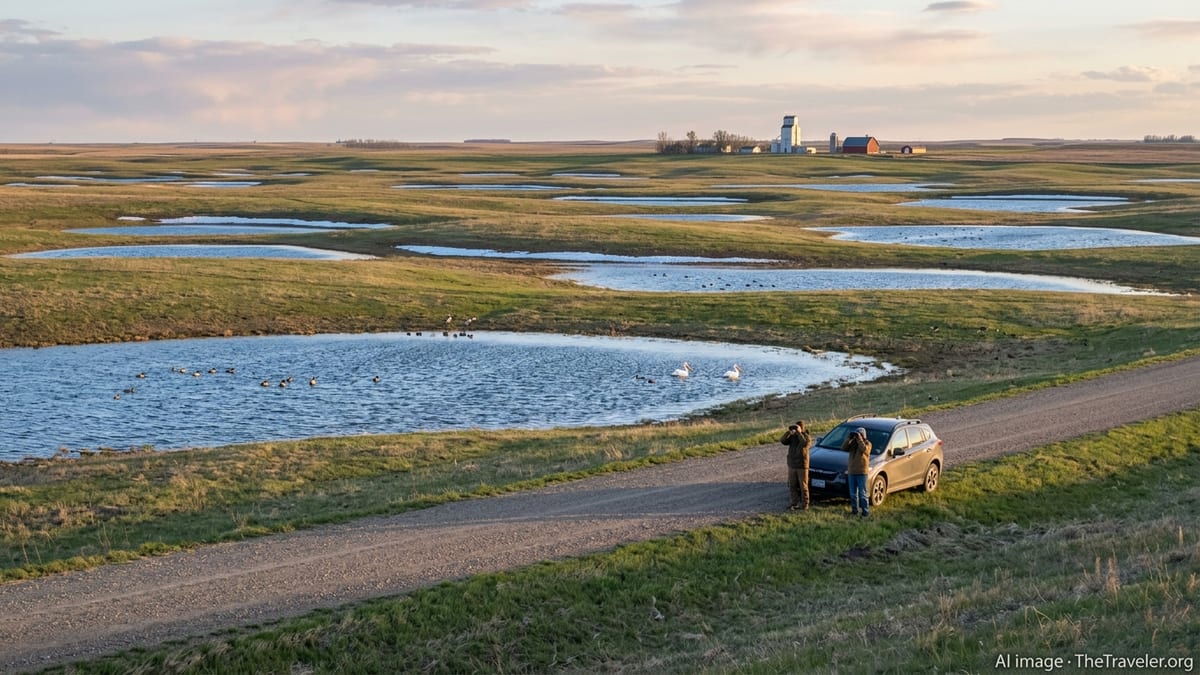
Prairie Potholes Turn Into a Spring Birding Spectacle
Each spring, North Dakota’s vast Prairie Pothole Region shifts from frozen silence to one of the busiest bird crossroads in North America. Publicly available information from conservation groups describes thousands of shallow glacial wetlands across the state as vital breeding and stopover habitat for ducks, geese and shorebirds moving along the Central Flyway. As ice retreats from March into May, these ponds fill with waterfowl in vivid breeding plumage, drawing birders eager for close views.
Tourism and wildlife agencies report that more than 370 bird species have been recorded in North Dakota, with over 200 known to nest or having nested in the state. Many of those birds pass through or settle in eastern and central North Dakota’s pothole country, where refuges and wetland management districts such as Devils Lake, Kulm and Hobart Lake provide rich feeding grounds. Seasonal notes from regional organizations indicate that snow geese, tundra swans and a variety of ducks concentrate in these marshes during peak migration windows in April and early May.
Local travel guides highlight self-guided birding drives around Jamestown and other communities, where gravel roads wind between prairie sloughs, farm ponds and wildlife refuges. Reports describe this as “drive-by birding” territory, with flocks often visible from the roadside and short pullouts leading to observation points. For beginners, spring waterfowl and larger birds like pelicans and cranes are considered easier targets than summer songbirds that disappear into leafy cover.
Nature-focused organizations also note that spring offers a rare combination of uncrowded spaces and high wildlife activity. With vegetation still low and the breeding season underway, visitors have a better chance of spotting lekking prairie-chickens, marsh-loving rails and early-arriving shorebirds along muddy shorelines. The result is a brief but intense window when North Dakota’s wetlands become a dynamic classroom for birders of every level.
Hidden Festivals and Small-Town Gatherings Come Out of Hibernation
Alongside the migration, a network of smaller festivals and cultural events quietly resumes across North Dakota as temperatures rise. Community calendars and regional travel guides point to bird-themed gatherings, photography contests and nature weekends that often operate far below the national radar. In eastern cities such as Fargo and Grand Forks, birding meetups and urban nature days link park trails and riverside greenways with introductory outings for residents and visitors.
In rural areas, heritage and arts festivals add a human counterpoint to the wild landscapes that draw travelers in spring. Public information from cultural organizations notes that Scandinavian celebrations, quilting retreats, farm markets and Native American powwows begin to reappear on weekends as roads clear and venues reopen. Many of these gatherings are modest in size but rich in local detail, pairing homemade food with traditional music, crafts and storytelling.
Statewide contests and seasonal campaigns also encourage travelers to look at familiar places with fresh eyes. Recent tourism promotions, including a governor’s photography competition, have specifically highlighted spring activities such as birding, fishing and small-town festivals as subjects. By rewarding images of migrating birds over prairie wetlands, kites flying above state parks or early-season community parades, these efforts effectively turn ordinary spring weekends into opportunities for curated exploration.
For visitors planning a getaway, this patchwork of events means it is increasingly possible to pair mornings in the wetlands with afternoons in historic downtowns or evening concerts in restored schoolhouses and barns. While many festivals remain locally focused and lightly promoted beyond their home regions, the cumulative effect is a spring season that feels less like a single marquee event and more like a series of layered, overlapping discoveries.
Badlands Parks and New Tribal Landscapes Open Up
Far from the wetlands of the east, western North Dakota is adding new reasons to visit the Badlands during shoulder season. Published coverage in recent years describes the creation of the Three Affiliated Tribes National Park along the Little Missouri River, a tribal initiative that preserves rugged but little-seen buttes and coulees while inviting low-impact recreation. The area, tied to the Mandan, Hidatsa and Arikara Nation, offers hiking, paddling and wildlife viewing in a section of Badlands terrain that had long been in private hands.
Elsewhere in the region, improvements to existing infrastructure are reshaping access to dramatic overlooks and wildlife hotspots. Reporting on Theodore Roosevelt National Park notes that a reconstructed segment of the park’s scenic loop road reopened in late 2025 after several years of closures caused by erosion and sinkholes. The restored route once again connects panoramic viewpoints, prairie dog towns and rolling grassland where bison and wild horses are often visible from the roadside.
Spring in the Badlands carries its own character distinct from the high-summer season. Visitor information emphasizes cooler temperatures and fewer crowds, along with the first flush of green in draws and cottonwood bottoms as snowmelt filters off the buttes. Trails that can be sweltering in July are often more comfortable in April and May, appealing to hikers and photographers who want long days on the landscape without the peak-season heat.
For travelers focused on birding, the Badlands and Missouri River corridor add raptors, songbirds and grassland specialists to any spring checklist built in the pothole region. Observers commonly report golden eagles, soaring hawks and displaying meadowlarks above the broken terrain. Combined with the new tribal parklands and upgraded access roads, these conditions are helping western North Dakota position itself as a complementary stop on spring itineraries that may start with wetland birding farther east.
State Parks and Lakes Deliver Quiet, Early-Season Adventure
Beyond headline destinations, North Dakota’s state parks and large reservoirs are also stepping into the spring spotlight. Public descriptions from park agencies and local tourism offices highlight locations such as Fort Stevenson State Park on Lake Sakakawea, Fort Abraham Lincoln near Mandan and recently renamed Rough Rider State Park in the Badlands as appealing shoulder-season bases. Trails, campgrounds and cabin areas typically begin to open in phases, providing a quieter alternative to summer’s family crowds.
Lake Sakakawea and other major reservoirs are particularly active in spring as anglers target walleye and other species staging in shallower water. At the same time, marinas and shorelines double as viewing platforms for pelicans, cormorants and grebes that move along the Missouri River system. Reports from birders and residents describe “crazy” concentrations of white pelicans at certain refuges and lakes, with long lines of birds cruising above the water in search of schooling fish.
In central and eastern parks, early-season events often mix outdoor recreation with family-friendly spectacles. Local coverage of Fort Stevenson notes a popular kite festival near the end of May that fills bluffs above the lake with bright canopies rising in the prairie wind. Elsewhere, ranger-led walks, night-sky programs and early wildflower walks return to calendars as snow clears from trails and gravel backroads.
For visitors, these parks function as convenient hubs between birding hotspots and small-town events. Campers can spend dawn scanning cattail marshes for rails and bitterns, then shift to afternoon bike rides, short hikes to historic forts or fireside evenings under open skies. Because many sites sit within an easy drive of both wetlands and regional cultural centers, they offer a flexible base for short spring holidays built around changing weather and migration reports.