

More news on this day
Passenger train services between China and North Korea have resumed for the first time in six years, restoring a historic rail lifeline between Beijing, Dandong and Pyongyang even as broader tourism remains tightly restricted.
Get the latest news straight to your inbox!
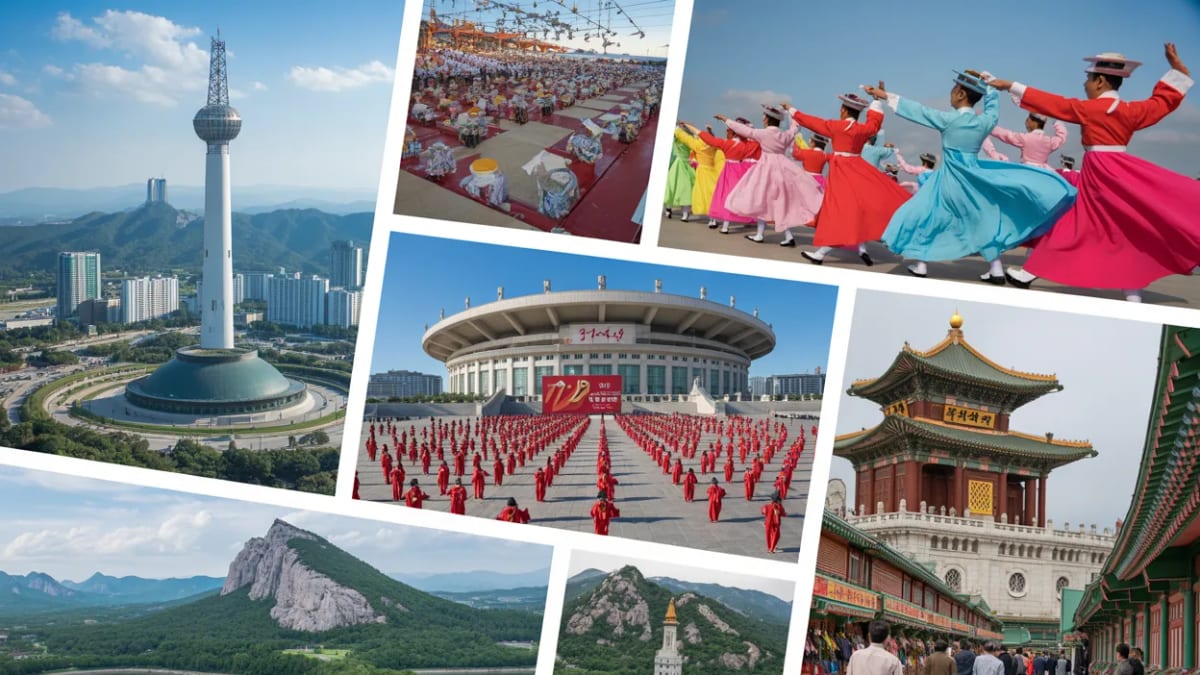
Image by Travel And Tour World
A Historic Rail Link Rolls Again After Years of Closure
The restart of passenger trains in mid-March 2026 ends a prolonged suspension that began in early 2020, when North Korea closed its borders in response to the Covid-19 pandemic. Services on the Beijing to Pyongyang route and the Dandong to Pyongyang corridor had been halted, cutting one of the most symbolic connections between the two neighbors.
Publicly available information from Chinese railway notices and regional media reports indicates that the through train between Beijing and Pyongyang is again operating several times a week, with an additional daily cross-border connection from the border hub of Dandong. Timetables show overnight services that traverse the Yalu River into Sinuiju before continuing to the North Korean capital.
The revival of these routes underscores the long-standing importance of rail as the main artery for people and goods moving between the two countries. The Beijing to Pyongyang service, introduced during the Cold War era, has long been viewed as both a practical link and a barometer of political ties, its suspension and restoration closely tracking shifts in North Korea’s external posture.
The current restart follows earlier steps to rebuild freight traffic and limited passenger flows. Rail freight between Dandong and Sinuiju resumed on a restricted basis in 2022, and more regularized cross-border trade has gradually followed, setting the stage for renewed passenger operations.
Who Can Ride: Work, Study and Family Visits First
Despite the headline of a reopening, the new phase of rail travel between China and North Korea is far from a full return to pre-pandemic tourism. Travel industry updates and regional coverage indicate that seats on the restarted trains are largely reserved for a narrow group of travelers, including Chinese and North Korean nationals with business, study, official or family reasons to cross the border.
In practice, ticketing remains tightly controlled. Reports from Chinese travel agencies involved in international rail sales suggest that passengers must hold valid visas, and in many cases business documentation, before they can purchase tickets for the Beijing to Pyongyang service. This framework reflects North Korea’s cautious, phased approach to reopening after years of isolation.
The pattern is consistent with North Korea’s broader border management since 2020. The country initially barred nearly all foreigners and sharply limited the movement of its own citizens. Over time it has selectively expanded access, first for returning nationals and specific partner countries, and later for a small number of organized visitors, while keeping mass tourism off the table.
Air links are following a similar trajectory. Air China has announced the resumption of flights between Beijing and Pyongyang from late March 2026, complementing the rail reopening and reinforcing a controlled reopening focused on essential or officially sanctioned travel, rather than holidaymakers.
Tourism Still Off-Limits for Most Foreign Visitors
The resumption of train services might suggest that foreign tourists can again ride the rails into North Korea, but recent developments point to a more complex reality. Publicly available information on tourism rules, as well as reporting by international media, indicates that North Korea’s border remains effectively closed to general leisure travel from most countries.
North Korea briefly experimented with limited tourism reopening after the height of the pandemic. In 2024 it accepted small groups of Russian visitors, mainly on tightly controlled itineraries, followed by short-lived pilot visits by select foreigners to specific regions. These moves did not translate into a broad-based return of pre-2020 tour operations, and restrictions were quickly tightened again.
Tourism to North Korea has historically been dominated by Chinese package groups, which once accounted for the majority of foreign arrivals. Despite that history, recent coverage indicates that large-scale Chinese group tourism has not yet been restored. Tour operators in China have signaled interest and, in some cases, begun preliminary marketing, but they continue to caution that confirmation from the North Korean side is still lacking.
Special tourism zones, such as the Wonsan Kalma coastal area on the country’s east coast, highlight the gap between infrastructure ambitions and current access. Construction there and in other resort projects has continued, and diplomatic delegations from China have inspected facilities, but foreign travelers other than a narrow circle of invited guests remain largely excluded.
Strategic Signaling Behind the Reopening
The timing of the rail restart carries significance beyond transport logistics. Analysts cited in regional coverage describe the move as part of a broader realignment in which China and North Korea seek to reinforce ties after several years of pandemic-driven separation and shifting global politics.
The restoration of a direct rail link offers practical benefits for both sides. For North Korea, it provides an avenue to reengage with its largest trading partner and a conduit for hard currency once tourism eventually expands. For China, it reinforces its influence on the Korean Peninsula at a moment when broader regional security dynamics, including North Korea’s relations with Russia and tensions with the United States and its allies, are in flux.
Passenger capacity on the train services remains modest, with only a limited number of carriages designated for international travelers. Nonetheless, the symbolism of cross-border coaches once again crossing the Yalu River has been widely noted in coverage across East Asia. The train’s return joins the gradual restoration of air links and growing freight volumes as visible markers of renewed engagement.
At the same time, the highly selective criteria for ticket holders suggest that Pyongyang is intent on calibrating this opening carefully. Public analysis points to a strategy that seeks economic benefit and diplomatic leverage without ceding extensive control over who enters the country, or exposing the domestic population to large numbers of foreign visitors.
What the Rail Reopening Means for Future Travel
For prospective visitors, the message is mixed. On one hand, the resumption of direct trains and upcoming flights creates a functional corridor that did not exist during the pandemic years, offering a potential pathway for travel if and when North Korea eases its restrictions on tourism. Travel industry commentary notes that these routes could eventually become key channels for cultural and historical tourism from China and beyond.
On the other hand, current rules keep most tourists on the sidelines. Travel specialists tracking policy changes emphasize that organized tours, mandatory guides and limited itineraries are likely to remain standard features whenever broader tourism restarts. For now, the practical effect of the rail reopening is to facilitate movement for a relatively small, vetted group rather than to open the door widely.
The experience of the first departures has underlined that distinction. Reports from the maiden Beijing to Pyongyang services describe near-empty international carriages, with staff waiting on compartments that remain largely unused. The contrast between the train’s symbolic significance and its light passenger load has become a recurring theme in regional coverage.
Looking ahead, observers see the restored rail line as an early step in a longer process. If North Korea judges the external environment favorable and sees clear economic gains, the trains that now carry mostly workers and officials could one day fill with tourists. For the moment, however, the historic service is back on the timetable, but North Korea’s doors remain only half open.