

More news on this day
Passenger train services between Beijing and Pyongyang have restarted this week after a years-long pandemic suspension, a move that observers view as a significant step toward restoring tourism flows and overland connectivity across Northeast Asia.
Get the latest news straight to your inbox!
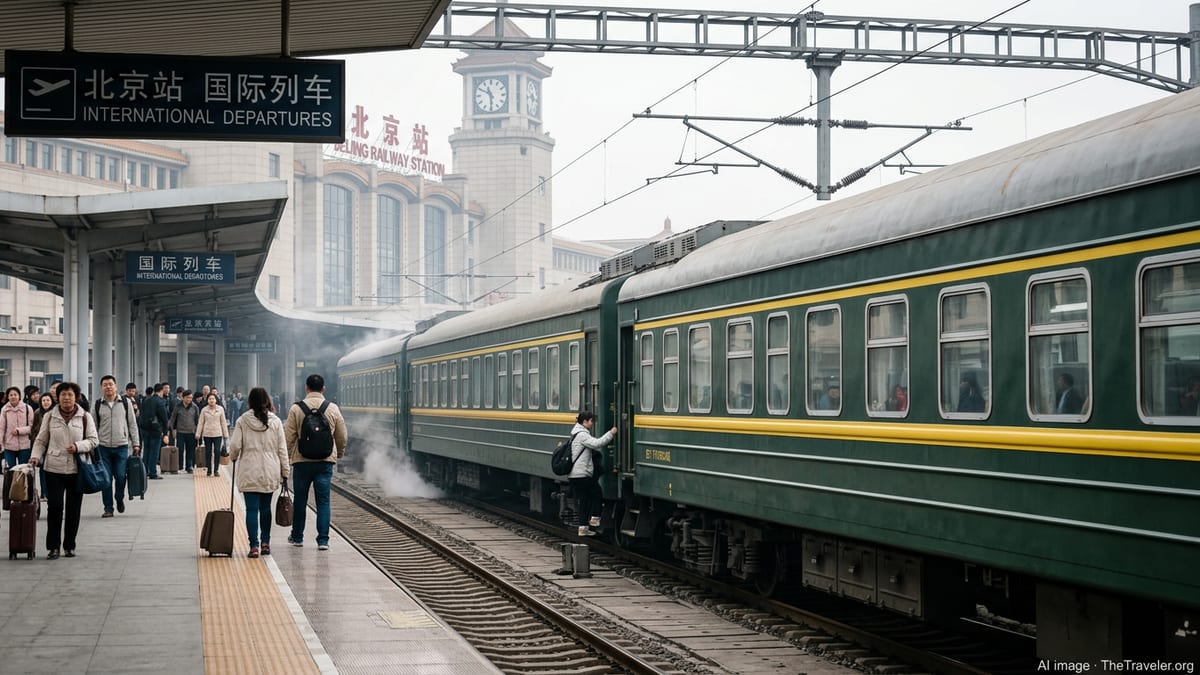
Historic Beijing–Pyongyang Line Back on Track
According to recent coverage from Chinese and international media, China State Railway Group has resumed international passenger trains linking Beijing and Dandong with Pyongyang, with services reported to operate multiple times a week following a restart on March 12, 2026. The reopening brings back a route that has historically served as the primary overland corridor between China and North Korea, and which had been effectively dormant since the onset of COVID-19 border closures in early 2020.
The Beijing–Pyongyang through train, often referred to in timetable references as the K27 and K28 service, has existed in various forms since the 1950s. Publicly available timetable information indicates that the Dandong–Pyongyang section formally resumed operations from March 12, forming the backbone of the revived cross-border passenger link. The restored trains are expected to carry both Chinese and foreign passengers who meet entry requirements, offering an alternative to limited flight options into Pyongyang.
For North Korea, the return of passenger rail to Beijing complements a broader, gradual reopening of its borders. Reports indicate that after years of almost total isolation, the country has been cautiously reintroducing international connections, beginning with select charter flights and small tour groups before expanding to regular air and rail links.
Tourism Prospects as Pyongyang Eases Border Controls
Tourism to North Korea was effectively halted in 2020, when the country imposed some of the world’s strictest pandemic-era measures, banning foreign visitors and sharply curtailing all cross-border traffic. Published accounts show that limited tourism activity resumed in 2024, initially centered on small groups of Russian visitors and, later, a broader set of foreign nationals joining organized tours under tight supervision.
With rail service from Beijing now back in operation, travel specialists who monitor the region suggest that the practical foundation is being laid for a wider revival of pre-pandemic tour patterns. Before 2020, Chinese nationals were estimated to represent the overwhelming majority of foreign visitors to North Korea, and many of those trips were organized as rail-based packages combining overnight journeys with curated itineraries in Pyongyang and regional cities.
Publicly available information on North Korea’s tourism system indicates that all trips remain highly structured, coordinated through state-linked travel bureaus and foreign partner agencies. While detailed schedules have not been fully published, the restored trains are expected to integrate into these set tour programs, potentially reducing costs and logistical hurdles compared with charter flights.
Safety protocols, health checks, and visa procedures are likely to remain stringent. However, the combination of scheduled rail services and expanding flight options is being interpreted by analysts as a sign that Pyongyang is seeking a controlled increase in visitor numbers, both for economic reasons and to normalize cross-border mobility after several years of isolation.
Regional Connectivity Strengthened by Parallel Air Links
The return of the Beijing–Pyongyang train coincides with renewed aviation links between the two capitals. According to recent airline timetable announcements, Air China plans to restart regular flights between Beijing and Pyongyang from March 30, 2026, adding another channel for travelers alongside the existing services operated by North Korea’s Air Koryo.
Together, the revived rail and air connections mark a notable shift in regional connectivity. For travelers in China and beyond, the ability to combine air and rail segments opens more flexible routing options, including overland itineraries that transit through Beijing or Dandong before crossing the Yalu River into North Korea. For North Korea, this mix of transport modes offers redundancy and potentially more stable passenger flows than reliance on air routes alone.
The restart also has implications for neighboring countries such as Russia, which has been rebuilding its own long-distance rail links with North Korea. Media coverage from Moscow and regional outlets has highlighted efforts to revive passenger routes between Russian cities and the Korean Peninsula, suggesting that Pyongyang is seeking to diversify its overland connections as part of a broader post-pandemic transport strategy.
In the longer term, transport observers note that a functioning Beijing–Pyongyang rail corridor could play a role in discussions about transcontinental rail tourism, given that Beijing already serves as a hub for trains reaching Central Asia, Russia, and Europe. While such itineraries involving North Korea remain niche and heavily regulated, the technical possibility underscores the wider connectivity impact of the current reopening.
Economic and Local Travel Impacts Along the Corridor
The resumption of cross-border trains is expected to generate economic effects not only in Pyongyang and Beijing but also in intermediate hubs such as Dandong, the primary land gateway between China and North Korea. Prior to the pandemic, Dandong supported a small but significant economy of hotels, guides, river cruises, and trading firms catering to cross-border traffic. Local media reports now suggest that some of these businesses are preparing for increased demand as passenger services return.
On the North Korean side, the restored line reinforces Pyongyang’s role as the central hub for international arrivals. Reports on domestic infrastructure developments describe ongoing upgrades to transport nodes linked to tourism, including coastal resort projects and internal rail services designed to move visitors from the capital to designated sites. Although access remains restricted and heavily curated, such projects indicate that authorities are positioning rail as a backbone for moving organized tour groups within the country.
For China, the renewed trains contribute to the broader goal of strengthening intercity and cross-border rail as a driver of regional development. Over the last decade, Beijing has promoted international rail corridors across Eurasia, and the return of services to Pyongyang aligns symbolically with that effort, even though volumes are likely to be modest by comparison with major freight and passenger routes.
Travel industry analysts caution that the economic gains from North Korea tourism will remain limited while overall visitor numbers stay small and itineraries tightly controlled. Nonetheless, they note that the psychological impact of seeing trains once again cross the border, after years in which the route stood as a symbol of pandemic-era closure, could be significant for businesses that rely on incremental increases in cross-border mobility.
Cautious Optimism Among Travel Watchers
Specialists who track travel to politically sensitive destinations describe the restart of Beijing–Pyongyang rail service as a cautiously hopeful development. While there is no indication of a rapid or unrestricted opening, the combination of regular trains, announced flight resumptions, and a gradual widening of tour offerings suggests a more predictable environment for those planning trips months in advance.
Prospective visitors are being advised in public commentary to monitor entry regulations closely, work only with established operators experienced in North Korea, and factor in the possibility of sudden schedule changes. The unique constraints of travel to the country, from photography rules to movement controls, remain in place even as transport links stabilize.
For the wider region, the revived passenger rail link stands as a visible indicator of shifting post-pandemic dynamics. Where closed borders once underscored isolation and geopolitical tension, the sight of an international train again arriving in Pyongyang from Beijing signals a tentative, managed reopening, with tourism and people-to-people contact positioned at the center of that change.