

More news on this day
Passenger train services between Beijing and Pyongyang have resumed for the first time since 2020, restoring a crucial overland link to one of the world’s most isolated destinations and raising new questions about the future of tourism to North Korea.
Get the latest news straight to your inbox!
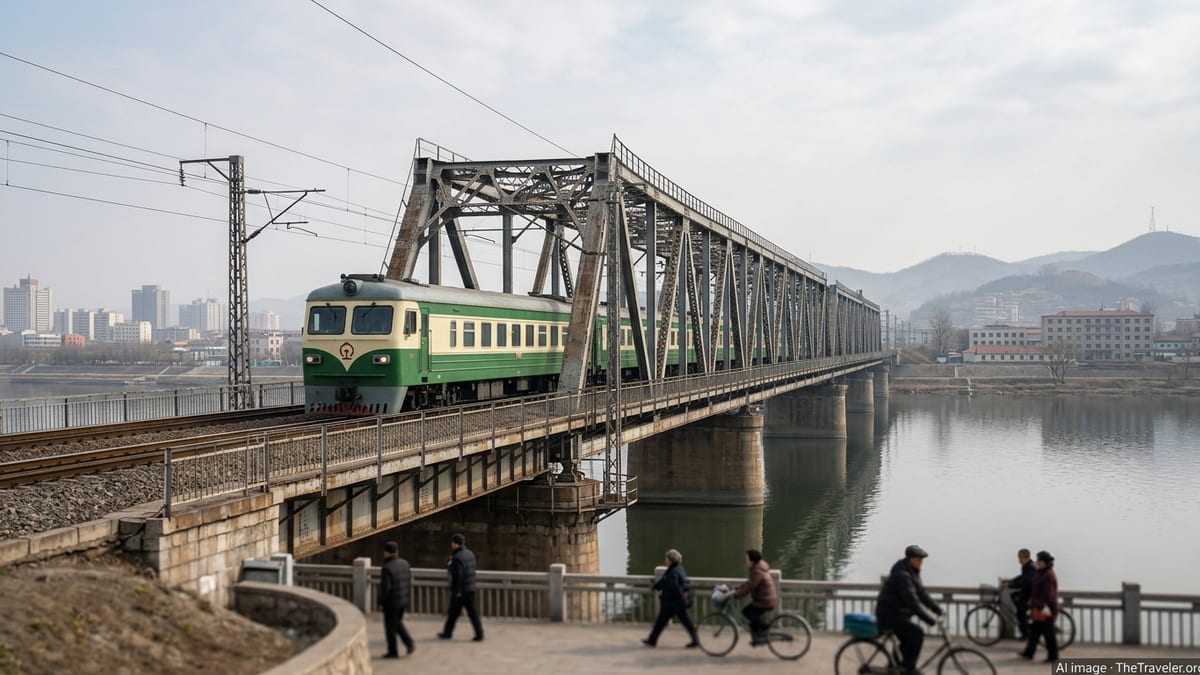
A Long-Suspended Lifeline Rolls Again
China’s rail authorities and state media reports indicate that international passenger trains between Beijing and Pyongyang resumed operations on March 12, 2026, after a six-year suspension triggered by the Covid-19 pandemic. Services on the flagship Beijing–Pyongyang route are scheduled several times a week, complemented by a daily connection between the Chinese border city of Dandong and the North Korean capital.
The move restores a historic corridor that had long been a favored route for diplomats, business travelers, aid workers and highly controlled tour groups heading into the Democratic People’s Republic of Korea. Prior to the shutdown in early 2020, the through train from Beijing was one of the most visible symbols of the limited connectivity between North Korea and the outside world.
Current timetables published by Chinese rail outlets suggest an overnight journey, with trains departing Beijing in the late afternoon and arriving in Pyongyang the following day. Only a small portion of the train’s consist is reportedly being used for passengers, underscoring that this is a cautious reopening rather than a full-scale return to pre-pandemic traffic levels.
Publicly available information also shows that tickets are, for now, being sold mainly within China and largely offline, a further indication that capacity is targeted at specific categories of travelers rather than opening the floodgates to general international tourism.
Tourism Still Tightly Controlled
Although the resumption of trains might suggest a broader opening, recent coverage by international and specialist North Korea travel outlets stresses that tourism access remains tightly controlled. North Korea restarted limited tourism in stages beginning in late 2024 and 2025, initially focusing on specific regions and carefully vetted group travel.
Reports indicate that Russian tourists were among the first foreign visitors allowed back for sightseeing after the pandemic, a pattern that continued into 2024 and 2025 as Moscow and Pyongyang deepened political and economic ties. By contrast, large-scale Chinese tour group traffic, which once accounted for the vast majority of foreign visitors, has not yet returned to pre-Covid norms.
Recent developments have also underscored how unpredictable access can be. Travel operators reported that the 2026 Pyongyang Marathon, a marquee event that typically attracts hundreds of foreign amateur runners and spectators, was canceled at short notice despite strong interest. For many in the industry, this has reinforced the perception that any reopening to tourism remains subject to abrupt policy changes in Pyongyang.
For now, many analysts describe the resumed trains primarily as a mechanism for officials, businesspeople and limited categories of approved passengers rather than a clear signal that the country is ready to welcome large numbers of foreign leisure travelers.
Implications for Would-Be Travelers
The reactivation of passenger rail between Beijing and Pyongyang nonetheless alters the practical map for future travel planning. Before Covid-19, overland journeys from China into North Korea were a niche but sought-after option for travelers seeking to combine Chinese itineraries with carefully choreographed tours inside the country. The restored services revive that possibility, at least on paper.
However, publicly available guidance from specialist tour agencies stresses that individual travelers cannot simply buy a ticket and enter North Korea independently. Visits still require pre-arranged itineraries with licensed operators, approved visas and strict adherence to local regulations, regardless of whether a visitor arrives by plane or train.
Travel advisories issued by several governments remain highly restrictive, warning of the absence of consular support, severe limits on freedom of movement and expression, and the possibility of sudden border closures. These notices have not been significantly relaxed in response to the latest rail developments, reflecting the gap between transport connectivity and genuine tourism openness.
Prospective visitors who hope to ride the Beijing–Pyongyang train as part of an itinerary are therefore being advised, in publicly available materials, to treat the new service as a potential option rather than a guaranteed feature, and to plan for flight alternatives in case of schedule changes or renewed suspensions.
Regional Signals and Economic Stakes
The timing of the rail restart is also being viewed through a wider geopolitical lens. Reports in regional media note that the first Beijing–Pyongyang departures coincide with renewed messaging about close ties between China and North Korea, including statements highlighting “friendly neighbor” relations and expanded economic cooperation.
Rail connectivity gives both sides practical benefits. For North Korea, the trains offer an essential channel for trade and the movement of personnel, particularly as the country remains largely cut off from global aviation networks and under heavy international sanctions. For China, the corridor reinforces Beijing’s role as Pyongyang’s main gateway to the world and signals a degree of confidence in health controls and border management.
There are also downstream tourism and services implications for Chinese border regions such as Dandong, which previously saw a modest but noticeable influx of international and domestic travelers using North Korea tours as part of broader itineraries. Local economies that built businesses around river cruises, train-spotting vantage points and day trips themed around the border may see renewed interest if cross-border movements stabilize.
At the same time, analysts quoted in regional coverage caution that any economic windfall tied directly to North Korea-bound tourism is likely to be modest and uneven, particularly while access for most foreign nationals remains constrained and subject to last-minute changes.
A Cautious Opening, Not a Tourism Surge
For now, the return of the Beijing–Pyongyang passenger train appears to mark the start of a gradual normalization of transport links rather than an immediate boom in tourism. Observers of North Korea’s controlled reopening note that the government has so far favored incremental steps, such as selective tour programs, new coastal resort facilities and tightly managed events, while maintaining the capacity to halt flows quickly.
Travel industry commentary suggests that once North Korea signals a broader reopening to international leisure travel, the restored rail line could become an attractive alternative to flying, especially for travelers looking to combine multi-country rail journeys across Northeast Asia. Sleeper compartments, slower speeds and the symbolic crossing of the Yalu River by train have historically appealed to a subset of adventure-focused visitors.
Until that moment arrives, the restarted train is best understood as a barometer of North Korea’s evolving comfort level with cross-border movement, rather than a clear green light for mass tourism. Its operation will be watched closely by tour operators, regional governments and would-be travelers alike, all looking for signs that one of the last great outliers on the global tourism map is ready to open its doors a little wider.