

More news on this day
New passenger rail links between China and North Korea in early 2026 are reviving one of Asia’s most politically sensitive borders, creating rare opportunities for tightly controlled train journeys into a country that has been largely sealed off to foreign visitors for years.
Get the latest news straight to your inbox!
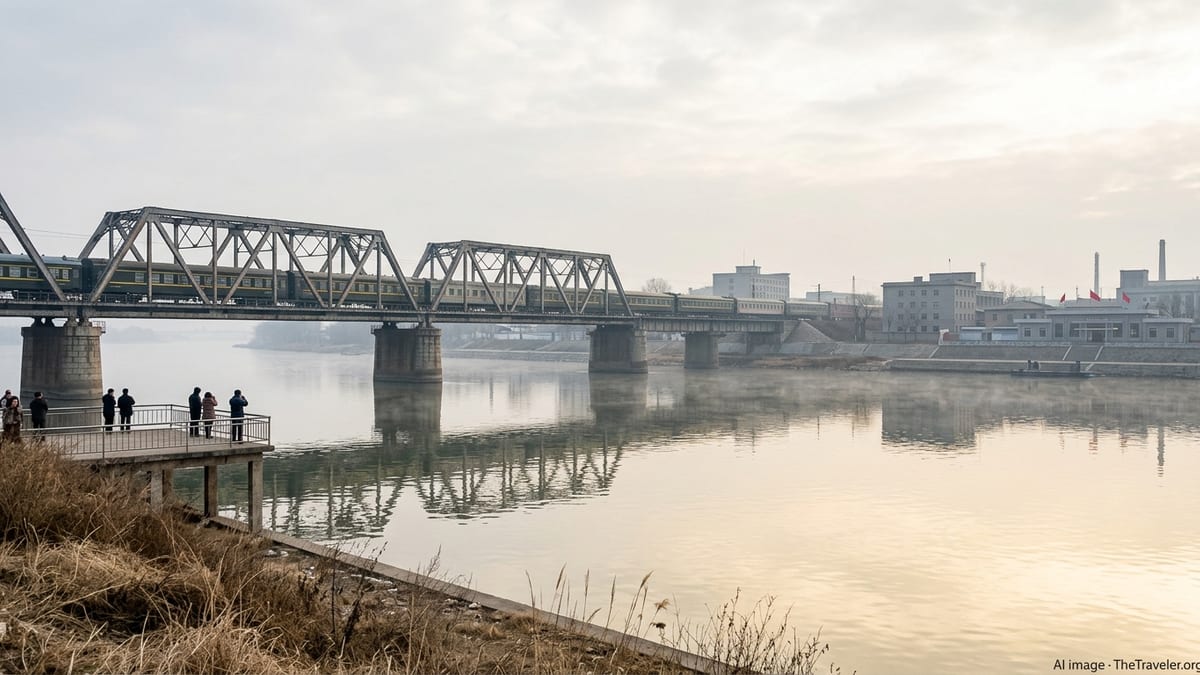
A Gradual Return of Cross-Border Rail Traffic
According to publicly available information from Chinese railway authorities and regional media, international passenger trains between Beijing, the border city of Dandong and Pyongyang are being restored in stages in March 2026. These services, halted during the pandemic and subsequently limited to cargo runs, are widely viewed as a significant step in normalizing cross-border movement along the China–North Korea frontier.
Reports indicate that the resumed trains are currently focused on facilitating travel for North Korean nationals, officials, aid workers and a narrow group of preapproved visitors rather than opening the door to mass tourism. However, the mere reinstatement of scheduled passenger services is drawing attention from travelers and tour operators who have long treated North Korea as one of the final frontiers of organized, highly restricted travel.
Travel industry commentary suggests that these trains could become the backbone of new itineraries built around overland journeys from China into North Korea, echoing the pre-2020 era when a limited number of foreign tourists rode overnight services from Beijing to Pyongyang. For now, expectations remain modest, but the symbolism of trains once again crossing the Yalu River is hard to ignore.
Signals From North Korea’s Evolving Tourism Policy
North Korea’s approach to tourism has shifted repeatedly since its borders were closed in early 2020. Published coverage in 2024 and 2025 described tightly controlled pilot openings for small Russian tour groups and foreign tour agency staff, often routed through northeastern special economic zones rather than the capital. In some periods, those openings were followed by renewed pauses, underscoring the experimental nature of the policy.
Open-source reporting on tourism in North Korea indicates that, even before the pandemic, all foreign visitors were required to join guided tours with fixed itineraries approved in advance. That framework remains intact today. There is no indication that independent travel will be permitted, and there are still frequent references to temporary suspensions, last-minute changes and heightened security checks around sensitive dates.
Analysts who track the country’s tourism infrastructure note that, despite the stop-start policy, North Korea has continued to invest in coastal resorts and transport projects such as the Wonsan Kalma tourist zone and its tram system, which opened in 2025. These developments suggest the leadership continues to see carefully managed tourism, particularly from neighboring China and Russia, as a potential source of foreign currency when conditions are deemed favorable.
China as the Primary Gateway for Prospective Visitors
China remains the dominant gateway for any traveler hoping to reach North Korea, and that role appears to be strengthening again in 2026. Historically, most foreign visitors, and the vast majority of Chinese tourists in particular, entered via Beijing or the border hubs of Dandong and Tumen. The resumption of international passenger trains and limited commercial flights between Beijing and Pyongyang fits into this pattern of China acting as the logistical and political bridge.
Publicly available commentary in Chinese media has framed the restoration of rail links as a way to deepen economic and “people-to-people” exchanges along the border. Travel-focused discussions within China also highlight the appeal of combined itineraries that pair northeastern Chinese cities with a short, highly choreographed visit across the frontier, mirroring pre-pandemic tour products that offered tightly timed excursions into selected North Korean cities.
For travelers outside the region, specialized agencies based in Beijing and other Chinese cities have traditionally acted as intermediaries, handling visas, approvals and ticketing for North Korea-bound trains. Industry observers expect that any future expansion of access in 2026 will again flow primarily through these channels, rather than through direct consumer sales by North Korean entities to overseas tourists.
Historic Train Journeys in a New Geopolitical Context
The experience of crossing from China into North Korea by rail has long carried a historical and political weight that goes beyond a typical international border. Lines hugging the Yalu and Tumen rivers pass landscapes marked by the legacy of Japanese colonial rail building, the Korean War and decades of Cold War confrontation. For many travelers who took these services before 2020, the slow approach into North Korean territory, accompanied by changes in uniforms, landscapes and station signage, formed a key part of the journey’s allure.
In 2026, the prospect of similar historic train journeys is reemerging against a different backdrop. North Korea has deepened its ties with Russia and remains under extensive international sanctions, while China is emphasizing regional connectivity through rail and port projects. Within this context, cross-border trains can serve multiple purposes at once: practical links for trade and labor, symbolic gestures of alliance, and tightly curated corridors for a small number of foreign visitors.
Early accounts from regional travelers and railway enthusiasts suggest that those who do secure permission to ride these trains may find a mixture of the familiar and the new: refurbished rolling stock on the Chinese side, upgraded border facilities, and the same strict photography and movement restrictions once the train reaches North Korean stations. The essential character of the journey, however, remains that of entering one of the world’s most controlled environments.
What Prospective Travelers Should Understand in 2026
Despite the renewed movement along the China–North Korea rail corridor, publicly available information indicates that access for foreign tourists in 2026 is still limited, conditional and subject to abrupt change. Tour operators and analysts consistently caution that itineraries can be revised at short notice, certain nationalities may face additional restrictions, and some regions, including parts of Pyongyang, have periodically remained off limits even during partial reopenings.
Prospective visitors are advised in travel commentary to treat any advertised tours as highly provisional until all clearances, visas and transport arrangements are formally confirmed. Insurance coverage, emergency contingencies and an understanding of local laws and customs are presented as essential considerations, given that North Korea’s legal and political environment differs markedly from that of neighboring countries.
For those prepared to navigate these uncertainties, the resumption of passenger trains between China and North Korea in 2026 represents a rare moment. It offers the possibility, though not a guarantee, of joining some of the first organized rail journeys along a border that has been largely off-limits for years, and experiencing first-hand one of the most closely watched frontiers in contemporary travel.