

More news on this day
A powerful February blizzard has thrown air travel into chaos across the northeastern United States, with more than 5,342 flight cancellations and 610 schedule disruptions reported at New York’s John F. Kennedy and LaGuardia airports, Boston Logan and Newark Liberty on Monday, leaving thousands of passengers stranded across the United States, Canada and key transatlantic corridors.
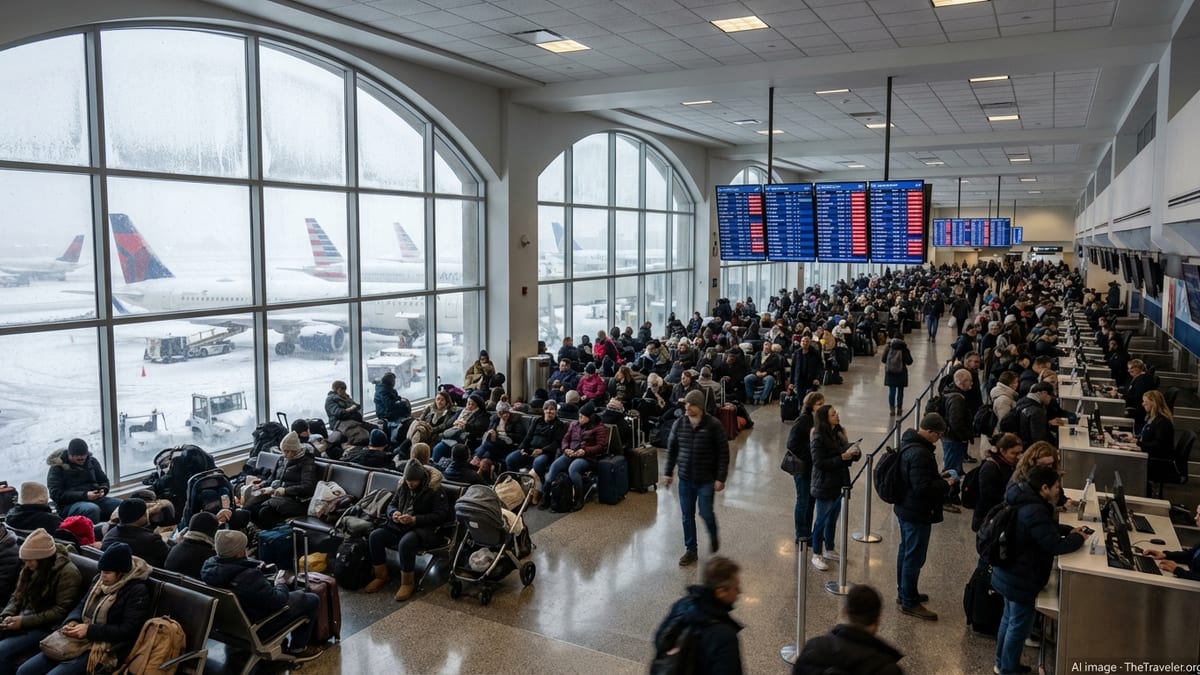
Blizzard Slams Northeast and Paralyzes Major Air Corridors
The latest in a series of severe winter systems, the February 2026 blizzard swept into the New York and New England region late Sunday, February 22, before intensifying through Monday, February 23. The storm delivered heavy snow, whiteout conditions and ferocious winds that rapidly pushed four of the region’s busiest airports toward operational standstill.
By Monday afternoon, aviation data providers were tracking more than 5,000 cancellations nationwide tied to the system, concentrated at John F. Kennedy International, LaGuardia, Boston Logan and Newark Liberty. Weather forecasters warned of snowfall totals approaching 60 centimeters in some metropolitan areas, with coastal flooding and near zero visibility compounding the risk to aircraft operations on approach and departure.
Authorities stressed that the bulk of cancellations were proactive safety measures, not last minute scrambles. Carriers and air traffic controllers began scaling back schedules over the weekend, once it became clear that strong crosswinds, low clouds and rapidly changing runway conditions would make safe, efficient operations nearly impossible during the peak of the storm.
Still, for travelers already on the move or connecting through the Northeast, the effect was the same: trips abruptly halted, itineraries shredded and terminals packed with passengers seeking information, vouchers and scarce alternative routes.
Where the Disruptions Hit Hardest: JFK, LaGuardia, Newark and Boston
Among the four primary hubs, John F. Kennedy International and LaGuardia in New York City bore the brunt of Sunday’s early wave of cancellations, with some terminals operating at a fraction of their normal departures and arrivals. Airlines trimmed schedules further overnight, leaving Monday’s boards at both airports dominated by red cancellation notices and extended delays.
At Newark Liberty, which sits directly in the storm’s wind corridor, operators reported hundreds of cancellations on Sunday alone, followed by a thinning schedule into Monday as airlines attempted to reposition aircraft out of harm’s way. Ground stops, where flights are held at their origin before departure, were periodically implemented to prevent gridlock on taxiways and in holding patterns above the airport.
Boston Logan, a critical link for both domestic and transatlantic services, saw sweeping suspensions of operations as the storm intensified over coastal New England. Delta Air Lines and other major carriers signaled they expected to halt most or all flights at Logan for extended stretches, a rare step that underscored both the severity of the weather and the fragility of winter operations at congested, weather prone hubs.
Together, the four airports form the spine of the United States’ northeastern air network. When they seize up, knock on effects ripple rapidly across the country, stranding passengers in cities that are not directly experiencing severe weather but depend heavily on connections through New York and Boston.
Ripple Effects Across the United States, Canada and Transatlantic Routes
While the storm’s bullseye remained fixed on the northeastern seaboard, its aviation impact radiated far beyond. Flight disruptions cascaded across domestic networks, affecting departures from the Midwest, South and West Coast that were scheduled to route through the affected hubs. Even airports under clear blue skies saw mounting cancellations as aircraft scheduled to arrive from the Northeast never left their gates.
In Canada, major gateways including Toronto and Montreal reported growing numbers of cancellations and delays on cross border services to New York and Boston. Airlines trimmed schedules rather than risk funneling more aircraft and travelers into hubs where operations were already severely constrained. Passengers on popular business and leisure routes between Canada and the northeastern United States faced multi day disruptions, with many rebooked later in the week.
The storm also punched a sizable hole in transatlantic schedules. Boston and New York’s JFK airport together handle a dense portfolio of flights to London, Dublin, Paris, Amsterdam and other European centers. With runways intermittently closed and ground operations hampered by blowing snow and icy conditions, carriers scrubbed or consolidated numerous overnight and daytime crossings. Some long haul aircraft were rerouted to secondary European or Canadian airports, while others remained parked on distant ramps waiting for a safe window to depart.
Travelers bound for Europe, as well as those returning to North America, found themselves in a patchwork of delays, diversions and last minute hotel stays. Aviation authorities warned that even once the storm passed, aircraft and crew imbalances on both sides of the Atlantic would continue to distort timetables for days.
How Airlines Responded: Waivers, Proactive Cancellations and Limited Rebooking Options
Confronted with ominous forecasts and growing warnings from the National Weather Service, major US carriers adopted what has become a standard playbook for large scale winter events. By late Saturday and into Sunday, airlines including Delta, American, United, JetBlue and Southwest began issuing flexible travel waivers allowing passengers destined for affected airports to change itineraries without incurring standard fees or fare differences on select dates.
In parallel, operations control centers started proactively canceling blocks of flights ahead of the heaviest snow and wind. Carriers argued that scrubbing flights early, rather than waiting for conditions to deteriorate, helped avoid dangerous situations in the air and on the ground, while reducing the number of travelers trapped in aircraft waiting out extended ground holds or deicing delays.
Yet for many customers, exercising those waivers proved challenging. With so many passengers seeking to move trips earlier or push them later in the week, remaining seats on alternative flights quickly evaporated. In some cases, travelers reported being offered rebooking options three or four days after their original departure date, especially on popular cross country and international routes.
Budget conscious flyers who had opted for basic economy or nonrefundable tickets sometimes encountered stricter limits, depending on the airline and particular fare rules. While carriers relaxed many penalties under the storm related waivers, they did not always guarantee hotel stays or meal coverage for those stranded overnight, leading to a patchwork of experiences in terminals from coast to coast.
Inside the Terminals: Stranded Passengers, Long Lines and Limited Answers
Inside JFK, LaGuardia, Newark and Boston Logan, scenes on Monday reflected the familiar strain of a major weather disruption. Travelers sprawled across terminal floors and clustered around scarce power outlets, juggling work obligations and family updates as they refreshed airline apps and departure boards in search of updates.
Snaking queues formed at check in counters and service desks, where overburdened staff tried to reroute passengers whose flights had been canceled multiple times. Many reported waiting hours to speak with an agent in person or via customer service hotlines. Automated rebooking tools within airline mobile apps handled a significant share of changes, but not all itineraries or ticket types could be modified digitally, pushing the heaviest cases back to human staff.
Airport concessions remained open, but as the day wore on some locations ran low on prepared food items and bottled water. Local transportation around the airports also suffered, with heavy snow and hazardous roads slowing taxis, rideshare services and public transit links. For visitors unfamiliar with the area, simply getting to and from hotels or alternative accommodation became a logistical challenge.
Despite the frustration, airport authorities and airline employees reported generally calm behavior from most passengers, many of whom acknowledged that the ferocity of the storm left few realistic options. Still, tempers occasionally flared as travelers confronted the prospect of missed weddings, business meetings, vacations and connecting cruises that could not be rescheduled.
What Travelers Need to Know Right Now
For those with flights scheduled into or out of the Northeast through at least Tuesday, February 24, travel experts emphasize one message above all: check your flight status repeatedly and do not assume a ticket means a confirmed seat. Schedules remain highly fluid as airlines juggle aircraft, available crew and rapidly changing runway conditions.
Passengers are urged to use official airline apps and text alerts as primary sources for real time updates, rather than relying solely on third party booking sites or generic flight trackers. When a cancellation occurs, acting quickly is essential. Available seats on later flights or alternative routes are often snapped up within minutes, particularly on high demand business and transatlantic services.
Travelers who no longer need to complete their trips should consider canceling proactively, even on nonrefundable tickets, as many carriers are temporarily relaxing rules to issue travel credits. Those who must travel regardless of delays should prepare for extended airport stays by packing medications, chargers, snacks and essential toiletries in carry on bags rather than checked luggage.
Experts also recommend monitoring local conditions at both origin and destination, as a cleared runway does not guarantee smooth passage to or from the airport. Road closures, suspended commuter rail service and limited taxi availability can make the last mile of any journey the most difficult portion during and immediately after a major winter storm.
Your Rights When Flights Are Canceled or Heavily Delayed
Despite the scale of the current disruption, passenger rights in the United States remain a patchwork heavily dependent on individual airline policies. In general, when a flight is canceled for weather related reasons, carriers are obligated to offer a refund if a passenger chooses not to travel, even on nonrefundable tickets. However, they are not automatically required to provide hotel rooms, meals or ground transportation.
Many airlines do extend goodwill accommodations during large events, especially if travelers are stranded away from home, but these offers can vary widely and are often prioritized based on factors such as elite status or fare class. Some travelers may receive hotel vouchers and meal credits, while others are directed to seek reimbursement later or to make their own arrangements entirely.
When delays or cancellations are within an airline’s control, such as mechanical issues or crew scheduling problems, obligations can be stronger, though interpretations often vary. The current storm falls clearly into the weather category for most flights, meaning that travelers should read the fine print of their carrier’s customer service commitments to understand what they can reasonably expect.
Travel insurance, whether purchased separately or included as a credit card benefit, can play a critical role in offsetting out of pocket costs for hotels, meals and alternative transportation. Policyholders are urged to document all receipts, maintain records of cancellation notices and file claims promptly once travel is complete or clearly abandoned.
How Long Will It Take for Schedules to Recover
Even as snow bands begin to weaken and skies eventually clear, the air travel system in the Northeast will not return to normal instantly. Airlines face the complex task of repositioning aircraft and crews that were displaced to safer airports ahead of the storm. Some jets are parked hundreds or even thousands of miles from their usual routes, and pilots or flight attendants may have reached duty time limits that require mandatory rest.
Industry analysts warn that schedule irregularities could persist for several days beyond the storm’s peak. Early morning banked departures are particularly vulnerable, because they rely on aircraft and crew that would normally arrive the previous evening. If those flights were canceled, the ripple effect can leave gaps in the schedule that are difficult to fill quickly.
Passengers already holding tickets later in the week should monitor developments but need not necessarily rush to change plans. If weather forecasts hold, runways at JFK, LaGuardia, Newark and Boston Logan are expected to be cleared and operating at higher capacity as plows, deicing crews and ground operations return to full strength. However, individual flights may continue to see schedule adjustments as airlines rebuild networks and work through backlogs of stranded travelers.
For now, industry experts suggest that anyone with flexible plans consider postponing nonessential travel through the affected hubs until airlines have a chance to stabilize operations. For those who must fly, patience, preparation and a clear understanding of available rights and options remain the most important tools for navigating one of the most disruptive winter storms of the season.