

More news on this day
A record-breaking winter storm that meteorologists are already calling the Blizzard of 2026 has buried the northeastern United States in snow, crippling schools, air travel, major highways and power restoration efforts from the mid-Atlantic to New England.
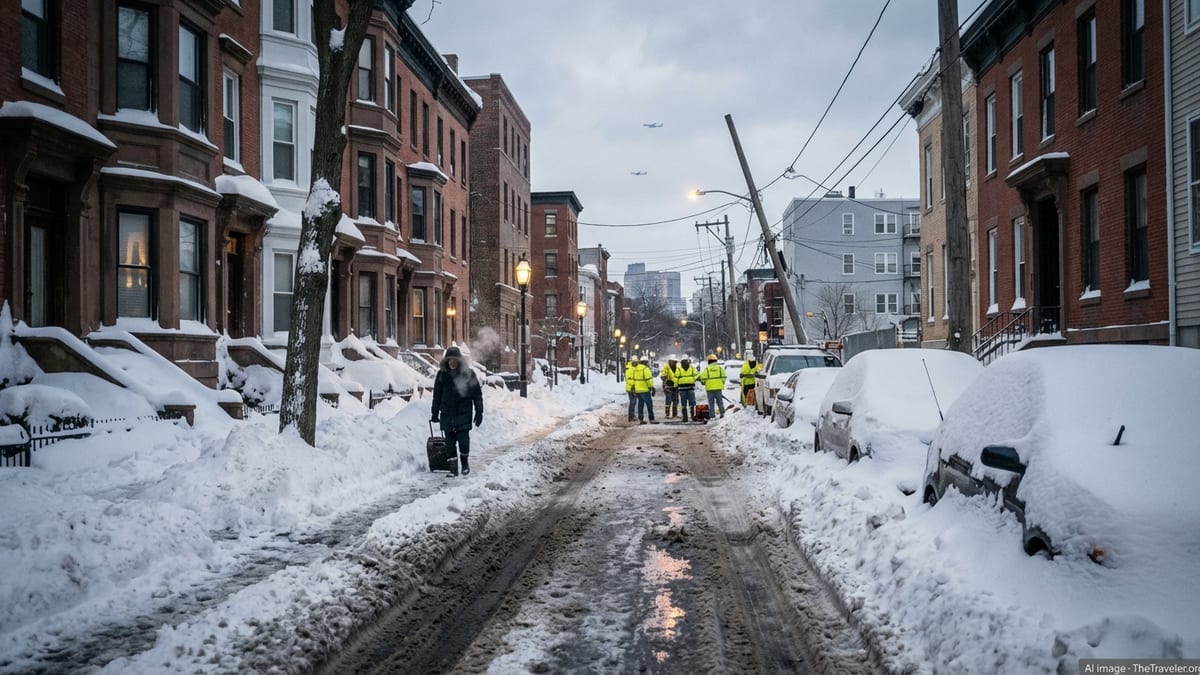
Historic Snowfall Shatters Records Across the Northeast
The February 2026 North American blizzard intensified into a powerful coastal storm over the weekend before peaking on Monday, February 23, dumping two to three feet of snow along a 700-mile stretch from Maryland to Maine. Forecasters say the system will likely rank among the most disruptive winter storms in modern records for the corridor that includes New York City, Boston, Philadelphia and Providence.
In Providence, Rhode Island, preliminary totals surpassed 37 inches at the airport, setting both single-day and two-day snowfall records and eclipsing infamous storms in 1978 and 1996. Parts of eastern Massachusetts and coastal New England reported similar totals, with wind gusts approaching hurricane strength along exposed capes and islands. In New York and New Jersey, widespread totals over two feet snarled urban streets and suburban communities alike, leaving cars entombed and residential neighborhoods cut off until plows could catch up.
Meteorologists say the storm “bombed out” off the Atlantic coast, with pressure dropping fast enough to qualify as a bomb cyclone, fueling bands of intense snowfall that produced whiteout conditions for hours. The National Weather Service warned that snowfall rates of 2 to 3 inches per hour combined with gusts above 60 miles per hour made travel “nearly impossible” at the height of the storm and contributed to dangerous wind chills for anyone stranded outdoors.
Although the heaviest snow has now pushed into Atlantic Canada, forecasters caution that lingering gusty winds, dangerously low visibility in blowing snow and refreezing slush will continue to pose hazards on untreated surfaces through at least late Tuesday, February 24.
Schools Close En Masse as Districts Struggle With Cleanup
From Washington’s northern suburbs to northern New England, school districts enacted sweeping closures and remote-learning days as the blizzard reached full strength. On Monday, blanket shutdowns left millions of students at home amid travel bans and impassable neighborhood streets. Some major districts in New York and New Jersey shifted to remote instruction, while others canceled classes altogether amid concerns about teacher commutes and bus operations.
By Tuesday morning, as snowplows made progress on main arteries, the patchwork of responses illustrated just how uneven recovery remains. New York City moved to reopen schools, drawing a mixed reaction from families and educators navigating uncleared sidewalks and reduced subway and bus service. Teachers’ unions in several cities said they would support staff who felt unsafe traveling, highlighting the tension between a desire to restore normal routines and the reality of snarled side streets and limited parking.
In Boston and across much of Massachusetts, many school systems extended closures into at least Wednesday, citing deep snowdrifts around campuses, blocked fire hydrants and concerns over safe student drop-off. Smaller coastal communities that endured both heavy snow and coastal flooding have warned parents to prepare for staggered reopenings as buildings are inspected and heating systems are checked for storm-related damage.
Rural districts from Pennsylvania to Maine face some of the longest delays. With narrow, tree-lined roads and scattered power outages, superintendents say it could take multiple days before school buses can safely navigate hilly routes and before all households regain consistent electricity and internet needed for remote alternatives.
Airports, Highways and Trains Buckle Under Travel Chaos
The travel fallout from the storm has rippled across the country. Airlines grounded operations at major Northeast hubs for much of Monday, triggering a cascading wave of cancellations nationwide. Since Sunday, more than 10,000 flights have been canceled and thousands more delayed as carriers reshuffled crews and aircraft. New York’s LaGuardia and John F. Kennedy airports, Newark Liberty and Boston Logan have been among the hardest hit, with departure boards showing nearly wall-to-wall cancellations during the storm’s peak.
Airline officials say they are prioritizing safety as crews work to clear runways and de-ice aircraft, but warned that recovery will stretch at least several days as they reposition planes and staff stranded across the network. Travelers attempting to reach the Northeast are being urged to monitor airline apps closely, accept waivers for fee-free rebooking where offered and, if possible, postpone nonessential trips until later in the week.
On the ground, governors from Maryland to Maine declared states of emergency at various points as snow intensified, issuing travel bans or strong advisories to keep vehicles off the roads. Major interstates, including portions of I-95, saw jackknifed tractor-trailers and long stretches of gridlock before plows and tow trucks could reach stranded drivers. Even as bans are lifted, transportation departments warn that visibility can drop suddenly in blowing snow and that shoulders remain piled high, leaving little margin for error.
Rail services have also been affected. Amtrak canceled or curtailed dozens of trains along the busy Northeast Corridor, while regional commuter systems scaled back schedules to allow crews to clear tracks and platforms. In the New York region, specialized snow-removal equipment has been deployed to tackle drifts up to 15 feet deep along key lines, but transit agencies caution that delays and crowding are likely as service slowly ramps back up.
Power Outages and Recovery Efforts Strain Local Infrastructure
Perhaps the most enduring impact of the blizzard is the strain on the power grid. At the storm’s peak, more than 600,000 customers across the Northeast lost electricity as heavy, wet snow and ferocious winds snapped tree limbs and brought down distribution lines. Massachusetts and New Jersey have reported some of the highest outage totals, with pockets of Rhode Island, Connecticut and coastal New York also hard hit.
Utility companies have mobilized thousands of lineworkers, including mutual-aid crews from as far away as the Midwest and Southeast, to accelerate restoration. Still, the combination of deep snowbanks, blocked side streets and ongoing gusts has slowed progress. Officials in several states warn that some of the hardest-hit communities, particularly along exposed coastal areas and rural interior towns, may not see full restoration until late in the week.
Emergency shelters have opened in churches, schools and community centers for residents without heat, especially older adults and families with small children. Local officials are urging people who still have power to check on neighbors, clear ventilation pipes and fire hydrants, and use generators only outdoors to avoid carbon monoxide poisoning. Hospitals and critical facilities have switched to backup power where needed and are coordinating closely with utilities to prioritize repairs.
Municipal budgets, already stretched by a series of smaller winter events earlier in the season, will face added pressure from overtime, fuel costs and equipment repairs. Early private estimates suggest that the storm could generate tens of billions of dollars in damage and lost economic activity, driven by shuttered businesses, disrupted supply chains and the sheer cost of snow removal in dense urban centers.
What Travelers and Residents Need to Know Now
For now, officials across the Northeast are united in a simple message: recovery is under way, but normal life will not resume overnight. Travelers with upcoming plans to or through the region this week should expect lingering disruption, from limited flight options and crowded trains to slower-than-usual highway travel. Flexible itineraries, generous connection times and confirmation of ground transport and lodging are essential.
Residents digging out are being urged to pace their efforts, with public health experts warning of heightened risks of heart strain and injury while shoveling deep, heavy snow. Authorities recommend clearing exhaust vents, hydrants and sidewalks while giving plows space to operate and avoiding pushing snow back into newly cleared streets. In coastal neighborhoods, drivers should also watch for hidden ice left behind by earlier flooding.
As temperatures fluctuate around the freezing mark in coming days, refreezing slush and partial meltdowns could create treacherous black ice on sidewalks, stairs and roadways each night and early morning. Local governments are encouraging the use of public transportation where operating, both to reduce congestion and to give snow-removal crews room to work on remaining problem spots.
With another, weaker system forecast to clip parts of the region later in the week, forecasters say the Northeast’s winter is far from over. For travelers, commuters and local residents alike, the Blizzard of 2026 is a stark reminder that even in a well-prepared region, a single record-breaking storm can push schools, transportation networks and power infrastructure to the brink.