

More news on this day
The Northern Territory is intensifying its tourism ambitions with a new long-range strategy that aims to translate its natural and cultural assets into a multi-billion dollar visitor economy by 2032, prioritising high-yield travellers, regional growth and stronger year-round demand across Australia’s Top End and Red Centre.
Get the latest news straight to your inbox!
From 2030 Vision to a 2032 Visitor Economy Roadmap
The latest planning builds on the Northern Territory’s Tourism Industry Strategy 2030, which set an ambition of between roughly three and three-and-a-half billion dollars in total visitor expenditure by the end of this decade. That earlier framework positioned tourism as one of the Territory’s largest employing sectors and a pillar of broader economic diversification beyond resources.
Publicly available updates to the 2030 strategy indicate that, even through volatile pandemic years, the Territory’s tourism sector has edged closer to those long-term expenditure bands. Analysis of recent reporting from the Territory government suggests that overall visitor spend has already surpassed three billion dollars in some years, aided by a rebound in domestic travel and stronger holiday and business events demand.
The new Northern Territory Visitor Economy Strategy 2032, unveiled in late 2025 and due to be fully implemented from mid-2026, is designed to extend that trajectory. While its headline targets are framed around growing annual visitor spending from about 1.5 to 2.2 billion dollars within the life of the plan, it sits alongside the existing 2030 industry vision that models a three billion dollar tourism economy when all segments are taken into account.
Taken together, the overlapping strategies sketch a pathway where incremental gains in overnight stays, length of trip and per‑visitor spend contribute to a sustained multi‑billion dollar tourism footprint across the Territory by the early 2030s.
High-Yield Visitors at the Centre of Growth Plans
A clear thread through both the 2030 and 2032 frameworks is the emphasis on high-yield visitors. Rather than maximising raw arrival numbers, the Territory is targeting travellers who stay longer, spend more on locally delivered experiences and disperse further into regional and remote areas, including Aboriginal communities that choose to participate in tourism.
Strategy documents and supporting commentary highlight premium nature-based itineraries, Aboriginal cultural tourism, multi-day touring, fishing and adventure experiences, and business events as core segments. These markets typically generate higher expenditure per trip through guided tours, hosted cultural activities, bespoke accommodation and associated dining, transport and retail spending.
In practical terms, the emerging 2032 roadmap points to a marketing tilt towards experience-rich packages rather than discount-led campaigns. Investment attraction materials show a focus on lifting the quality of product in key hubs such as Darwin, Katherine, Tennant Creek and Alice Springs, with encouragement for new eco-lodges, small-scale luxury camps, cultural centres and upgraded touring infrastructure that can support premium pricing.
By concentrating on value rather than volume, the Northern Territory is also seeking to manage environmental and cultural pressures. A smaller number of higher-spending visitors is viewed as more compatible with sensitive landscapes and community expectations than a rapid surge in low-cost mass tourism.
Regional Hubs Emerging as Investment and Experience Anchors
Regional growth is another defining feature of the Territory’s tourism push. Policy material linked to both the 2030 strategy and the new visitor economy plan points to Darwin as an international gateway and staging point, but places equal emphasis on strengthening other hubs so that benefits are more widely shared.
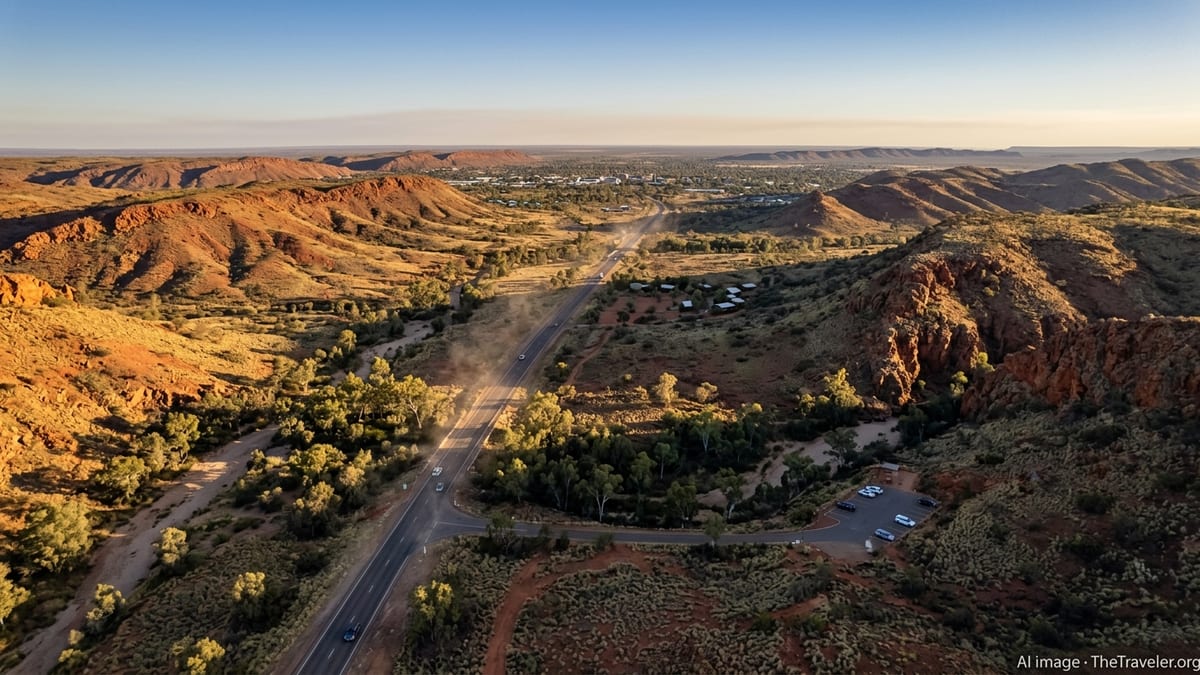
Alice Springs and the broader Red Centre remain central to this approach, with the iconic landscapes of Uluru, Kings Canyon and the West MacDonnell Ranges acting as magnets for international and domestic visitors. Priority projects identified in infrastructure and tourism documents include upgrades to access roads, trail networks, lookouts, and national park facilities aimed at extending stays and encouraging visitors to explore beyond single flagship sites.
In the Top End, Kakadu and Litchfield national parks, Arnhem Land gateways and key fishing regions are highlighted as priority areas for both public and private investment. Recent funding rounds through programs such as visitor experience enhancement grants have supported new interpretive signage, accessible viewing platforms, marina and boat ramp improvements, and refurbishments of small tourism businesses in regional towns.
The 2032 strategy also flags closer alignment between tourism planning and wider infrastructure pipelines. Transport corridors, telecommunications upgrades and regional air connectivity are viewed as enablers of higher-yield tourism, particularly for visitors who seek multi-region journeys linking coastal, desert and cultural experiences in a single trip.
Leveraging the Territory’s Northern Gateway to Asia
The Northern Territory’s geographic position as Australia’s northern gateway to Asia sits at the heart of its tourism growth story. Planning documents describe a renewed effort to tap into short- and medium-haul markets in Southeast and East Asia, with a focus on travellers who are prepared to spend more on immersive experiences rather than brief stopovers.
The 2032 visitor economy framework identifies improved aviation links, stronger integration with national tourism campaigns and tailored partnerships with Asian travel trade as critical levers. Priority segments include high-income independent travellers, small group tours, education visitors and those combining business travel with leisure time in Australia.
Darwin’s role as a defence, resources and logistics hub is expected to continue driving a steady flow of corporate visitors, which the Territory aims to convert into higher-yield stays. Initiatives cited in investment materials include expanded business events facilities, curated pre- and post-conference touring options and efforts to encourage repeat visits that extend beyond capital city limits.
By building reliable air and cruise connectivity and promoting itineraries that showcase both the Top End and Red Centre, the Northern Territory is attempting to position itself as a distinctive alternative to more crowded east-coast destinations for regional travellers seeking nature, culture and open space.
Sustainability, Liveability and Community Benefits as Core Measures
Beyond raw expenditure targets, the Territory’s tourism plans repeatedly frame success in terms of community benefits and long-term sustainability. The visitor economy is presented as a way to support local jobs, small business viability and liveability in remote towns and communities that rely on diverse income streams to thrive.
Strategy material emphasises protecting natural and cultural heritage as tourism volumes grow. This includes support for joint management of national parks, co-designed visitor experiences with Traditional Owners, and projects that improve environmental performance such as renewable energy adoption and better waste and water management at high-traffic sites.
The 2032 roadmap also links visitor growth to broader quality-of-life outcomes for residents. Investments in events, cultural venues, trails and waterfront precincts are framed as dual-purpose assets that enhance local amenity while meeting visitor expectations, helping to make regional centres more attractive places to live, work and invest.
As the Territory moves toward the early 2030s, public reporting indicates that tourism authorities intend to track not only visitor numbers and spending, but also measures such as regional dispersal, repeat visitation, Indigenous participation and industry resilience. The multi-billion dollar tourism ambition is therefore being coupled with a broader objective to build a distinctive, high-yield and sustainable visitor economy that reflects the Northern Territory’s character and aspirations.