

More news on this day
Northwest Arkansas National Airport, the rapidly growing hub better known as XNA, is facing renewed attention from travelers as fresh data on delays and cancellations across the United States highlights how even mid-sized regional airports are feeling the strain of a stressed national air travel system.
Get the latest news straight to your inbox!
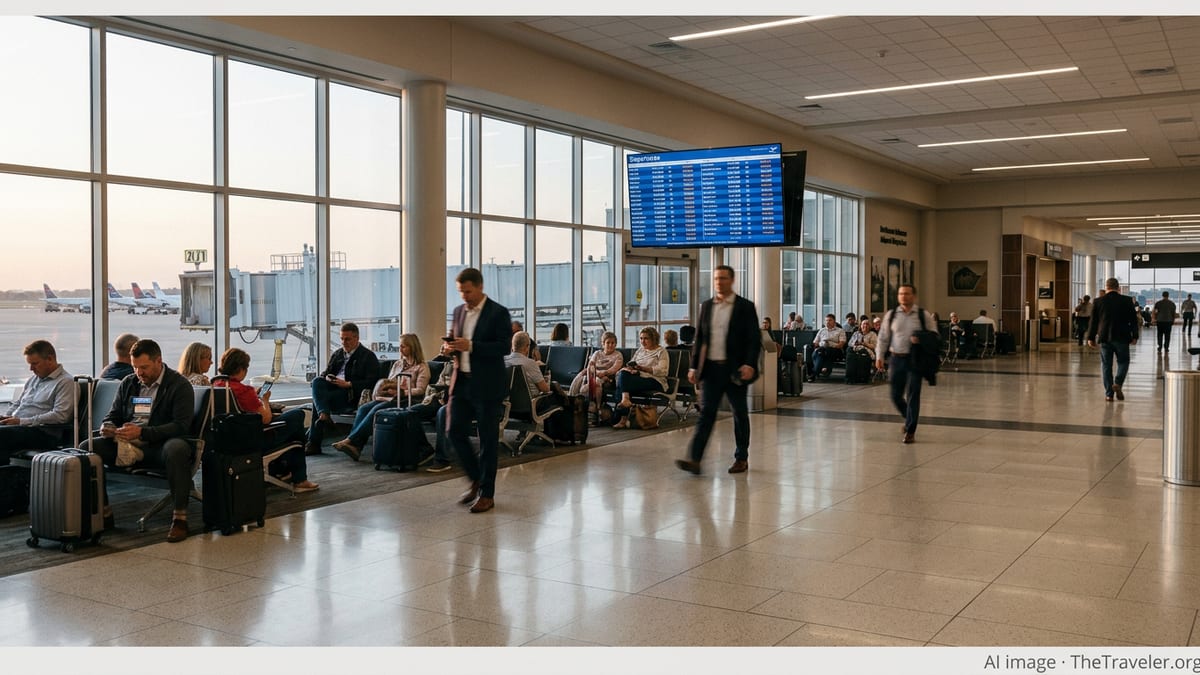
A Fast-Growing Airport Caught in a National Bottleneck
Northwest Arkansas National Airport has expanded quickly in recent years, surpassing Little Rock in 2025 to become Arkansas’s busiest airport by passenger volume. Publicly available federal planning documents list nearly one million annual enplanements and outline more than fifty million dollars in development projects, underscoring how central XNA has become for business and leisure travel in the region.
With growth has come pressure. XNA is heavily reliant on connections through some of the country’s most delay-prone hubs, including Dallas Fort Worth, Chicago O’Hare and Atlanta. Industry analyses of 2025 performance show these large airports near the top of national rankings for disruptions, meaning a missed connection or late inbound aircraft elsewhere can easily cascade into delays or cancellations on flights serving Northwest Arkansas.
Travel statistics also suggest that Arkansas travelers pay a relatively high financial price when delays occur. One national study of 2025 flight disruptions found Arkansas among the most expensive states in terms of average costs tied to cancellations and long delays, a reflection of the limited route options and frequent need for rebooking through distant hubs.
All of this has made trip planning from XNA more complicated at a time when demand from the region’s corporate and tourist sectors remains strong year-round.
The New Delay List: Where XNA Stands Now
A recently updated ranking of airports by typical delay paints a nuanced picture for Northwest Arkansas National Airport. In the latest combined delays table compiled from global flight-tracking data, XNA appears around the middle of the pack, with an average delay of about 21 minutes and a comparatively low recorded cancellation rate.
That placement means XNA is not among the worst U.S. airports for disruptions, but it is also far from the best. Other analyses released in early 2026 highlight major hubs such as Dallas Fort Worth, Newark Liberty, Ronald Reagan Washington National and several Florida airports as having significantly higher shares of delayed or canceled flights. By contrast, XNA’s challenge is less about extreme statistics on its own property and more about its dependence on those larger, more congested nodes in the network.
For travelers, the new list is a reminder that being based at a mid-sized regional airport does not provide immunity from the broader delays that dominate national rankings. A flight leaving XNA on time can still arrive late if it is headed into a chronically congested hub, or if the same aircraft arrived late from another city earlier in the day.
In practical terms, XNA’s current position on delay lists suggests a moderate but persistent risk of schedule disruption. Passengers may not see the extreme gridlock associated with some coastal or mega-hub airports, yet they still face a meaningful chance of missed connections and extended travel days, particularly on tight itineraries.
Weather, Infrastructure and Airspace: Why Flights Can Slip Off Schedule
Seasonal weather remains one of the biggest factors behind unpredictable operations in and out of Northwest Arkansas. The region sits on the edge of major storm tracks that can bring severe thunderstorms in warmer months and freezing precipitation in winter. National aviation guidance for the 2025 to 2026 winter season has emphasized the likelihood of ground delay programs, reroutes and ground stops across affected regions as air traffic managers respond to low visibility, icing and strong winds.
Even when skies are clear over XNA, disruptive weather elsewhere can ripple through its schedule. Thunderstorms over Texas or the Midwest, snow events in Chicago or the Northeast, and coastal storms affecting East Coast hubs often lead to late-arriving aircraft. Because XNA’s route map leans heavily on a limited number of daily frequencies to major hubs, the delay of a single aircraft can affect several departures in short succession.
Infrastructure and airspace constraints also play a role. As a small-hub commercial airport with a compact airfield, XNA can move traffic efficiently in normal conditions, but it has less built-in flexibility than the country’s largest airports when things go wrong. Construction projects outlined in regional transportation plans, including improved surface access to the terminal, are intended to support future growth but can add near-term complexity for passengers trying to reach flights during peak periods.
Compounding these factors are broader staffing and system-wide challenges. Industry coverage over the past year has repeatedly pointed to tight air traffic control staffing and strain at key facilities, leading to slower flow rates and periodic metering of departures, especially during high-demand travel windows.
How Travelers From Northwest Arkansas Can Reduce Their Risk
While no traveler can eliminate the possibility of a delay or cancellation, recent data and expert guidance suggest several strategies that are particularly relevant for those flying from XNA. Early morning departures tend to be less vulnerable to rolling delays, because aircraft and crews are already on site and the national system has not yet accumulated a day’s worth of disruptions.
Choosing longer connection times can also make a significant difference. With the latest lists identifying certain hubs as frequent sources of disruption, allowing at least 90 minutes to two hours for domestic connections through those airports can provide a buffer if inbound flights are late. Travelers with flexibility may want to favor routes that avoid the most delay-prone hubs altogether, even if that means a connection through a less familiar city.
Another important step is close monitoring of flight status through airline apps and airport information displays. Published coverage of disruptions in recent seasons stresses that aircraft assignments and departure times can shift quickly, and notifications about rebookings or gate changes often arrive first through digital channels.
Finally, travelers from Northwest Arkansas may want to review travel insurance options that specifically address delays, missed connections and cancellations. Studies of 2025 disruptions suggest that ancillary costs such as hotels, meals and replacement tickets can climb quickly in smaller markets where alternative same-day flights are limited, making coverage more valuable for certain trips.
What This Means for Spring and Summer Travel Plans
As the United States moves from late winter into the busy spring break and summer travel seasons of 2026, the combination of strong demand and lingering operational challenges points to another year of uneven reliability. For XNA, the picture is mixed: the airport itself does not currently rank among the country’s most severe hotspots for disruption, yet its heavy reliance on large and often congested hubs keeps travelers exposed to problems originating hundreds of miles away.
Publicly available planning documents indicate that Northwest Arkansas National Airport will continue pursuing infrastructure improvements and capacity enhancements over the coming years, aimed at supporting its growing role in the regional economy. In the near term, however, the most useful tools remain in the hands of passengers, who can adjust itineraries, build in buffers and stay informed as conditions evolve.
For anyone flying in or out of Northwest Arkansas in the coming months, the latest national delay lists serve as a cautionary backdrop rather than a verdict. The data shows that while XNA is not at the top of the nation’s worst-offender rankings, travelers should still approach their plans with added flexibility, realistic expectations and a readiness to adapt when the system falters.