

More news on this day
Travelers flying through Northwest Arkansas National Airport in mid-March 2026 are encountering a perfect storm of national weather chaos, federal cutbacks, and new data on chronically delayed routes that is raising the risk of missed connections, abrupt schedule changes, and even last-minute cancellations.
Get the latest news straight to your inbox!
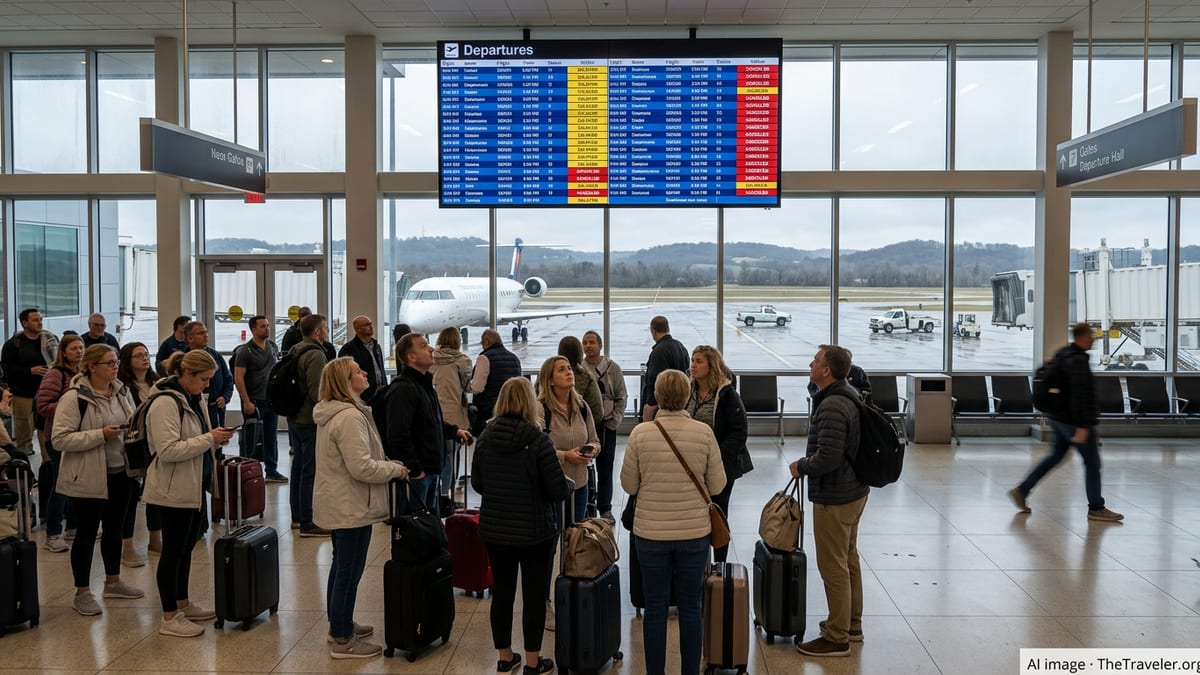
Regional Weather Chaos Ripples Into Northwest Arkansas
Northwest Arkansas National Airport, known by its code XNA, sits near the heart of a Central U.S. weather pattern that has turned volatile again this week. A powerful multi-day storm complex affecting large stretches of the Plains, Midwest, and East is disrupting air traffic across the country, with blizzard conditions, ice, and severe thunderstorms complicating flight operations from major hubs to smaller regional fields.
Recent nationwide disruption figures show thousands of delays and hundreds of cancellations across the United States on multiple days in March, particularly at major connection points such as Chicago, Atlanta, Dallas, and Houston. When those large hubs struggle, regional airports like XNA often feel the impact later in the day through rolling delays, missed aircraft rotations, and crews that arrive out of sync with the schedule.
Even when skies over northwest Arkansas appear relatively calm, arriving aircraft may still be subject to reroutes or airborne holding due to congestion or bad weather further up the route. For passengers, that translates into longer-than-expected gate waits and tighter connection times, especially on itineraries that rely on a single daily flight.
With winter storm activity lingering unusually late into the season and severe thunderstorms already flaring in the Lower Mississippi Valley and Southeast, the likelihood of further knock-on effects for XNA departures and arrivals remains elevated throughout the current week.
FAA Constraints and a New Era of Ground Delays
Beyond the weather, structural strains in the U.S. aviation system are adding friction for Northwest Arkansas travelers. Federal data and industry analyses highlight ongoing air traffic control staffing challenges, along with capacity caps at several of the nation’s busiest airports, designed to reduce chronic congestion but also concentrating disruption when demand is high.
According to public FAA delay-mapping information, Northwest Arkansas is currently listed among the South Central airports experiencing moderate departure and arrival impacts, with typical taxi or holding delays of 16 to 45 minutes during affected periods. This places XNA inside a web of managed traffic flows that can change from hour to hour as controllers balance safety, weather, and runway capacity across multiple states.
In practice, that can mean flights that remain on the ground at XNA even when the runway is clear, if there are restrictions en route to a hub such as Dallas Fort Worth or Houston. Conversely, inbound aircraft may be held in the air or slowed earlier in the flight, resulting in late arrivals that compress turnaround times for the next departure from Northwest Arkansas.
Travelers may not see these constraints directly, but they appear in schedules as creeping delays that move from 15 to 30 minutes and then beyond, sometimes culminating in cancellations when crew duty limits or missed slots at onward hubs make the original flight plan unworkable.
The New List: America’s Most Delay-Prone Airports
Adding to the current turbulence is a new national ranking of U.S. airports with the highest proportion of delayed flights based on Department of Transportation performance data. The latest analysis, released in early 2026, identifies Dallas Fort Worth International Airport as the worst large hub in the country for delays, followed closely by several other major connection points.
This fresh “most delayed” list matters for Northwest Arkansas because XNA’s route map is heavily dependent on a handful of big hubs for onward domestic and international connections. Airlines operating from XNA funnel passengers through Dallas Fort Worth, Denver, Chicago, and other major fields that feature prominently in recent disruption coverage.
When an airport that already ranks among the slowest for on-time performance experiences additional strain from storms or staffing limits, the impact on smaller spokes in the network intensifies. Flights between XNA and those hubs can become the first targets for schedule trimming or equipment swaps, since they serve fewer local passengers than the core trunk routes between mega-hubs.
Recent route adjustments have already reduced certain daily frequencies between Northwest Arkansas and Dallas, reflecting both federal traffic caps and airline capacity decisions. Fewer options mean each remaining flight carries more pressure: if one is delayed or canceled, it can be much harder for passengers from XNA to rebook the same day.
Why Your XNA Flight Might Be Delayed or Canceled Today
For passengers on the ground in northwest Arkansas, all of these national forces converge into a handful of practical pain points. First, weather-driven disruptions at big hubs can cascade quickly into XNA’s relatively compact schedule, especially for early-morning departures that depend on aircraft and crews overnighting at larger airports.
Second, air traffic management initiatives such as ground delay programs and reroutes can quietly cap the number of flights that move into and out of congested airspace, even when local skies appear clear. A single constraint at a busy hub can cause a knock-on delay to a regional feeder flight serving Bentonville, Fayetteville, and the surrounding communities.
Third, recent federal capacity reductions and staffing challenges mean airlines have less flexibility to add backup aircraft or extra sections when disruption hits. Instead, carriers sometimes consolidate flights or cancel low-volume routes outright to keep their most profitable hubs moving, leaving smaller markets like Northwest Arkansas more exposed to schedule cuts.
Finally, the wider security and federal workforce environment can add another layer of uncertainty at screening checkpoints. While reports from some recent travelers indicate that security lines at XNA itself have remained relatively manageable, strain at larger origin or connection airports can still delay passengers and baggage, altering departure times across the network.
How Northwest Arkansas Travelers Can Navigate the Turbulence
With the national aviation system under pressure and a new spotlight on America’s most delay-prone airports, travelers using Northwest Arkansas National Airport may need to adjust expectations and strategies in the short term. Booking longer connection windows through known bottleneck hubs, opting for earlier departures where possible, and closely monitoring flight status on the day of travel can help reduce the risk of becoming stranded.
Publicly available performance data show that smaller airports like XNA often run relatively smoothly when the broader network is stable, but they are also more vulnerable when capacity is tight. A single mechanical issue or inbound delay can cascade across an entire day’s schedule in a way that is less common at mega-hubs with dozens of backup aircraft and crews.
In the coming days, as the current March storm system runs its course and federal traffic management measures remain in force, Northwest Arkansas passengers should expect an elevated possibility of delays, rolling schedule adjustments, and occasional cancellations. The national list of problem hubs may not feature XNA itself, but its place in the web of connections means local travelers are directly exposed to the turbulence playing out across the wider U.S. air network.