

More news on this day
Norway’s glacier-carved fjords and Scotland’s wind-swept isles are emerging as prime “shoulder season” escapes, as Fred Olsen Cruise Lines packages quieter sailings with limited-time savings aimed at cost-conscious travelers.
Get the latest news straight to your inbox!
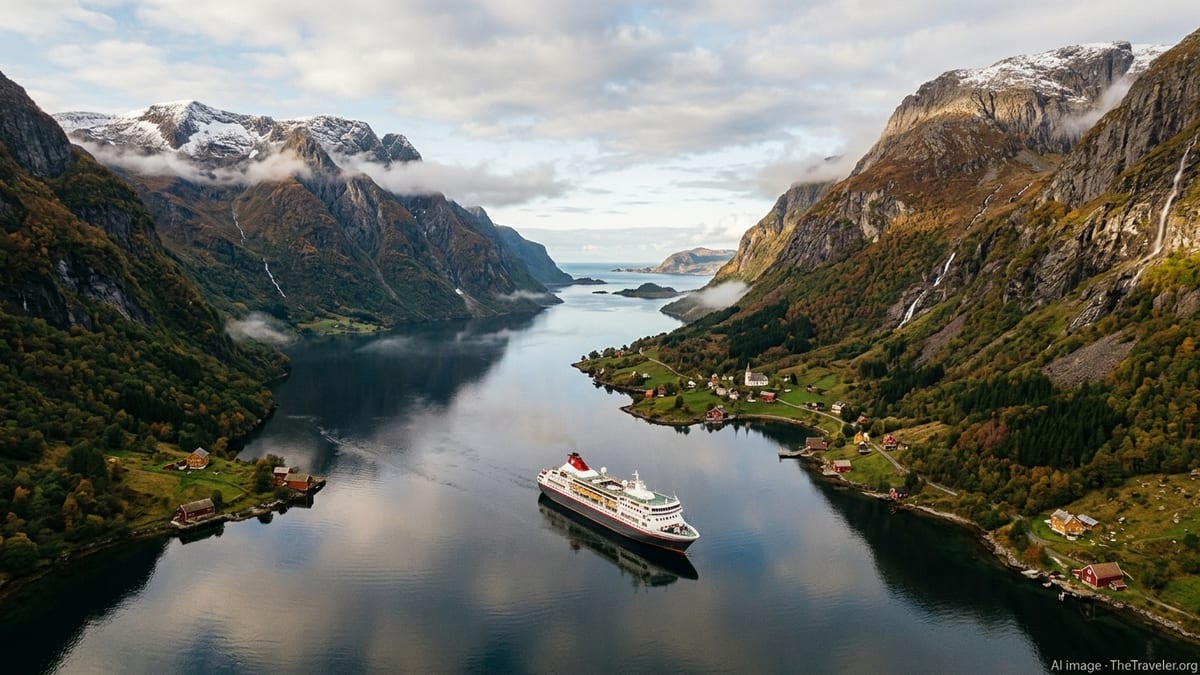
Shoulder Season Gains Momentum in Northern Europe
Publicly available data on cruise traffic in Norway indicates that calls are spreading more evenly across the year, with a clear rise in spring and autumn sailings as lines respond to crowding and capacity limits in peak summer. Industry reports describe a maturing market in which passengers increasingly look beyond July and August for milder weather, open viewpoints, and less congested village streets.
Travel guidance from major cruise brands and regional tourism boards frequently highlights May, early June, September, and early October as optimal months to see Norway’s famous fjords, citing a blend of lingering snow on the peaks, green valleys, and better value on fares and shore activities. For many itineraries, these weeks now book out months in advance, reflecting a shift in traveler behavior toward off-peak exploration.
Similar patterns are emerging in the British Isles. Cruise commentary focused on the region notes that early spring and late autumn offer some of the best pricing around Scotland and Ireland, as ships reposition and operators seek to extend the season. These windows are increasingly promoted as a way to experience island communities without the festival crowds and high-season hotel rates that characterize mid-summer.
Across both Norway and Scotland, this recalibration is happening against a backdrop of broader cruise growth. Industry forecasts project record passenger volumes by 2026, but with more emphasis on route diversity, smaller vessels, and environmental performance, particularly in sensitive northern destinations.
Fred Olsen Focuses on Value Cruises to Fjords and Isles
Within this shifting landscape, Fred Olsen Cruise Lines is leaning on its long-established reputation in northern waters to market shoulder season voyages that combine classic scenic routes with targeted savings. The UK-based line, which operates a small-ship fleet, has a broad program of 2025 and 2026 sailings that weave through Norway’s deep fjords and the rugged coasts of Scotland’s islands.
Promotional material for the 2025 program highlights Norway itineraries focused on “scenic landscapes of the Norwegian fjords,” with ports such as Hardangerfjord, Eidfjord, Olden, and Bergen often featured in early and late season slots. Shorter daylight hours at the edges of the season are framed as an advantage for dramatic low-angle light on cliff faces and increased chances of atmospheric conditions, from lingering early spring snowfields to moody autumn mists.
The line’s worldwide 2025–26 brochure indicates that fjord sailings will continue into late spring and early autumn of 2026, with dedicated “fjords and waterfalls” routes and extended scenic cruising through well-known inlets such as Lysefjord and Sognefjord. These itineraries are typically priced below peak summer departures and may come with added incentives like onboard spending credit, early-booking reductions, or time-limited weekend sale discounts on select sailings.
For Scotland, Fred Olsen’s deployment regularly includes British Isles and Scotland-focused cruises that skirt the Hebrides, Orkney, and Shetland in the shoulders of the season. Travel magazines covering British Isles cruising note that the company is often cited for value in these months, using departures from regional UK ports to keep access costs lower for domestic travelers.
What Travelers Can Expect From Shoulder Season Savings
Travel advice from Nordic-focused tour operators suggests that shoulder season trips to the fjords can be 20 to 30 percent cheaper than high summer, once both cruise fares and on-the-ground expenses are factored in. Lower demand for shore excursions, hotels, and local transport in May and September can soften overall trip budgets, particularly for travelers extending their voyage with nights in Bergen, Stavanger, or Oslo.
Publicly available fare examples for recent Fred Olsen sales on Norway cruises show short booking windows in which prices are reduced across specific departures, sometimes bundled with free onboard spending or discounts on third and fourth guests in a cabin. These promotions have tended to focus on spring and late-summer sailings, indicating that the line is using price to encourage travelers to consider dates outside the traditional school holiday peak.
In Scotland, broader cruise market overviews report that the best-value British Isles itineraries are frequently found in April, early May, and October. During these periods, cooler temperatures and the chance of unsettled weather are balanced by thinner crowds at sites such as Kirkwall in Orkney or Stornoway in the Outer Hebrides, where local businesses are keen to capture the start and end of the visitor season.
For travelers, the practical impact of these shoulder season strategies is a wider range of budget options. Smaller ships like those in the Fred Olsen fleet can offer fjord-facing cabins at lower entry prices than at the height of summer, while still providing access to narrow waterways and lesser-known anchorages. The trade-off is a higher likelihood of changeable conditions, which can affect everything from deck time to the availability of certain shore excursions.
Environmental Rules and Capacity Shape Itinerary Design
Regulatory shifts in Norway are adding another incentive to travel outside the most popular months. National authorities have approved stricter emissions requirements for ships visiting UNESCO-listed fjords, with a phased approach that pushes the industry toward zero and low-emission solutions over the coming years. Recent decisions have extended earlier deadlines, but the long-term direction remains clear, and ports are moving to manage both environmental impact and visitor flow.
Reports from Norwegian maritime agencies show that while total cruise calls remain high, there is an ongoing push to spread arrivals across more months and more ports, reducing congestion in iconic locations such as Geiranger while steering ships toward emerging destinations including Nordfjordeid. This strategy aligns well with the shoulder season products that lines like Fred Olsen are emphasizing, as smaller vessels can more easily access secondary ports and operate within new rules.
In Scotland, attention is focused less on emissions in narrow fjords and more on community impact and infrastructure pressure in smaller island harbors. Public discussions around capacity in locations like Orkney and the Hebrides have encouraged cruise operators to adjust timings, distribute calls more evenly, and emphasize cultural engagement over short, high-volume visits. Sailing early or late in the year can support this by smoothing out peaks and concentrating spending in months when local economies benefit most.
Together, these regulatory and planning efforts are subtly reshaping how and when northern routes are sold. For travelers, it means that itineraries combining Norway’s fjords and Scotland’s islands during shoulder seasons may offer both better value and a closer alignment with emerging sustainability priorities in the cruise industry.
How to Choose the Right Shoulder Season Sailing
For travelers considering Fred Olsen’s offers, published guidance from cruise specialists emphasizes clarity on priorities: scenery, price, daylight, or the chance of northern lights. Spring fjord cruises often feature snow-dusted summits, waterfalls at full force, and longer days as the season progresses, while early autumn brings richer colors and cooler nights, but gradually shortening daylight at higher latitudes.
Prospective passengers are encouraged by consumer travel outlets to look closely at itineraries rather than just marketing labels. Not all “Norwegian fjords” cruises include the same ports or depth of scenic cruising, and not all “Scottish isles” sailings reach the more remote Outer Hebrides or Shetland. Smaller ships tend to spend more time in narrow inlets and sheltered anchorages, which can be particularly rewarding in shoulder seasons when weather windows may be tighter.
Budget planning also plays a role. While base fares can be lower, shoulder season trips may call for investment in layered clothing, waterproof outerwear, and flexible plans if conditions affect tender operations or cancel more exposed excursions. Travel insurance that covers weather-related disruption is widely recommended in consumer advice columns for northern itineraries at both ends of the season.
Overall, a combination of evolving cruise regulations, changing traveler preferences, and tactical pricing from operators like Fred Olsen is turning once-overlooked months into some of the most attractive times to explore Norway’s fjords and Scotland’s islands. For visitors willing to accept a little meteorological uncertainty, the reward can be quieter decks, uncrowded viewpoints, and a substantial reduction in the total cost of a bucket-list northern cruise.