

More news on this day
Norway’s usually reliable air network came under strain as 119 flights were hit by delays and cancellations across Oslo, Trondheim and Stavanger, disrupting schedules for Scandinavian Airlines, SAS Link, Norwegian Air Shuttle and several other carriers and forcing thousands of passengers to rework their travel plans.
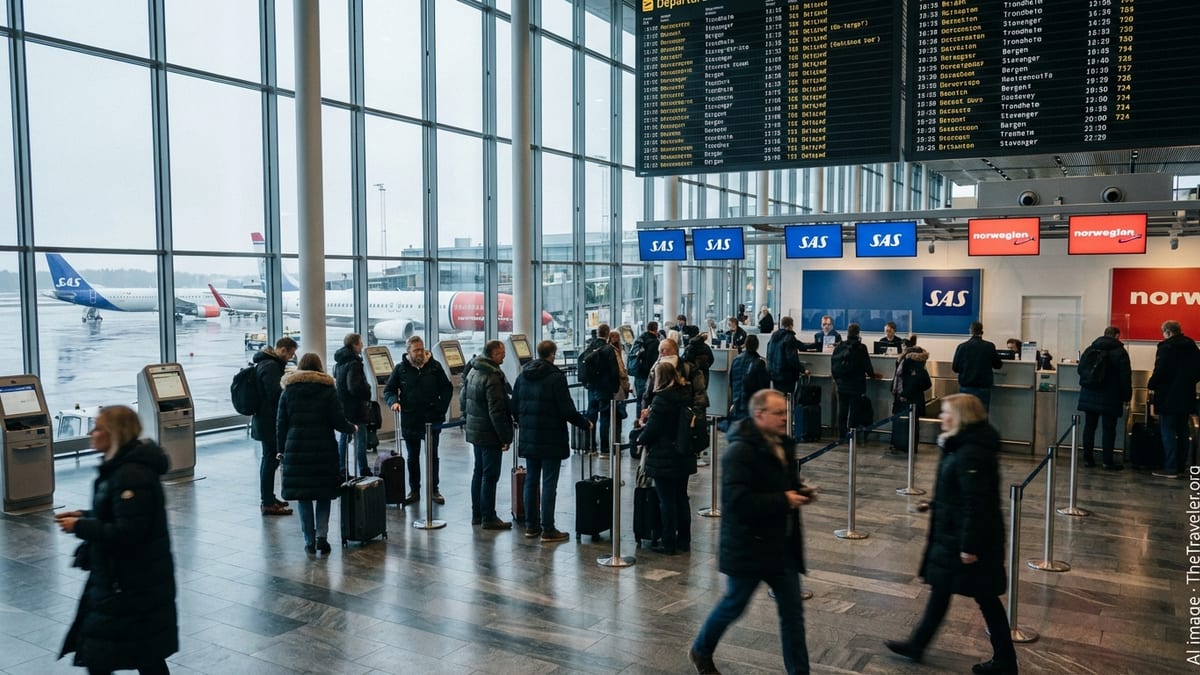
109 Delays and 10 Cancellations Across Norway’s Key Airports
Fresh operational data from Norway’s aviation system shows a total of 119 affected flights, combining 109 delays and 10 outright cancellations at three of the country’s most important airports: Oslo Gardermoen, Trondheim Vaernes and Stavanger Sola. While disruptions are not unusual during busy travel periods, the breadth of the impact across multiple hubs on the same day set this episode apart and created a ripple effect through domestic and regional routes.
Oslo, the country’s main international gateway, recorded the largest share of problems. Seven flights were cancelled and 81 were delayed, leading to congestion at departure gates, pressure on ground-handling teams and a knock-on effect for connecting services within Norway and beyond. With Gardermoen acting as the linchpin of the national route network, any instability there can quickly cascade into route changes and missed connections for travellers heading to smaller cities and overseas destinations.
Trondheim and Stavanger saw fewer total disruptions but higher proportional impacts on some regional rotations. Trondheim logged two cancellations and 20 delays, while Stavanger reported one cancellation and eight delays. For passengers relying on short-haul domestic links for business trips, family visits or onward international flights, even a handful of schedule changes can translate into long waiting times and unplanned overnight stays.
Aviation analysts note that the pattern of disturbances points to operational stress rather than a single, isolated incident such as severe weather or airport infrastructure failure. Instead, a combination of resource constraints, tight aircraft utilization and possible air traffic control restrictions likely contributed to the day’s irregular operations.
SAS Link and Scandinavian Airlines Bear the Brunt
Among the airlines affected, carriers within the SAS group appeared to shoulder the heaviest burden of cancellations and delays, particularly at Oslo and Trondheim. At Gardermoen, SAS Link registered five cancellations, a notable share of its scheduled services from the airport, alongside nine delayed flights. Mainline Scandinavian Airlines also reported two cancellations and 28 delays from Oslo, highlighting how quickly disruption at a primary base can spread across its network.
The concentration of difficulties at Trondheim further underscored SAS Link’s exposure. There, the regional operator saw two cancellations and four delays, pushing its cancellation rate into double digits and making disruption especially visible on key domestic connections. In Stavanger, SAS Link reported one cancellation and three delays, again a relatively high proportion for a smaller schedule focused on short-haul commuter traffic.
Industry observers point out that regional feeders such as SAS Link often operate tight turnarounds with limited spare aircraft on standby. When even minor technical issues, crew scheduling conflicts or air traffic restrictions occur, these operators can have less flexibility to recover the timetable quickly. That can translate into a cluster of late departures, missed slot times and ultimately the need to cancel selected rotations to restore network balance.
Despite the challenges, Scandinavian Airlines and SAS Link maintained the majority of their operations, with most flights still departing, albeit behind schedule. Airline representatives have emphasised that safety takes precedence over punctuality, and that decisions to delay or cancel flights are made to ensure crews, aircraft and weather conditions are all within strict operating limits.
Norwegian Air Shuttle, Wideroe and Others Also Caught in the Snarl
While the spotlight fell on SAS group carriers, they were not alone in facing schedule disruption. Norwegian Air Shuttle, one of Norway’s largest airlines and a key player on domestic and European routes from Oslo, Trondheim and Stavanger, also reported delays across selected departures. For a carrier that sells itself on a broad point-to-point network connecting Norwegian cities with major European hubs and leisure destinations, same-day irregularities can be especially disruptive for passengers relying on tight self-directed connections.
Smaller and regional operators, including Wideroe, were likewise touched by the day’s operational turbulence. With many of these airlines serving remote communities and short runways in coastal and northern Norway, delays on trunk routes into hubs such as Oslo and Trondheim can lead to late arrivals of feed services, crew reassignments and rescheduled turnarounds. That, in turn, can cause late departures on the very flights linking smaller communities to the rest of the country.
International carriers operating into Oslo and Stavanger also faced knock-on effects, particularly where they rely on shared ground handling services or are bound by the same air traffic control constraints. Late-arriving inbound aircraft shorten the window for refuelling, cleaning and boarding, and can easily slip beyond their allocated departure slot, prompting further delays as they re-enter the departure queue.
The mixed group of affected airlines highlights an important point for travellers: irregular operations rarely confine themselves to a single brand or alliance. Once delays begin to stack up at a major hub, virtually all carriers using that infrastructure may experience some degree of turbulence in their timetables.
Oslo, Trondheim and Stavanger Feel the Impact on Passengers
For passengers on the ground, the statistics translated into crowded terminals, longer lines at service desks and a scramble for information as departure boards flickered with revised times. At Oslo Gardermoen, where both business and leisure travellers transit daily between domestic and international flights, missing a single connection can mean a full-day delay, especially on routes with limited frequencies.
In Trondheim, the effect was acutely felt by domestic commuters and regional tourists. Travellers heading to and from central Norway for meetings, university visits or weekend city breaks faced uncertainty as revised departure times shifted repeatedly. Even a 30 to 60 minute delay can be critical for rail and ferry connections that link Trondheim’s airport to surrounding communities, amplifying the overall disruption.
Stavanger, an important hub for Norway’s offshore energy sector and gateway to popular hiking destinations, saw delays that risked pushing some travellers into last-minute hotel stays or forcing them to alter onward plans. For international visitors planning tight itineraries that include iconic attractions such as nearby fjord viewpoints or coastal villages, a day of irregular flights can compress already short visits and lead to cancelled excursions.
Airport staff at all three hubs faced the difficult task of managing passenger expectations while coordinating with airlines and air traffic control. With many travellers increasingly reliant on mobile apps and digital notifications, consistent and timely communication became as critical as operational recovery itself in helping passengers make informed choices about rebooking and onward travel.
Tourism and Business Travel Across Norway Under Pressure
The wave of disruptions arrived at a time when Norway continues to position itself as a year-round destination for both leisure and corporate travellers. Tourism authorities and local businesses have invested heavily in promoting city breaks in Oslo and Trondheim, as well as nature-based experiences accessible from Stavanger and other coastal hubs. While a single day of irregular operations may not dramatically alter annual visitor numbers, repeated disruptions can undermine confidence among time-sensitive travellers.
For Oslo’s tourism ecosystem, unpredictable delays can lead to later hotel check-ins, missed evening tours and reduced spending in restaurants and cultural venues. Tour operators have to juggle late arrivals, reconfigure group schedules and, in some cases, absorb the cost of unused arrangements when guests do not reach the city in time for pre-booked activities.
In Trondheim, where historical and cultural tourism blends with a growing technology and education sector, the reliability of domestic links is a crucial selling point. Business travellers often plan same-day returns or overnight visits tied closely to flight schedules. When cancellations or lengthy delays occur, meetings may need to shift online or be postponed altogether, diluting the benefits of face-to-face engagement and reducing the economic spillover for hotels and conference venues.
Stavanger’s dual identity as an industrial hub and launchpad for iconic outdoor adventures means that disrupted air services can simultaneously affect corporate visitors bound for offshore installations and international tourists heading to nearby natural attractions. Local stakeholders emphasise that maintaining robust and resilient air connectivity is a key component of Norway’s broader strategy to balance economic development with sustainable tourism growth.
What Travellers Should Do if Their Flight Is Affected
Passengers caught up in Norway’s latest wave of flight disruptions are being advised to act quickly but methodically. The first step is to check the status of any upcoming flight via official airline channels such as mobile apps and text or email alerts. Airport departure and arrival boards can offer a snapshot of the situation, but in practice it is the airline that will confirm any rebooking options, rerouting possibilities or entitlement to refunds.
Travellers are also urged to arrive at the airport with additional time to spare, particularly if flying from Oslo, Trondheim or Stavanger on days when irregular operations are likely. Extra time allows for security queues that may swell when multiple departures are pushed into a similar time window. It also gives passengers more flexibility if they need to visit a service desk, adjust baggage arrangements or make last-minute changes to onward ground transport.
Where possible, experts suggest keeping all documentation, including boarding passes, booking confirmations and receipts for meals, taxis and accommodation purchased as a result of disruption. These records can be vital when submitting claims to airlines under applicable passenger rights frameworks or to travel insurance providers, which often require clear evidence of the cause and duration of delays.
For travellers making complex itineraries that combine separate tickets, building in longer connection times can help cushion against the kind of knock-on delays witnessed during this latest episode. While it may mean spending an extra hour in an airport lounge or café, the trade-off can be worthwhile when networks come under unexpected strain.
Passenger Rights and Compensation Under European Rules
The latest disruption in Norway also serves as a reminder of the legal protections available to air travellers under European and Norwegian regulations. In many circumstances, passengers whose flights are significantly delayed or cancelled may be entitled to assistance such as meals, refreshments and, where necessary, hotel accommodation. The exact thresholds depend on flight distance and the length of the delay, but airlines are generally expected to provide what is known as a duty of care once delays pass certain time limits.
In addition to immediate assistance, some passengers may be eligible for financial compensation when flights are cancelled or arrive at their destination with a long delay, provided the disruption was not caused by extraordinary circumstances outside the airline’s control. Determining eligibility can be complex, and travellers are encouraged to review the conditions set out in their carrier’s contract of carriage and in relevant European passenger rights guidelines.
Airlines encourage customers to submit claims through official digital channels rather than at the airport, where frontline staff are focused on operational recovery and customer service. Many carriers now provide online forms that guide passengers step by step through documenting their case, uploading receipts and tracking the progress of compensation or reimbursement requests.
Consumer advocates stress that passengers should remain patient yet persistent, keeping a record of all communications and following up if responses are delayed. While compensation processes may take time, clear documentation and an understanding of one’s rights can significantly improve the chances of a successful claim.
Airlines and Airports Focus on Restoring Normal Operations
As the day of disruptions unfolded, airlines and airport operators across Norway moved to stabilise schedules and restore normal operations. Priority was typically given to flights with large numbers of onward connections, as well as to routes serving remote communities with limited alternative transport options. Once the immediate backlog of delayed departures began to clear, carriers focused on repositioning aircraft and crews to ensure that the following day’s schedule could start on time.
Airport authorities at Oslo, Trondheim and Stavanger indicated that they were closely coordinating with air traffic control, ground-handling companies and airlines to manage gate assignments, de-icing resources where required and passenger flows through terminals. Efforts included deploying additional staff to information points and check-in areas, as well as using public announcement systems and display boards to keep travellers updated about changing departure times.
Looking ahead, industry experts say that Norway’s aviation sector will continue to evaluate how network resilience can be strengthened, whether through increased staffing buffers, more flexible aircraft allocation or upgrades to digital systems that improve real-time decision making. While no air transport network can entirely eliminate the risk of disruption, incremental improvements can reduce the likelihood that a cluster of operational issues will escalate into widespread delays.
For travellers, the latest episode serves as a timely reminder that even in countries with strong aviation infrastructure and high punctuality standards, building travel plans with a margin for the unexpected remains one of the most effective strategies for ensuring smoother journeys.