

More news on this day
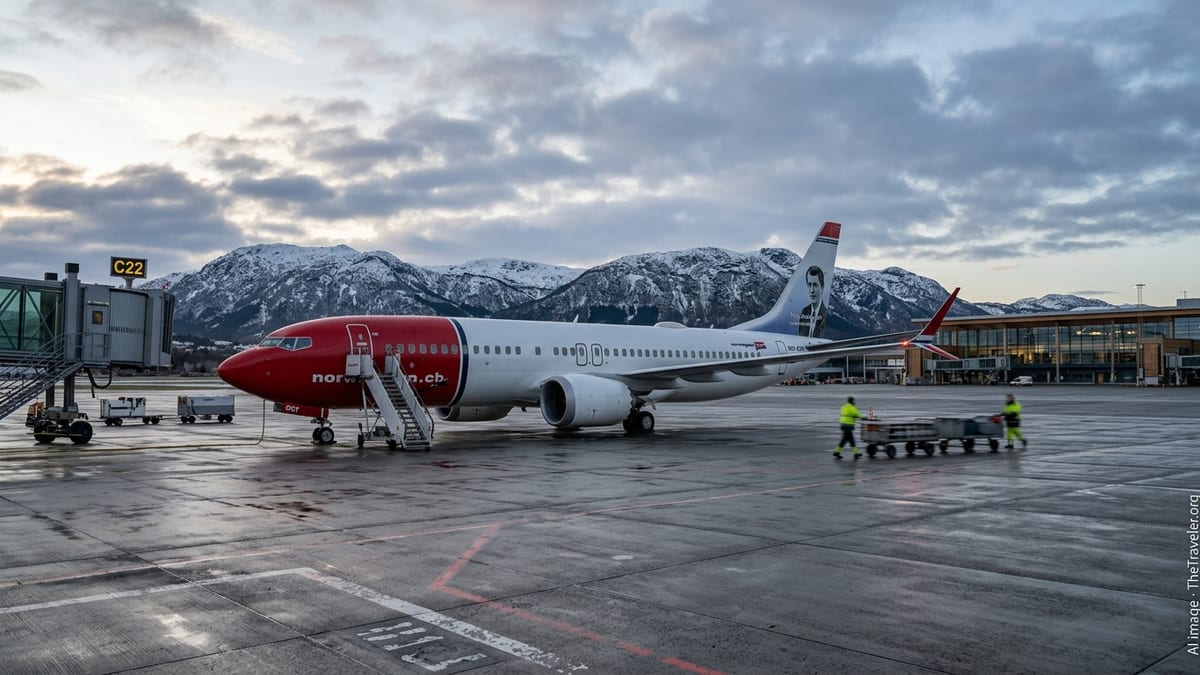
Norwegian is set to tighten the air bridge between Norway’s rain-soaked west coast and the subtropical Canaries, adding a direct Bergen–Gran Canaria route that will be operated with its fuel-efficient Boeing 737 MAX aircraft and positioned as a convenient escape to winter sun.
Get the latest news straight to your inbox!
New Link Between Fjords and Winter Sun
The new connection will link Bergen Airport Flesland with Gran Canaria Airport at Las Palmas, creating a nonstop corridor between Western Norway’s main gateway and one of Europe’s most established winter-sun destinations. Publicly available schedule data shows that Norwegian and its Swedish operating unit are already listed as operating direct flights on the route, with a typical block time of around five and a half hours.
The development reflects how traffic between Scandinavia and the Canary Islands continues to recover and expand after the pandemic. Airline network data for Gran Canaria indicates that Norwegian already serves the island from several Nordic points, with Bergen appearing as a seasonal destination in the airport’s published overview. This new routing is expected to formalize Bergen’s role as a regular origin point for leisure traffic heading to the Spanish archipelago.
The Bergen–Gran Canaria link adds to a broader wave of capacity growth on Nordic–Canaries markets, where low-cost and hybrid carriers have been adding new city pairs and increasing frequencies for winter and shoulder seasons. Reports from aviation outlets tracking schedule filings suggest that Norwegian’s move aligns with similar expansions by competitors that are also betting on strong demand from Nordic travelers seeking guaranteed sunshine.
Norwegian has stated in previous network updates that the Canary Islands remain among its most popular leisure markets from Norway. Industry coverage from Spanish and Norwegian media in late 2025 highlighted plans for new direct links between Gran Canaria and Norwegian regional cities, including Bergen, pointing to sustained appetite for point-to-point flying that bypasses Oslo.
Seasonal Focus Aimed at Peak Leisure Demand
The Bergen–Gran Canaria flights are expected to be tailored primarily to winter and shoulder-season demand, when Norwegians traditionally migrate south to escape the darkest and wettest months. Schedule information compiled by independent flight-tracking and fare platforms shows that direct services between Bergen and Las Palmas typically cluster around the main winter travel peaks and holiday periods, rather than operating as a year-round high-frequency business route.
This seasonal pattern mirrors how airlines across Scandinavia structure their Canary Islands operations. Carriers often intensify flights from October through March, when temperatures at home are low and daylight hours short, then trim capacity in late spring as Mediterranean destinations become more attractive. For Norwegian, concentrating capacity in the cooler months allows better aircraft utilization and pricing on what is essentially a pure leisure market.
For Bergen’s catchment area, which includes large parts of Western Norway, the direct link removes the need for a change of planes in Oslo or other European hubs. Travel planning tools already list the new nonstop as one of the fastest options to Gran Canaria from Bergen, cutting journey times and reducing the risk of winter-weather disruptions that can complicate tight connections.
Tourism stakeholders in both regions are likely to view the route as a valuable seasonal bridge. Norway’s official tourism statistics have pointed to rising international visitation to the fjord region in recent years, while separate data cited by travel-industry coverage indicates that outbound leisure travel from Norway to Spain has also grown, with the Canary Islands retaining a central role in the winter mix.
737 MAX Brings Efficiency and Range to the Atlantic Hop
Norwegian’s decision to deploy Boeing 737 MAX aircraft on the Bergen–Gran Canaria sector reflects the airline’s broader fleet strategy. Company reports on its fleet composition show that Norwegian now relies on a mix of Boeing 737-800 and newer 737 MAX 8 jets, with the MAX gradually assuming a larger share of medium-haul leisure flying as deliveries continue.
The Bergen–Gran Canaria flight is a relatively long narrowbody sector, with flight time typically above five hours. Industry analysis of the 737 MAX 8 notes that the aircraft’s improved fuel burn compared with older 737 variants makes it well suited to such mid-length routes, where efficiency gains accumulate over long daily utilization. For an airline focused on low fares and tight unit costs, deploying the MAX on a route of this distance can support more competitive pricing while helping to limit emissions per passenger.
Environmental performance is a key consideration in the Nordics, where regulators and travelers alike are increasingly attentive to aviation’s climate footprint. Norwegian’s own communications about its fleet renewal have underscored that the MAX family delivers lower fuel consumption and reduced carbon emissions per seat versus the 737-800s it is gradually replacing. On a leisure-heavy route like Bergen–Gran Canaria, where average load factors tend to be high during the core season, those per-passenger efficiency gains are particularly relevant.
The use of a single-aisle aircraft also allows Norwegian to right-size capacity for the market. Rather than deploying larger widebody jets, the airline can adjust the number of weekly 737 MAX rotations in response to demand, adding or trimming frequencies between Bergen and Gran Canaria as booking trends evolve.
Bergen’s Growing Role in Norway’s International Network
Bergen Airport has steadily expanded its international portfolio over the past decade, transitioning from a primarily domestic hub into a more diversified gateway. Reference information on the airport’s traffic profile notes that it now hosts a range of European routes alongside one of Europe’s busiest domestic corridors to Oslo.
Norwegian has been part of that evolution, using Bergen as both a domestic node and a launching point for European leisure flights. Previous route announcements from the airline have included new summer destinations from Bergen, and the addition of a direct link to Gran Canaria reinforces the city’s status as a key origin for sun-and-sea travel.
For Western Norway’s tourism industry, increased international connectivity works in both directions. While the primary flow on the Bergen–Gran Canaria route is expected to be Norwegians heading south, the same flights can bring Spanish and other European visitors into Bergen, particularly in shoulder seasons when fjord cruises and city breaks are marketed aggressively.
The move also dovetails with a broader trend toward decentralizing Norway’s international air services. Rather than concentrating almost all long leisure routes at Oslo, airlines are progressively adding point-to-point links from regional cities like Bergen, Stavanger and Trondheim to southern European destinations. This approach shortens journeys for passengers outside the capital region and spreads economic benefits across multiple hubs.
Competitive Canary Islands Market Intensifies
The new Bergen–Gran Canaria connection slots into a rapidly evolving competitive landscape in the Canary Islands. Recent seasons have seen several European carriers open bases or seasonal stations at Gran Canaria, Tenerife and other islands, using narrowbody aircraft to link secondary cities in Northern and Central Europe directly to the archipelago.
Reports from aviation news platforms detail how rival airlines have launched routes from smaller Norwegian cities to Gran Canaria, increasing the number of options for travelers and exerting downward pressure on fares. Norwegian’s decision to solidify its presence on the Bergen–Gran Canaria sector can be interpreted as a response to that competition, ensuring the airline maintains visibility in one of its core leisure markets.
At the same time, the Canary Islands’ enduring appeal reduces the risk associated with committing aircraft time to these routes. Climate, established resort infrastructure and a long-standing reputation among Nordic travelers mean that winter and early-spring flights to Gran Canaria often achieve strong load factors, even when multiple carriers operate in the market.
With the Bergen–Gran Canaria service framed around efficient 737 MAX operations and a clear focus on seasonal leisure demand, Norwegian is aligning its network and fleet strategies with traveler preferences that show little sign of weakening. For residents of Western Norway looking ahead to the next dark season, the promise of a more direct path to the sun is likely to be a compelling addition to the booking screen.