

More news on this day
Norwegian Cruise Line is entering 2026 with one of the most aggressive fleet and capacity buildouts in the cruise sector, positioning the company as a central force reshaping global tourism flows across the Caribbean, Europe, and beyond.
Get the latest news straight to your inbox!
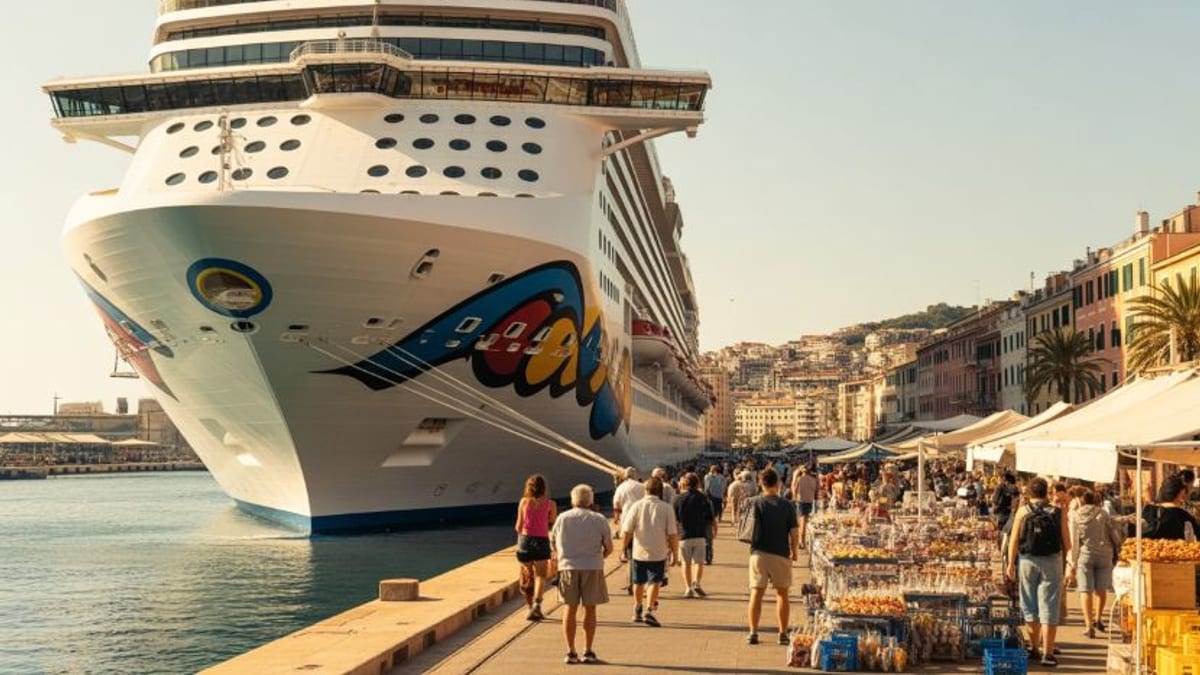
Image by International Cruise News: Latest Cruise Line & Cruise Ship News
From Recovery to Rapid Expansion
After several years of industry recovery, publicly available company filings and investor presentations indicate that Norwegian Cruise Line Holdings has pivoted decisively from stabilization to growth, targeting 2026 as a milestone year. The group, which encompasses Norwegian Cruise Line, Oceania Cruises, and Regent Seven Seas Cruises, reported record revenue for 2024 and continued capacity growth through 2025, setting the stage for a pronounced expansion in guest volumes and itineraries in 2026.
Industry analyses show that Norwegian Cruise Line Holdings is on one of the steepest growth trajectories among major cruise operators, with projected passenger capacity rising from roughly 2.8 million at the start of 2025 to more than 4.2 million by 2033. This equates to annual capacity growth of more than 5 percent, outpacing some larger competitors and signaling a deliberate strategy to capture a bigger share of global leisure travel demand.
Financial commentary on recent quarterly results suggests that the company aims to balance this capacity surge with a “yield over volume” approach, focusing on higher-spend guests, premium itineraries, and enhanced onboard experiences rather than pure discount-driven occupancy. For tourism markets, this combination of more berths and higher-spending passengers is expected to translate into greater economic impact per arrival in key port communities.
The expansion also coincides with continued cost discipline. Analyst reports referencing guidance for 2026 point to cruise operating costs growing at a pace below general inflation, which could give Norwegian additional flexibility to invest in product innovation, destination development, and targeted pricing without eroding profitability.
Prima Plus Class and Newbuilds Redefine Capacity
Central to Norwegian Cruise Line’s 2026 push is the rollout of its Prima Plus class of ships and the ramp-up of recently delivered tonnage. The Prima platform, originally ordered in 2017, has evolved into a new generation of vessels designed around higher space ratios, more outdoor areas, and diversified dining and entertainment, all aimed at attracting both loyal cruisers and first-time guests.
The first Prima Plus ship, Norwegian Aqua, was delivered in 2025 at roughly 156,000 gross tons with capacity for more than 3,500 guests based on double occupancy. Deployment plans for 2026 include multiple visits to high-demand destinations such as Bermuda, anchoring new seasonal patterns in the North American market. Schedules shared via booking channels and promotional materials show Norwegian Aqua operating a series of seven-night sailings that tie major U.S. gateways to island hubs, reinforcing the line’s presence on key Atlantic routes.
Norwegian Luna, another Prima Plus vessel, entered passenger service in March 2026 following an inaugural transatlantic crossing between Italy and Miami. With similar dimensions and a focus on upscale yet mass-market experiences, Norwegian Luna adds further capacity in the Caribbean and potentially into European deployments later in the year, giving the brand more flexibility to adjust to demand in both regions.
Looking beyond 2026, Norwegian Aura, described in recent announcements as the largest and most “illuminating” ship in the fleet, is already on sale for 2027 sailings. At about 168,000 gross tons and nearly 3,900 guests at double occupancy, Aura represents a 10 percent size increase over Aqua and Luna. The ramp-up of bookings for Aura during 2026 is expected to support Norwegian’s longer-term expansion plans, particularly among family and multigenerational travelers seeking larger resort-style ships.
Strategic Pruning and Brand-Wide Optimization
Fleet expansion at Norwegian Cruise Line is being accompanied by targeted pruning and redeployment, indicating a more surgical approach to capacity management. Industry coverage shows that older vessels such as Norwegian Sky and Norwegian Sun have departed the core fleet under charter arrangements, while additional ships in the company’s Oceania and Regent brands are earmarked for future transfers or charters to residential and specialty operators.
This rotation out of older, smaller ships and into larger, more efficient vessels is expected to lower unit costs over time while enhancing the guest proposition. Newer ships typically feature more balcony accommodations, expanded suites, and high-yield specialty venues, which can increase revenue per passenger without necessarily relying on higher headcounts alone.
At the upper end of the market, Oceania Cruises and Regent Seven Seas Cruises are also in line for new tonnage later in the decade, including additional “Prestige-class” ships for Regent that are larger than their predecessors but engineered to maintain a high crew-to-guest ratio. Although most of these deliveries fall after 2026, orders placed with Italian shipbuilder Fincantieri and disclosed in company communications are a key part of Norwegian’s narrative to investors and travel partners, underscoring a long runway of growth.
For ports and destinations, the shift from smaller legacy ships to larger, amenity-rich vessels means higher per-call guest volumes and more complex logistics requirements. However, it also creates opportunities for expanded excursion offerings, premium experiences, and longer stays, particularly in homeports that can support pre- and post-cruise tourism.
Private Island Investments and Itinerary Power
Norwegian’s 2026 strategy is not limited to hardware at sea. A major pillar of the company’s growth plan is the continued development of Great Stirrup Cay, its private island in the Bahamas. Investments outlined in prior corporate announcements include a new multi-ship pier, expanded beach and pool areas, and a large-scale waterpark slated to come online in phases around 2026 and 2027.
By late 2025, Norwegian had already opened new attractions on the island, including a lagoon-style pool complex and upgraded adult-only and family zones. Additional features scheduled to debut in 2026, such as an extensive waterpark and adventure amenities, are expected to enhance the island’s role as a high-yield destination central to many Caribbean itineraries.
Analyst commentary on these projects suggests that Great Stirrup Cay is becoming a key lever for pricing power and itinerary differentiation. With the ability to handle multiple large ships simultaneously, the island allows Norwegian to concentrate guest spending within its own ecosystem while still delivering a tropical port experience. This model, already used by rivals, is set to become more important as larger Prima Plus and future 200,000-gross-ton ships enter the fleet.
The focus on proprietary destinations also has implications for regional tourism dynamics. While some spending is captured within Norwegian’s operations, the increased volume of cruises that start and end at U.S. and Caribbean ports, and the associated air, hotel, and excursion demand, continues to support broader tourism economies across Florida, the Bahamas, and neighboring island nations.
How Norwegian’s 2026 Push Shifts the Competitive Landscape
As Norwegian Cruise Line’s 2026 capacity increases flow into the marketplace, analysts and industry observers are watching how competitors respond. Royal Caribbean Group and Carnival Corporation both maintain larger overall fleets, but Norwegian’s combination of new tonnage, targeted brand positioning, and disciplined cost management has put it on a steeper relative growth curve through the early 2030s.
In the mass and premium segments, the Prima Plus ships give Norwegian a contemporary counterweight to rivals’ newest hardware, particularly in North America and Europe. The focus on space-per-guest, upgraded dining, and entertainment experiences is aimed at attracting travelers who might otherwise consider land-based resorts, especially as cruise pricing remains competitive against rising hotel and airfare costs.
For global tourism, Norwegian’s expansion in 2026 means more cruise calls, more homeport operations, and a greater flow of international visitors to a range of destinations. Ports in the Caribbean, Alaska, the Mediterranean, and Northern Europe are likely to feel the impact most directly, as deployment plans shift to capitalize on higher yielding routes and extended seasons.
At the same time, the company’s emphasis on profitability and balance sheet improvement suggests that fleet growth will be closely tied to demand trends rather than unchecked expansion. As 2026 unfolds, Norwegian Cruise Line’s ability to fill its new ships at attractive yields, while sustaining investment in destinations like Great Stirrup Cay, will be a key indicator of how far its fleet strategy can reshape the global tourism map over the rest of the decade.