

More news on this day
Norwegian Epic is set to spotlight some of the Mediterranean’s most sought-after destinations in 2026, introducing a series of Barcelona to Rome sailings that link classic European cities with extended port days designed for deeper onshore exploration.
Get the latest news straight to your inbox!
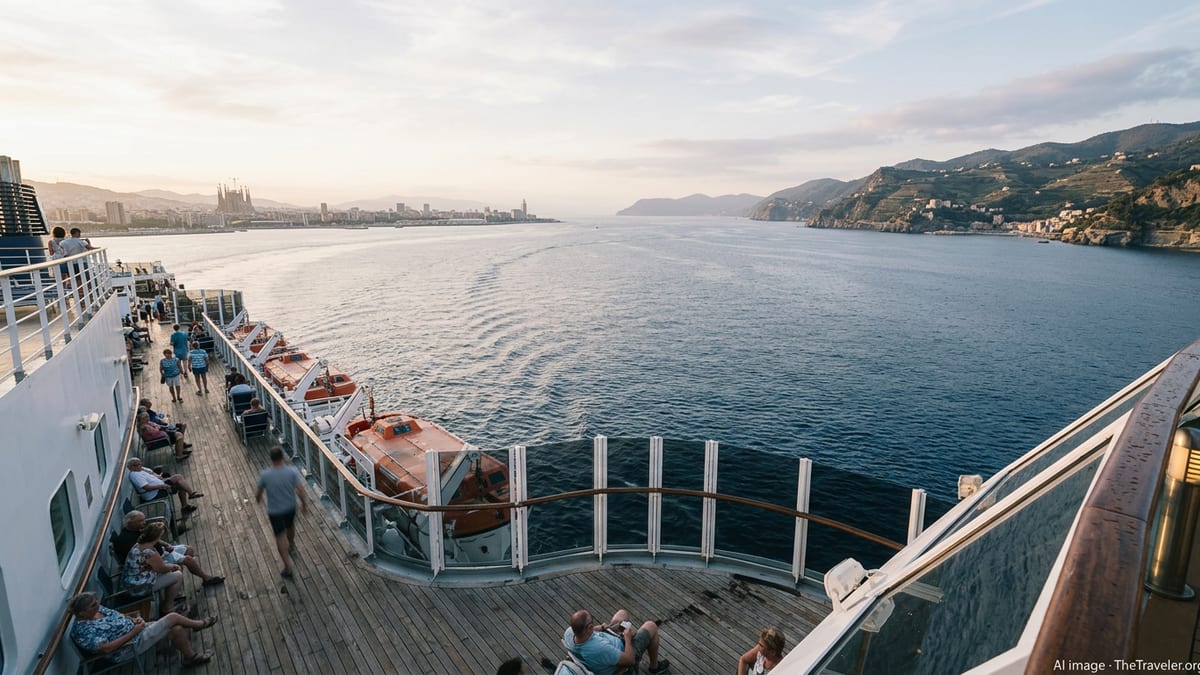
New Open-Jaw Mediterranean Route for 2026
Publicly available itinerary information shows that Norwegian Cruise Line is positioning Norwegian Epic on a slate of open-jaw voyages between Barcelona and Civitavecchia, the port for Rome, from May through October 2026. The seven-night Western Mediterranean sailings are structured to begin in one marquee city and end in the other, giving travelers built-in flexibility for pre- or post-cruise stays on land.
Schedules shared by cruise retailers and planning guides describe multiple departures branded as Mediterranean itineraries from Barcelona to Rome or in reverse. These voyages are typically seven nights in length and operate on Sundays in late spring, summer and early autumn, aligning with peak Mediterranean travel season and school holiday periods.
Rather than repeating ports, the open-jaw format focuses on a curated arc through Spain, France and Italy. Reports indicate that Norwegian Epic is being used as a signature ship on this route, pairing its large-ship amenities with a port-intensive profile that has become increasingly prominent in cruise marketing for Europe.
Industry materials also highlight that the Barcelona to Rome program is part of a wider push by the brand to offer more time in port across its European schedule. Norwegian Epic’s Western Mediterranean loop is being promoted as a convenient gateway for travelers who want a single itinerary that connects two of Europe’s most visited cities while adding several coastal highlights in between.
Port-Intensive Itinerary Showcases Western Mediterranean Icons
Sample itineraries for Norwegian Epic’s Barcelona to Rome sailings outline a sequence of well-known ports that collectively read like a checklist of Western Mediterranean favorites. Calls commonly include Marseille and Villefranche, gateways to Provence and the French Riviera, along with Livorno for access to Florence and Pisa, Messina in Sicily and Salerno on Italy’s Amalfi-facing coast, before concluding in Civitavecchia.
Brochures and online cruise catalogs describe this pattern as a seven-night Mediterranean journey linking Spain, France and Italy with only limited time at sea. The design reflects a broader trend toward maximizing time ashore in Europe, with Norwegian Epic’s itineraries often emphasizing between 10 and 17 hours in key ports such as Livorno to allow for full-day excursions into Tuscany.
In France, the mix of Marseille and Villefranche gives travelers contrasting snapshots of the region, from the working port city tied to Provence to the smaller harbor associated with Nice and nearby coastal resorts. In Italy, Messina offers access to Sicily’s northeastern corner, while Salerno positions guests within reach of the Amalfi Coast’s dramatic landscapes and seaside towns.
This port lineup positions the voyage as a compact introduction to several Mediterranean regions within a single week. The route is marketed as suitable for first-time cruisers who want to see headline destinations quickly, as well as repeat visitors who value the convenience of unpacking once while revisiting favorite coastal cities.
Extended Time in Port Targets Deeper Shore Experiences
According to published coverage and cruise line planning documents, a key feature of Norwegian Epic’s Mediterranean program is the emphasis on longer port calls. In Livorno, itineraries frequently highlight later departure times, allowing guests to undertake full-day trips inland to Florence or Pisa without facing extremely compressed schedules.
This focus on extended port windows aligns with a growing expectation among European cruisers for more immersive shore experiences rather than brief photo stops. The Barcelona to Rome sailings are designed to balance sea days with days spent docked close to shore, letting travelers spend meaningful time exploring historic centers, coastal promenades and regional cuisine.
Longer calls are particularly relevant in ports that serve as gateways rather than destinations in their own right. Livorno’s rail and road links into Tuscany, combined with increased time in port, open up access to metropolitan Florence, the leaning tower in Pisa and smaller Tuscan towns. Similarly, Salerno can serve as a staging point for visits along the Amalfi Coast, where travel times along narrow coastal roads can be significant.
For many travelers, this structure effectively turns the cruise into a series of full-day city or regional visits, with the ship functioning as a floating base hotel. The result is an itinerary that aims to deliver the comfort and predictability of large-ship cruising while retaining some of the flexibility and depth associated with land-based touring.
Barcelona and Rome Anchor a Classic European Journey
At each end of the itinerary, Barcelona and Rome provide natural anchors that resonate with international travelers. Barcelona offers a major air hub, a busy cruise terminal and a compact city center known for its Modernist architecture, waterfront promenades and food markets. Many prospective passengers plan to arrive early or stay on after their sailing to explore the Catalan capital’s neighborhoods and cultural landmarks.
On the other side of the route, Civitavecchia connects directly to Rome by rail and highway, making it a practical entry or exit point for time in the Italian capital. Travel planners often note that the open-jaw structure encourages guests to book hotel stays in Rome either before or after their cruise, turning the seven-night sailing into part of a longer European itinerary.
Because the voyage runs between two cities with extensive flight options, it appeals to travelers who prefer to avoid circular routes that start and finish in the same port. The Barcelona to Rome direction can be paired with flights into Spain and out of Italy, or vice versa, enabling one-way overland travel before or after the cruise for those who wish to add additional European cities.
Industry observers point out that this combination of gateway cities, high-profile coastal ports and extended shore time aligns Norwegian Epic’s Western Mediterranean cruises with demand for itineraries that feel both efficient and aspirational. The route taps into enduring interest in Mediterranean culture, history and cuisine while packaging it into a one-week format accessible to a broad range of travelers.
Growing Demand for Mediterranean Sailings into Late 2020s
The decision to place Norwegian Epic on recurring Barcelona to Rome sailings forms part of a wider expansion of Mediterranean capacity across the cruise sector. Trade publications and cruise comparison platforms report a steady increase in Western Mediterranean options for 2026 and 2027, with multiple brands assigning large ships to itineraries centered on Spain, France and Italy.
Norwegian Epic’s schedule fits within this competitive landscape as a flagship example of the port-intensive style now common in European cruising. The ship’s presence on open-jaw voyages between Barcelona and Rome is being promoted alongside other regional routes, including Greek Isles and Eastern Mediterranean programs, as cruise operators respond to sustained interest in Europe following the rebound of international travel.
As booking windows for 2026 sailings open further, the Barcelona to Rome program aboard Norwegian Epic is positioned as a high-visibility option for travelers seeking a structured, weeklong introduction to the Mediterranean’s marquee destinations. With its combination of iconic ports, longer shore days and flexible start and end points, the itinerary is emerging as a notable entry in the next wave of European cruise offerings.