

More news on this day
Norwegian Cruise Line’s newest Prima Plus class ship, Norwegian Luna, has completed a thirteen-day maiden transatlantic voyage from Civitavecchia, the port for Rome, to Miami, marking a key milestone as the 156,300-gross-ton vessel positions for its first Caribbean season from Florida.
Get the latest news straight to your inbox!
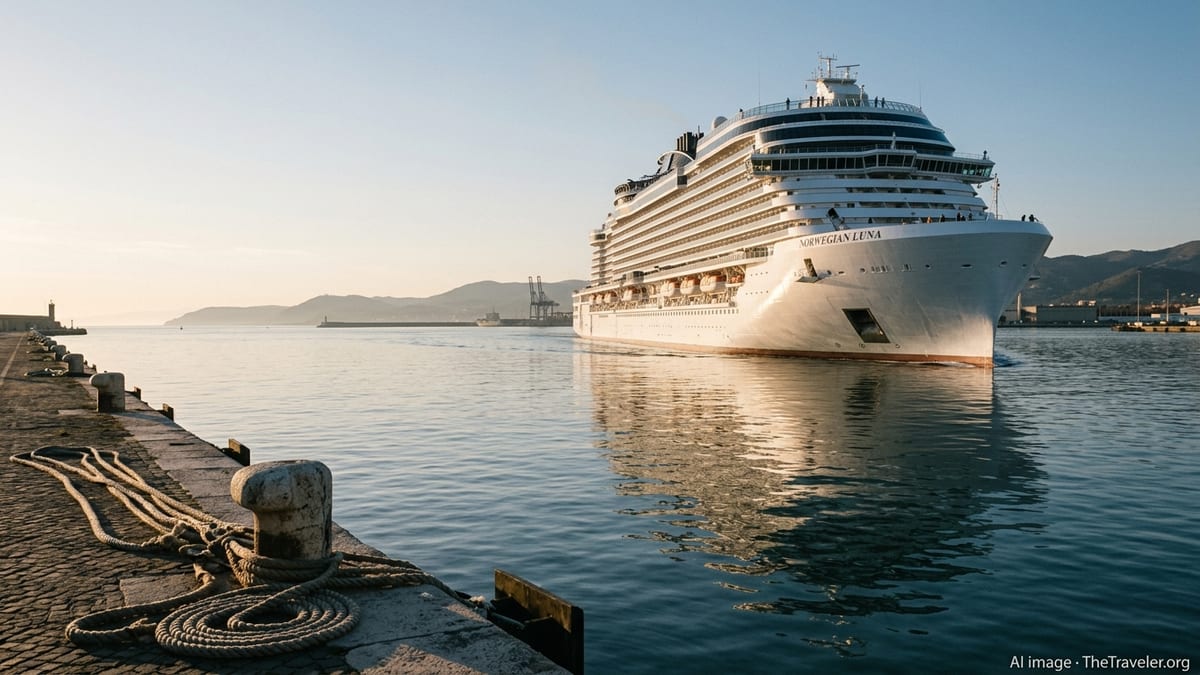
A Shipyard-Fresh Giant Heads for Florida
Publicly available deployment data and industry coverage indicate that Norwegian Luna was delivered to Norwegian Cruise Line in March 2026 as the second ship in the Prima Plus subclass, following Norwegian Aqua. At approximately 322 meters in length and accommodating around 3,550 guests at double occupancy, the newbuild continues the line’s strategy of introducing slightly larger, more amenity-rich versions of its Prima-class design.
The thirteen-day transatlantic crossing, scheduled from March 10 to March 23, 2026, carried the ship from Civitavecchia near Rome to Miami, with a brief call in Tangier, Morocco, before a long stretch of open Atlantic. Cruise itinerary listings describe the voyage as a one-way repositioning sailing, bridging Luna’s European handover period and its long-planned deployment from South Florida.
The crossing effectively serves as Luna’s passenger-facing debut, giving early adopters a preview of a vessel that will later operate weeklong Caribbean itineraries from Miami beginning in April 2026. For Norwegian Cruise Line, the voyage represents both a traditional transatlantic relocation and a high-profile test run for a new flagship in one of its most competitive markets.
The timing aligns with previously announced plans for the Prima and Prima Plus program, which has gradually expanded the line’s footprint in North America with larger ships and reworked onboard spaces aimed at sea-day-heavy itineraries.
Route Strategy: Tangier Stop and Twelve Sea Days
Early sailing details discussed in enthusiast forums and booking engines describe the Norwegian Luna voyage as a thirteen-night itinerary with twelve full days at sea and a single port call in Tangier. The ship is slated to depart Civitavecchia on March 10, 2026, reach Tangier for a short daytime stop, and then proceed west across the Atlantic before arriving in Miami on March 23.
That structure reflects a deliberate focus on extended sea time rather than a port-intensive schedule. Transatlantic segments of this type are typically used to showcase a ship’s public spaces, dining, entertainment, and spa offerings, and Luna’s crossing appears designed around that model. For many passengers, the appeal lies in the long, uninterrupted run of sea days rather than frequent port calls.
Industry commentators note that including Tangier adds a North African flavor to an otherwise linear crossing, providing a final European cultural touchpoint before the ship commits to nearly two weeks in open water. The brief call also offers an additional selling point for travelers seeking a less conventional port on a one-off itinerary.
Weather patterns in March can still be variable in the North Atlantic, but the southern routing toward Florida generally offers more temperate conditions than winter crossings further north, which is likely a factor in Norwegian Cruise Line’s planning for this inaugural voyage.
Onboard Experience on a Prima Plus Newbuild
Norwegian Luna’s design follows the Prima and Norwegian Aqua template, with incremental enhancements that have been highlighted in prior Norwegian Cruise Line announcements about the Prima Plus subclass. Public descriptions of the class emphasize expanded outdoor space, a refined pool deck, and a focus on varied dining, including casual food halls and specialty restaurants tailored to longer sailings.
Cruise line materials and independent previews point to features such as elevated entertainment venues, an enlarged thermal spa area, and a mix of indoor-outdoor lounges intended to keep passengers engaged during sea-day-heavy itineraries like the Rome to Miami crossing. The Prima platform’s emphasis on spacious promenades and ocean-facing venues appears particularly suited to a voyage that spends the majority of its time at sea.
Passenger discussions posted during the sailing describe the experience as an opportunity to explore restaurants, new bar concepts, and entertainment lineups before the ship settles into a steady pattern of seven-night Caribbean cruises. Reports from these early adopters suggest high interest in specialty dining reservations, spa access, and adult-only retreat spaces, reflecting how guests often approach a long inaugural transatlantic as both a voyage and a deep dive into a new ship.
Publicly shared observations also indicate that, as with many newbuilds, certain operational details and digital systems continue to be fine-tuned during the first weeks in service. For travelers who chose this crossing, that sense of being among the first to experience and evaluate a new vessel is a significant part of the appeal.
Positioning for Miami and the Caribbean Market
The conclusion of Norwegian Luna’s thirteen-day voyage into Miami positions the ship for a prominent role in Norwegian Cruise Line’s Caribbean program. Company itineraries and trade publications show that beginning April 4, 2026, Luna is scheduled to operate seven-day Caribbean voyages from PortMiami, alternating between Western and Eastern Caribbean routes.
Planned ports for the Eastern Caribbean pattern include Puerto Plata in the Dominican Republic, Tortola in the British Virgin Islands, St. Thomas in the U.S. Virgin Islands, and Great Stirrup Cay, Norwegian’s private island in the Bahamas. Western itineraries are expected to visit destinations such as Roatan in Honduras, Costa Maya and Cozumel in Mexico, and Harvest Caye in Belize.
The transatlantic voyage therefore acts as both a delivery journey and a marketing tool, building attention among enthusiasts ahead of Luna’s entry into the mainstream cruise calendar. Once based in Miami, the ship is set to compete in a crowded field of new hardware from multiple brands, where distinctive onboard features and private-destination access play a key role in attracting bookings.
Analysts following the sector have pointed to the Prima and Prima Plus series, including Norwegian Luna, as central to the line’s strategy of refreshing its fleet with ships that balance capacity growth against a more upscale, space-forward layout. The successful completion of the Rome to Miami crossing helps clear the way for the ship to begin generating full-season revenue in one of cruising’s most important regions.
Transatlantic Crossings Remain a Niche but Growing Segment
Norwegian Luna’s maiden voyage highlights the ongoing interest in transatlantic cruises as a niche segment within the broader market. These sailings traditionally appeal to repeat cruisers and ship enthusiasts willing to trade frequent port days for extended time on board and a slower, more traditional style of travel between continents.
Industry data and booking patterns suggest that repositioning voyages like Luna’s can offer comparatively strong value on a per-night basis, which in turn attracts passengers looking for longer escapes at moderate price points. For cruise lines, they present an efficient way to move tonnage between regions while still generating revenue and marketing momentum.
The thirteen-day journey to Florida also underscores how new ships are increasingly introduced with carefully choreographed inaugural schedules that combine European shipyard handovers, limited preview sailings, and high-visibility transatlantic crossings. Norwegian Luna’s voyage from Rome to Miami fits squarely into that pattern, linking the ship’s European origins with its long-term role as a Miami-based Caribbean vessel.
As the ship settles into regular service from PortMiami, the March 2026 crossing is likely to be remembered among cruise followers as the moment Norwegian Luna moved from shipyard headline to active player in the competitive Florida cruise market, carrying its first wave of passengers across the Atlantic toward a new homeport.