

More news on this day
Norwegian Luna’s first Atlantic crossing, sailing this month from Rome to Miami, is being closely watched across the cruise industry as a test case for how far big-ship travel can push into true luxury territory.
Get the latest news straight to your inbox!
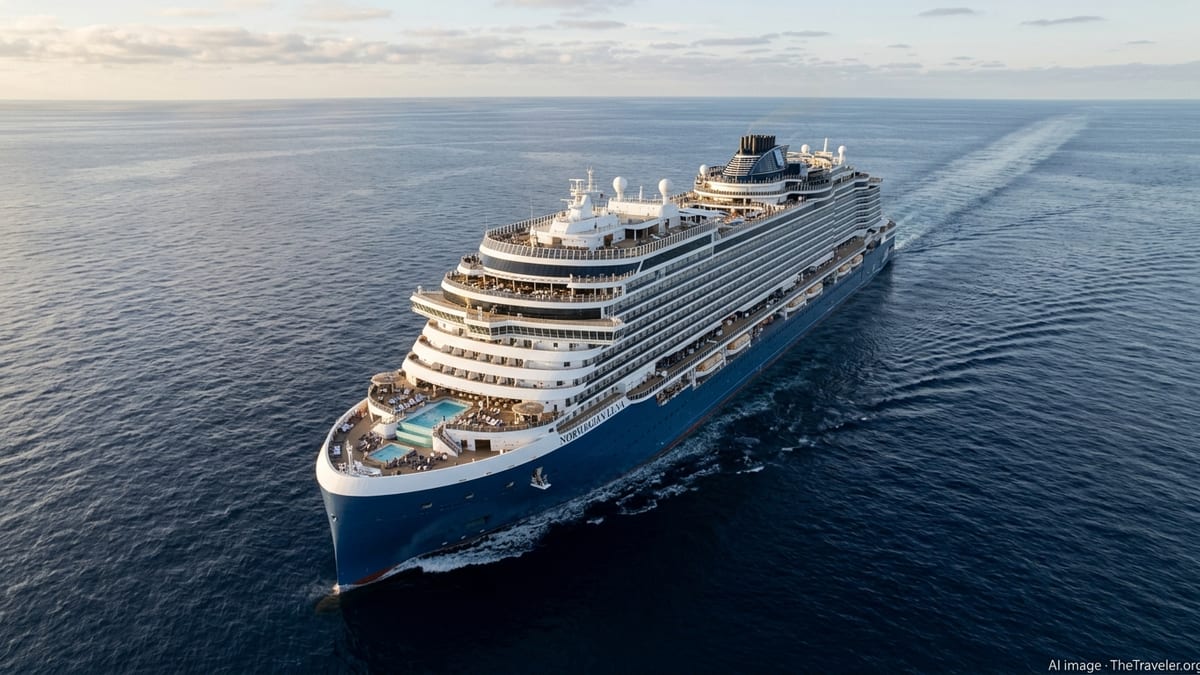
A Transatlantic Debut Designed as a Showcase
The 13-night voyage from Civitavecchia, the port for Rome, to Miami positions Norwegian Luna as more than a simple repositioning sailing. Publicly available schedules show the crossing running from March 10 to March 23, with 12 days at sea that effectively turn the Atlantic into a proving ground for Norwegian Cruise Line’s newest Prima Plus class ship.
According to company releases and industry coverage, the 156,000-gross-ton Norwegian Luna is the second vessel in the Prima Plus series and the 21st ship in the fleet. The class builds on the earlier Prima design but increases size and capacity by roughly 10 percent, allowing more space for suites, expanded public areas and an enhanced outdoor promenade while aiming to maintain a high space-per-guest ratio.
For travelers, the extended sea days highlight what the ship can offer when destinations fall away and the vessel itself becomes the focus. Luna’s schedule for this first crossing emphasizes that idea, with the ship functioning as a floating resort for nearly two weeks as it heads toward its new homeport in Miami.
Industry analysts note that this timing is significant. With delivery in early March and a swift departure for the United States, Norwegian Cruise Line is signaling confidence that Luna is ready to enter the competitive Caribbean market at a moment when demand for upscale, resort-style cruising continues to grow.
Prima Plus Class Raises the Bar on Space and Design
Norwegian Luna’s design language continues the Prima series’ emphasis on generous outdoor areas, streamlined lines and an overall aesthetic more reminiscent of a contemporary urban hotel than a traditional cruise liner. Trade publications describe Luna as carrying around 3,560 guests at double occupancy across more than 1,800 staterooms, a capacity that keeps it below the largest megaships while allowing for more space per passenger.
Central to the Prima Plus concept is Ocean Boulevard, the wraparound outdoor promenade that encircles the ship at a lower deck. On Luna, this area has been further refined with expanded seating, al fresco dining and glass-deck walkways that keep passengers close to the sea. On a long Atlantic crossing, this space is expected to be one of the ship’s signature draws, offering open-air views during sea days that can stretch uninterrupted for nearly two weeks.
Indoor public spaces are also evolving in line with the new class. Coverage of the ship’s handover at the Fincantieri yard in Marghera highlights upgraded lounges and a refreshed theater layout designed for more flexible entertainment programming. The aim, according to cruise industry reports, is to provide a layout that can easily adapt between quiet sea days and more energetic evenings as the crossing progresses.
This focus on space and flow marks a broader trend in the premium large-ship segment, where cruise lines are moving away from purely maximizing capacity and toward layouts that can support longer itineraries and more sea-intensive routes, such as transatlantic voyages.
New Attractions Target the High-End Leisure Market
Norwegian Luna arrives with a line-up of headline features tailored to travelers seeking resort-style experiences at sea. Among the most high-profile additions is the Aqua Slidecoaster, a hybrid waterslide and coaster attraction that wraps around the upper decks and has been repeatedly highlighted in pre-launch coverage as a symbolic element of the Prima Plus offering.
Dining is another key focus. Norwegian Luna incorporates the expanded restaurant and bar portfolio introduced with Norwegian Aqua, including a mix of included and specialty venues that aim to offer more variety over longer sailings. Industry reports point to an emphasis on design-forward interiors and distinct culinary identities for each venue, reflecting a broader push among cruise lines to compete directly with land-based luxury resorts on food and beverage quality.
The ship’s wellness and pool areas have also been reworked for the Prima Plus iteration. Open-source descriptions of the design reference larger pool decks, additional whirlpools and upgraded spa facilities. Over the course of a nearly two-week Atlantic journey, these areas are likely to play a central role in how guests experience the ship, effectively acting as the main “destination” when no ports are on the calendar.
For Norwegian Cruise Line, the combination of new attractions and reimagined spaces is intended to differentiate Luna in a crowded field of newbuilds. By concentrating these features on a high-profile inaugural crossing, the company is positioning the voyage as a showcase for what next-generation mass-market cruising can look like at the upper end of the segment.
Luxury Positioning on a Mainstream Brand
While Norwegian Cruise Line remains a mainstream operator, the Prima Plus ships, including Luna, are increasingly framed as bridging the gap between traditional big-ship cruising and the boutique feel of smaller luxury vessels. Industry commentators point to the Haven complex, the line’s ship-within-a-ship suite enclave, as a central pillar of this strategy.
On Norwegian Luna, the Haven is positioned at the aft with private sun decks, dining and lounge spaces reserved for suite guests. The extended sea time on the Atlantic crossing places particular emphasis on these exclusive areas, effectively turning the enclave into a private resort at sea for much of the voyage.
Beyond suites, the broader stateroom mix on Luna includes an expanded range of balcony cabins and spa-focused accommodations. Coverage of the ship’s design notes that even standard cabins aim for a more contemporary hotel feel, with neutral color palettes and cleaner lines that align with current trends in upscale hospitality.
This layered approach to luxury, where premium experiences are embedded within a larger mainstream product, reflects a wider pattern in the cruise industry. Norwegian Luna’s first Atlantic passage offers an early test of how successfully that model resonates with guests willing to spend nearly two weeks at sea in pursuit of a more refined onboard experience.
A Strategic Bridge to the Caribbean and Beyond
The timing and routing of Norwegian Luna’s Atlantic crossing also serve a strategic purpose. Once the ship arrives in Miami on March 23, published itineraries show it shifting quickly into a program of Caribbean cruises, with seven-night sailings to popular ports and a full season stretching through late 2026.
By front-loading the ship’s debut with a high-profile transatlantic voyage, Norwegian Cruise Line gains extended time with its most engaged guests, many of whom follow newbuilds closely and book inaugural sailings years in advance. That audience is likely to share extensive feedback and social media coverage, effectively turning the crossing into a lengthy soft launch ahead of Luna’s entry into regular service.
Looking ahead, schedules indicate that Norwegian Luna will later expand its deployment to include sailings from New York, adding Bermuda and other North Atlantic routes to its portfolio. In that context, the maiden crossing takes on additional significance, signaling that longer sea-focused itineraries will be an integral part of the ship’s identity rather than a one-time repositioning.
As Norwegian Luna makes its way across the Atlantic, the voyage stands as a visible marker of how large-ship cruising is evolving. With a heightened focus on space, design and curated experiences at sea, the ship’s first ocean-spanning journey is being watched as a bellwether for a new era of luxury-leaning travel on some of the industry’s biggest vessels.