


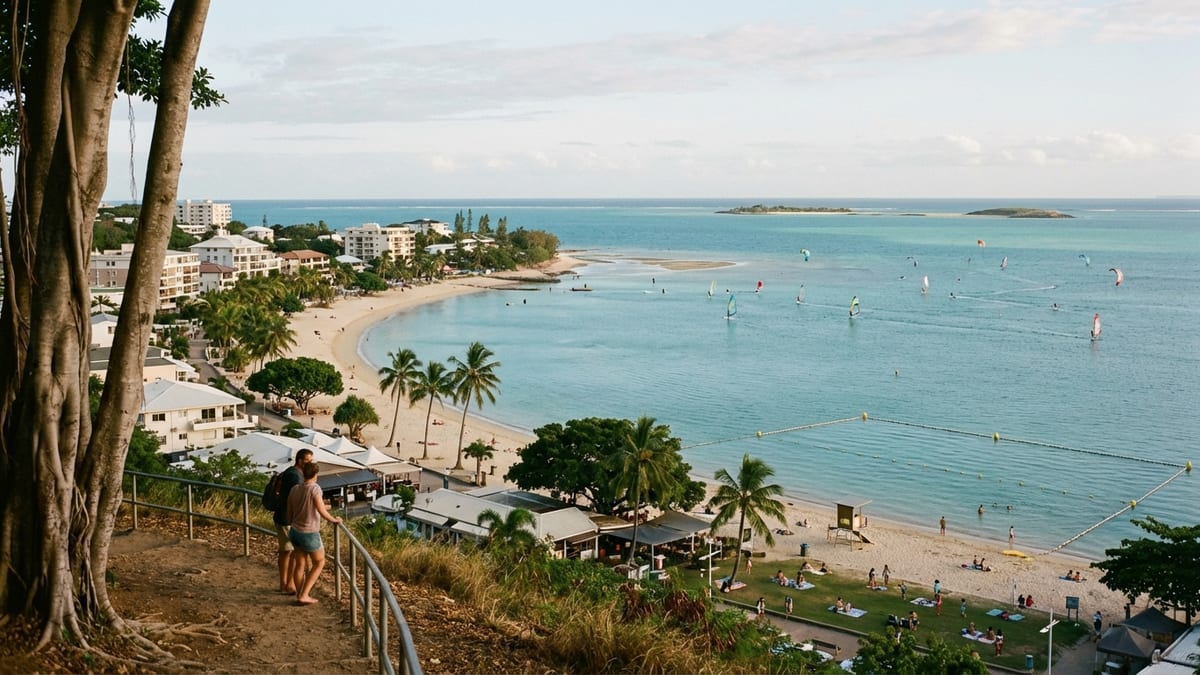
Nouméa’s long, curving bays frame one of the South Pacific’s most appealing cityscapes, where glassy turquoise water laps an easygoing waterfront of palms, promenades and pavement cafés.
For many visitors, the capital of New Caledonia is less a big city and more a string of beaches: Anse Vata and Baie des Citrons in particular are central to the city’s rhythm, shaping everything from morning swims and water sports to sunset drinks and late-night music. This guide explores Nouméa’s key beaches, how to enjoy them safely in the wake of changing swimming rules, and what to expect when you plan your own day by the lagoon.
Understanding Nouméa’s Lagoon and Beach Scene
Nouméa sits on the edge of one of the world’s largest lagoon systems, part of a vast barrier reef complex that is listed as a UNESCO World Heritage site. The city’s main beaches may be urban, but they share the same lagoon: shallow, clear water, bright sand and a reef-dotted horizon. What distinguishes each bay is its orientation to the wind, its onshore atmosphere and the types of activities it lends itself to, from family paddling to advanced kite sessions.
The core beachfronts are strung along the same coastal road, with Anse Vata curving gracefully in front of hotels and apartments and Baie des Citrons tucked around the headland in a more sheltered position. Smaller pockets of sand, such as Château Royal beach at the southern end of Anse Vata, and the beaches near Ouen Toro headland, round out the picture along with short boat rides to islets like Duck Island and Îlot Maître.
Recent years have brought more attention to safety and conservation here. Shark incidents in 2023 and 2024 prompted authorities to restrict swimming at several beaches, introduce shark monitoring and install netted bathing zones. At the same time, New Caledonia has launched a reef resilience strategy to help safeguard the lagoon’s coral ecosystems. For visitors, that means a more managed beach experience than in the past, but it also means clearer guidelines on when and where you can swim with confidence.
Anse Vata: Windsurfing Hub and Waterfront Promenade
Anse Vata is Nouméa’s emblematic city beach, a long sweep of sand running beneath a shady promenade of banyan trees and coconut palms. On any given day, the wide views across the lagoon to low-lying islets and reef breaks reinforce how central the sea is to life here. Hotels line the waterfront, cafés spill onto terraces, and joggers and strollers trace the curve of the bay along the Roger Laroque promenade.
The bay is particularly known for its wind. When the trade winds pick up, the outer part of Anse Vata transforms into a busy water sports arena, with windsurfers and kitesurfers streaking back and forth and often riding out as far as Duck Island or Îlot Maître. Rental outfits along the promenade supply boards, sails, kites and kayaks, and lessons are available for beginners who want to try a first session on flat, tropical water rather than in heavy surf.
Swimming at Anse Vata has at times been impacted by citywide safety measures, with tighter rules implemented after shark incidents further along the coast. Before you dive in, check the latest advisories posted at the beach access points or ask at your hotel or local tourism office which stretches are currently open. Even on days when swimming is limited or conditions are choppy, Anse Vata remains a lively place to walk, cycle or simply sit on the sand and watch the sails skim across the lagoon.
At the southern end of the bay, Château Royal beach offers a slightly more intimate feel, backed partly by resort gardens and often used for paddleboarding and relaxed lounging. From here, it is a short stroll up to the base of the Ouen Toro headland, where a hilltop park delivers panoramic views over Anse Vata, the lagoon and the outer reef, especially dramatic at golden hour.
Baie des Citrons: Sheltered Swims and Nightlife Energy
Just around the point from Anse Vata, Baie des Citrons offers a contrasting mood. The bay is smaller and more enclosed, with calm, sheltered water and a broad, gently shelving sandy beach. Grassy lawns shaded by trees border parts of the shore, providing a comfortable spot for picnics, siestas and beach games. Families in particular gravitate here, drawn by the relatively protected setting and the easy access to snacks, ice creams and shaded rest areas.
Baie des Citrons has also become the heart of Nouméa’s dining and nightlife scene. Both sides of the coastal road are lined with cafés, bars, creperies, burger joints and restaurants serving everything from seafood platters to Vietnamese and Italian dishes. As the sun drops behind the low hills, the atmosphere subtly shifts: beachgoers drift up from the sand for an aperitif, rooftop bars and lounges start to fill, and later in the evening live music and DJ sets spill into the night from clubs facing the lagoon.
In response to shark incidents, city authorities have invested heavily in a netted, supervised bathing zone at Baie des Citrons. A large metal-mesh net now encloses a defined area off the main beach, with buoys marking the perimeter and lifeguards on duty during the day. This zone is where most locals and visitors now swim and snorkel. While the system is not without controversy from an environmental perspective, for visitors it provides a clear, managed space for safe bathing, particularly appealing for families with younger children.
Practical amenities enhance the sense of ease: public showers and toilets, nearby parking, shaded lawns and a relatively wind-sheltered orientation all help make Baie des Citrons an all-day beach, comfortable from late-morning swims through to evening drinks and dinner. If you are staying in the Anse Vata area, it is a pleasant walk or a short bus or taxi ride to shift from one bay to the other depending on the time of day and the conditions.
Other Nouméa Beaches and Easy Lagoon Escapes
Beyond Anse Vata and Baie des Citrons, Nouméa offers several smaller, more localized beaches and a cluster of easy offshore escapes that can help you experience the lagoon’s variety. Many visitors discover Château Royal beach at the southern arc of Anse Vata, where resort landscaping meets the shoreline and the feel is a little more secluded than on the main bay. Even when larger sections of the coast are subject to swimming restrictions, hotel-managed beachfronts often maintain closely monitored access within the framework set by local authorities.
Just inland from the waterfront, the Ouen Toro municipal swimming pool provides an alternative option for a saltwater-adjacent dip when ocean swimming is restricted or if you simply prefer a lane swim with lifeguards and facilities. The pool complex sits near the base of the Ouen Toro hill, making it easy to pair with a short hike up to viewpoints over the reef and surrounding bay system.
The most rewarding way to appreciate Nouméa’s lagoon, however, is to head offshore. Water taxis from Anse Vata run to nearby islets such as îlot Canard (Duck Island), a low coral cay encircled by coral gardens popular with snorkelers. Underwater trails, marked by buoys, guide swimmers over patches of reef teeming with tropical fish. Farther out, Îlot Maître hosts an overwater bungalow resort and sand-fringed shallows where kiteboarders often launch. Boat operators and hotels keep a close eye on safety directives, so expect briefings on where you can swim, snorkel or paddle on any given day.
For a quieter beach not far from town, locals sometimes look beyond the central bays to more residential stretches or to beaches on the outskirts of Nouméa. Conditions and accessibility can change with weather and safety measures, so check locally before seeking out lesser-known spots. The common thread is the ever-present lagoon: a constant aquamarine backdrop even when you are not directly on the sand.
Safety, Shark Nets and Current Swimming Rules
In 2023, a cluster of shark attacks near Nouméa, including a fatal incident at Château Royal beach, triggered some of the Pacific region’s most far-reaching coastal safety measures. Authorities imposed a sweeping, months-long ban on swimming and water sports along much of the city’s shoreline while they assessed shark behavior, culled some animals and developed longer-term risk management strategies. These steps had a significant impact on beach culture and tourism, with formerly busy waterfronts at times left almost empty.
Since then, Nouméa has moved towards a more calibrated approach. Rather than blanket closures, the city has focused on establishing defined, netted bathing areas at key beaches, notably Baie des Citrons and, in stages, sections of Château Royal and Anse Vata. In these zones, steel-link nets anchored to the seabed create an underwater barrier aimed at preventing larger sharks from entering, while lifeguards supervise swimmers during set hours. Outside of these areas, restrictions may remain in effect, and motorized and non-motorized water sports are typically subject to specific regulations.
For visitors, the practical takeaway is straightforward: always look for the latest signage at beach entrances and follow any cordoned-off zones or instructions from local authorities. Flags, information boards and barrier tapes make clear where swimming is allowed on a given day. Conditions and rules can change in response to shark sightings or environmental factors, so guidance your friend heard months earlier might no longer apply. When in doubt, ask at your hotel reception, a nearby surf or dive shop, or the local tourist information office for up-to-date advice.
It is worth remembering that the aim of these policies is risk reduction, not risk elimination. While the overall number of shark encounters remains very small relative to the number of people using the water, the city’s cautious stance reflects both the seriousness of recent incidents and the importance of restoring confidence for residents and tourists. Balanced against that is growing concern for the lagoon’s ecology, prompting ongoing debate over the long-term role of nets and culling and strengthening support for broader reef conservation efforts.
Best Times to Visit, Weather and Beach Conditions
Nouméa enjoys a warm, semi-tropical climate, with sea temperatures that make swimming and water sports appealing for most of the year. The cooler, drier season generally runs from May to September, with daytime highs in the low to mid-20s Celsius and relatively low humidity. For many travelers, this is the most comfortable time to explore the city’s beaches, with sparkling clear mornings, mild afternoons and cooler evenings that pair well with seaside dining.
The warmer season, from around October through April, brings higher temperatures, increased humidity and the possibility of tropical downpours or cyclones. Sea temperatures rise, making the lagoon particularly inviting for snorkeling and paddling in calmer spells between weather systems. Trade winds are a defining feature, especially over Anse Vata, and they can strengthen in the afternoon. This pattern favors early-morning swims and sunbathing, followed by wind-driven sports like windsurfing and kitesurfing as the day advances.
Water clarity varies with recent weather and tidal patterns. After heavy rain, runoff can reduce visibility near shore and shift sand around the shallows. On calm, dry days, the lagoon often takes on its archetypal turquoise brilliance, and snorkeling in netted zones or around islets can reveal bright coral and reef fish just below the surface. Sturdy sun protection is essential; even in the cooler months, ultraviolet levels can be intense, amplified by reflection off water and sand.
When planning, keep in mind that the peak periods for regional travel, including school holidays in France, Australia and New Zealand, can make beachfront accommodation and restaurant reservations more competitive. Shoulder months at the start and end of the dry season often offer a good balance of pleasant weather, manageable visitor numbers and the full spectrum of beach activities.
Practical Tips for Enjoying Nouméa’s Beaches
Logistics in Nouméa are relatively straightforward, but a little planning will help you make the most of the beachfront. The main bays of Anse Vata and Baie des Citrons lie along the same coastal corridor, accessible by city buses, taxis and ride services as well as on foot or by bicycle from many central hotels. If you are staying downtown near the marina, consider using the regular buses that follow the waterfront or renting an e-bike to avoid the need to park in busy periods.
Public facilities at the main beaches are generally good, with showers, toilets and changing areas located at or near the sand, especially at Baie des Citrons. Shaded lawns and benches provide respite from the midday sun. Beachfront kiosks and small supermarkets nearby make it easy to pick up water, snacks and picnic supplies. Many travelers choose to pack reef-safe sunscreen and a rash guard, both to minimize sunburn and to reduce chemical impact on the lagoon’s fragile coral ecosystems.
For water sports equipment and excursions, the cluster of rental outlets and tour desks around Anse Vata is an obvious starting point. Here you can arrange windsurfing or kitesurfing lessons, stand-up paddleboard or kayak rentals, or boat transfers to Duck Island and other close-in islets. Booking a half-day snorkel or lagoon cruise early in your stay can be a useful orientation, showing you the layout of the reefs and netted zones while giving you a feel for local safety procedures.
Finally, give yourself time at day’s end to linger on the waterfront. Nouméa’s sunsets over the lagoon can be quietly spectacular, with the silhouettes of moored yachts and distant islets set against warm bands of color. Whether you choose the breezier sweep of Anse Vata or the sociable, café-lined curve of Baie des Citrons, watching the light fade over the water is one of the city’s simplest, and most enduring, pleasures.
The Takeaway
Nouméa’s beaches tell a story of a city that lives by, and increasingly thinks carefully about, its lagoon. Anse Vata provides a broad, wind-kissed stage for boards, kites and long, reflective walks; Baie des Citrons offers sheltered swimming, family-friendly lawns and the buzz of bars and restaurants that roll from afternoon to late night. Smaller beaches and nearby islets extend that experience into quieter corners and coral-fringed snorkeling spots.
Recent shark incidents and the safety measures that followed have changed how both residents and travelers interact with the water, concentrating swimming into netted zones and heightening awareness of the lagoon’s risks as well as its rewards. Yet the fundamental appeal remains: accessible strips of sand, warm tropical water and a uniquely New Caledonian blend of French café culture and Pacific island ease.
For visitors prepared to stay informed, follow local guidance and approach the lagoon with respect, Nouméa’s beaches still deliver on the promise that has long drawn travelers here. From first light over Anse Vata to late-night music along Baie des Citrons, the bays are where the city feels most alive, and where the connection between urban life and the surrounding reef is most vivid.
FAQ
Q1: Is it currently safe to swim at Anse Vata and Baie des Citrons?
Swimming is generally concentrated in clearly marked, netted and supervised zones, especially at Baie des Citrons and sections of Château Royal and Anse Vata. Safety rules can change, so always check beachside signage and ask locally for the latest guidance before entering the water.
Q2: Which beach is better for families with young children?
Baie des Citrons tends to suit families best due to its sheltered orientation, gently sloping sand, grassy shaded areas and supervised netted swimming zone. Easy access to toilets, showers, ice cream shops and casual eateries adds to its family-friendly appeal.
Q3: Where can I find the best water sports in Nouméa?
Anse Vata is the main hub for water sports. When the trade winds are blowing, you will see windsurfers and kitesurfers launching here and heading out toward nearby islets. Rental shops and schools along the promenade offer equipment and lessons for all levels, as well as kayaks and stand-up paddleboards.
Q4: Do I need to worry about sharks when swimming in Nouméa?
Shark incidents in 2023 and 2024 led to stricter safety measures, including netted zones and monitored swimming areas. If you stay within designated zones, follow official advice and avoid swimming at dawn, dusk or in murky water, the risk is significantly reduced, although, as anywhere in the ocean, it is never zero.
Q5: What is the best time of year to visit Nouméa’s beaches?
The dry season from May to September typically brings comfortable temperatures, lower humidity and plenty of sunshine, making it ideal for walking, sightseeing and beach days. The warmer, wetter months from October to April offer balmier sea temperatures but can be more humid and occasionally affected by tropical storms.
Q6: How do I get to Duck Island and other nearby islets?
Water taxis and small boat services operate from Anse Vata, running frequent shuttles to Duck Island and, less frequently, to other close-in islets such as Îlot Maître. Tickets can usually be purchased at small kiosks or directly at the departure pontoons, and hotel desks can assist with current schedules.
Q7: Are there good snorkeling spots close to the main beaches?
Yes. Within the netted areas at Baie des Citrons and around Duck Island you can find patches of coral and reef fish suitable for casual snorkeling. Offshore excursions by boat can also take you to more extensive coral gardens, with operators providing gear and safety briefings.
Q8: What should I bring for a day on Nouméa’s beaches?
Essentials include strong sun protection, a hat, a refillable water bottle, swimwear, a light cover-up or rash guard, and reef-safe sunscreen. Reef shoes can be helpful in rocky areas. While cafés and shops are nearby, packing some snacks and a small beach mat or towel will make it easier to settle in.
Q9: Can I rely on public transport to reach the beaches?
Yes. Local buses run between central Nouméa and the waterfront, stopping near both Anse Vata and Baie des Citrons. Services are not as frequent as in larger cities, so it is wise to check timetables in advance. Taxis and ride services are widely used, and many visitors also enjoy walking or cycling between the bays.
Q10: Are there alternatives if ocean swimming is temporarily restricted?
If swimming is limited, you can use facilities such as the Ouen Toro municipal pool, focus on coastal walks, cycling or hiking to viewpoints, or take a guided lagoon cruise that does not necessarily involve entering the water. The waterfront cafés, aquarium near Baie des Citrons and city museums also offer easy alternatives on days when the sea is off-limits.