

More news on this day
New York City is expanding a suite of tourism and culture-focused grants designed to spotlight neighborhood festivals, cultural heritage programming and community events across all five boroughs, aligning arts funding with a broader strategy to attract visitors and support local economies.
Get the latest news straight to your inbox!
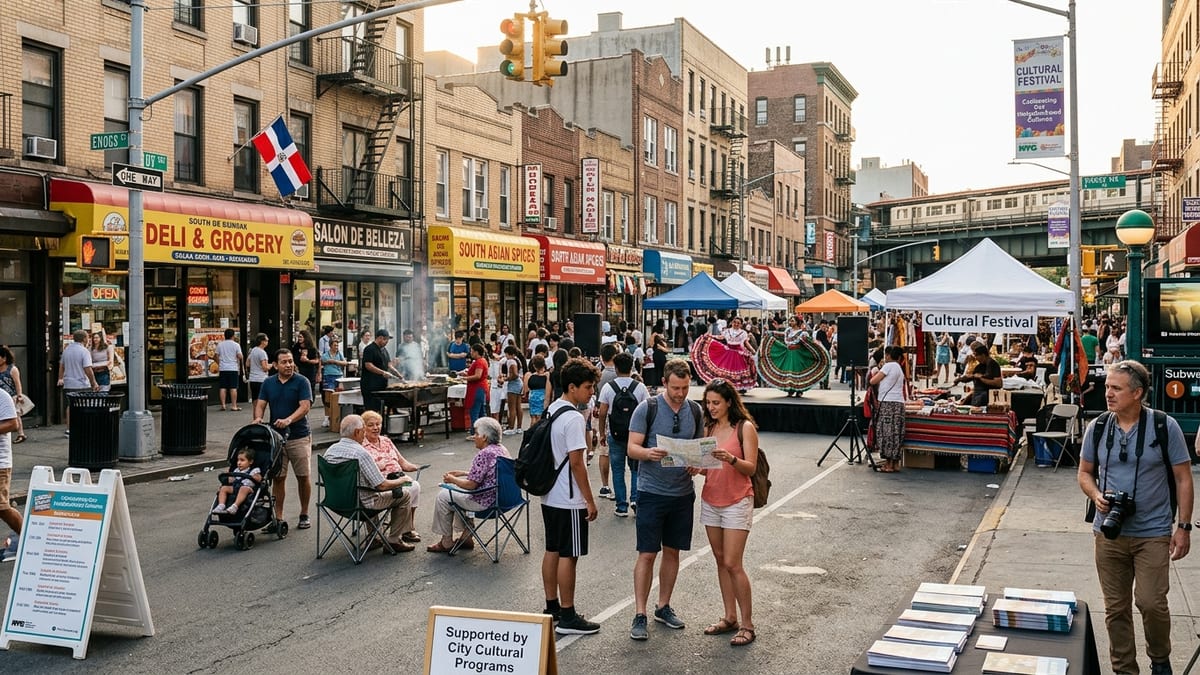
A Bigger Tourism Toolkit For Neighborhood Culture
The latest budget and program documents from New York City show a clear shift toward using cultural grants as a tourism tool, not only for Manhattan but for communities in Brooklyn, Queens, the Bronx and Staten Island as well. Publicly available information highlights increased support through the Department of Cultural Affairs and allied tourism programs for organizations that can draw visitors while celebrating local identity.
City reporting for the current fiscal cycle indicates that cultural funding is being used to reinforce a post-pandemic tourism rebound, with nearly 65 million visitors returning to New York City in the most recent full calendar year. As visitor numbers recover, grant programs tied to festivals, public art and street events are being positioned as a way to spread economic activity beyond traditional tourist corridors.
Officials have framed this expansion as an evolution of longstanding arts support toward a more tourism-facing model. The focus is on neighborhood-based institutions, community cultural organizations and event producers that can turn local stories, cuisines and traditions into drawcards for both residents and visitors.
While individual grant lines sit in different agencies, from cultural affairs to economic development and business improvement districts, the direction is consistent: more money and technical support for events that make it easier for visitors to discover the full geography and diversity of New York City.
How The Expanded Grants Work Across the Five Boroughs
The core architecture of the expansion sits within the Department of Cultural Affairs grantmaking, including the Cultural Development Fund and support for the network of cultural institutions based in all five boroughs. Recent budget materials point to higher overall allocations for these programs, with more than one thousand cultural organizations receiving operating or program grants citywide.
These grants can underwrite festivals, open streets activities, performances in parks and historic sites, as well as multi-day cultural celebrations that anchor neighborhood calendars. In many cases, funding may cover artist fees, production costs, marketing, accessibility services and community engagement, provided that events are public and rooted in local culture.
Parallel initiatives, such as citywide campaigns that package cultural offers into themed seasons, are increasingly linked to this funding. Programs spotlighting architecture, design, neighborhood history and seasonal celebrations draw on grantees from every borough, connecting small organizations to larger tourism marketing efforts and shared branding.
Economic development plans released over the past year also reference support for business improvement districts and local partners that stage festivals and markets. These efforts are framed as tools to boost foot traffic for small businesses while giving visitors a reason to explore outside familiar landmarks.
Focus on Cultural Heritage, Festivals and Community Storytelling
A defining feature of the expanded initiative is its emphasis on cultural heritage and festivals that reflect the city’s layered histories and diasporas. Funding priorities highlighted in recent program guidelines and public summaries include projects that preserve immigrant traditions, celebrate Black and Indigenous histories, and surface neighborhood-specific stories through performance, food, craft and ritual.
Examples in past funding rounds range from folk dance and traditional music series to community history walks and heritage markets. Separate city tourism campaigns have promoted events in places such as Harlem, Jackson Heights, Chinatown, the South Bronx and Staten Island’s North Shore, illustrating how grant-supported programming can plug into a wider narrative about New York City as a mosaic of cultures.
Larger annual festivals, including those devoted to design, architecture and the arts, have also expanded their reach across boroughs in recent years. These umbrella events often include independently organized neighborhood programs supported by city grants, bringing visitors to smaller cultural venues, libraries, historic houses and open streets that might otherwise stay under the radar.
Public information from cultural councils and fiscal sponsors notes that a substantial share of grantees are first-time recipients, suggesting that the tourism-focused push is helping newer and smaller groups gain access to city funding for the first time.
Eligibility, Application Pathways and What Applicants Should Prepare
Eligibility criteria vary by program, but most city cultural grants are directed to nonprofit organizations or fiscally sponsored groups based in New York City. Typical requirements include a clear arts or cultural mission, a history of public programming, and the ability to deliver events that are open and accessible to diverse audiences.
Application materials usually ask for project descriptions, budgets, timelines and audience plans, along with information on how a proposed festival or heritage event advances equity, neighborhood engagement and artistic quality. Many programs now explicitly request information about how projects contribute to tourism or visitor experience, such as attracting out-of-borough audiences or partnering with local businesses.
Recent cycles have also emphasized geographic balance and demographic diversity. Background documents for cultural development funding describe efforts to ensure that resources reach organizations serving communities of color, immigrant neighborhoods and areas with fewer longstanding cultural institutions, particularly in the outer boroughs.
Applicants are encouraged, according to publicly available guidance, to build collaborations with community boards, schools, faith groups and small businesses, and to think about year-round impact rather than one-off events. Projects that can be repeated or scaled, or that tie into existing citywide cultural calendars, are often positioned competitively.
Tourism Impact and What This Means for Visitors
The expansion of tourism-oriented cultural grants is already shaping the visitor experience by adding more neighborhood festivals, markets and performances to the city’s annual calendar. For travelers, this means a wider range of free or low-cost events in residential districts, from waterfront celebrations in the Bronx to food and music festivals in Queens and heritage parades in Brooklyn and Staten Island.
City tourism promotion materials over the last two years have increasingly highlighted neighborhood itineraries tied to these events, signaling a strategic interest in spreading visitor spending and easing pressure on the most crowded attractions. This aligns with global trends in urban tourism policy that favor dispersal, authenticity and community benefit.
For local residents, the grants offer both cultural and economic dividends. They help sustain small arts organizations, provide paid work for artists and cultural workers, and direct visitor attention to independent restaurants, shops and markets near festival routes. They also give communities more tools to tell their own stories at a time when many neighborhoods are navigating rapid change.
Industry analysts note that as New York City continues to chase record visitor numbers, the success of this expanded grants initiative will be measured not only in attendance figures, but in how well it reinforces neighborhood pride, cultural preservation and shared public life across all five boroughs.