

More news on this day
A reported man-overboard emergency on Royal Caribbean’s Oasis of the Seas this week prompted an intense response and anxious moments for passengers before publicly available information indicated the alarm was triggered by an apparent prank involving teenagers on board.
Get the latest news straight to your inbox!
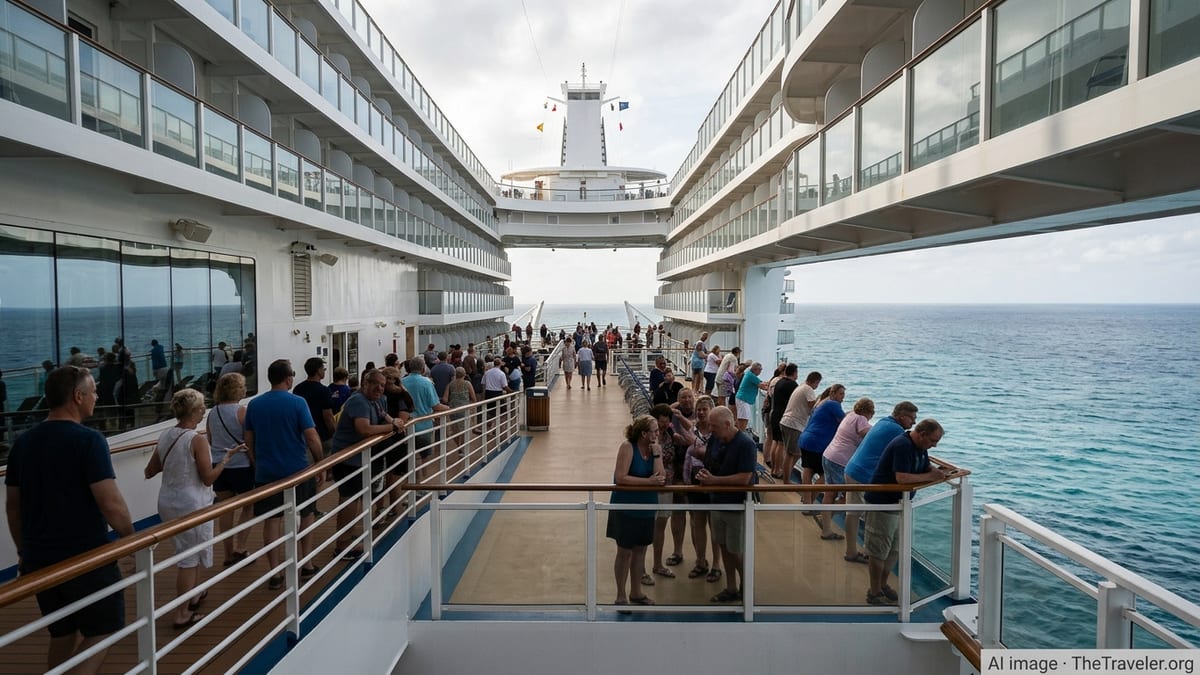
False Alarm Follows Chilling Man-Overboard Call
According to published coverage and first-hand passenger accounts shared on cruise forums and social media, the incident unfolded on Oasis of the Seas during a Caribbean sailing when a man-overboard alert was initiated. Passengers reported hearing emergency announcements and observing crew members quickly mobilizing around the ship’s open decks as standard procedures were activated.
Publicly available descriptions of the episode indicate that the alarm followed claims that a guest had gone overboard. Several travelers described seeing the ship slow while search measures appeared to be put in place, with many assuming that a genuine life-or-death emergency was underway.
Subsequent reporting from cruise-focused outlets and online communities stated that safety checks and head counts were conducted to verify that all passengers were accounted for. As the process unfolded, posts from people on board began to suggest that no person was missing, raising questions about the origin of the report.
By later in the day, information circulating among passengers and in online discussions indicated that the suspected overboard case was being treated as a false alarm rather than an actual disappearance at sea.
Teen Prank Allegations Emerge On Board
Details shared in passenger accounts indicate that attention soon turned to a group of teenagers as the possible source of the overboard claim. Multiple reports circulating online describe the incident as an alleged prank in which teens suggested that someone had fallen from the vessel, triggering the emergency response.
Commentary from travelers on cruise discussion boards characterizes the behavior as part of a pattern of unruly conduct by some youths on the sailing, with several posters describing disruptive activity around the ship in the days leading up to the incident. While specific identities have not been made public, the narrative that emerged across platforms consistently linked the scare to teenage guests.
Publicly available information does not indicate that anyone actually entered the water during the event. Instead, the incident appears to have arisen from claims that proved unfounded once crew completed their checks and confirmed that all passengers were present.
The episode has fueled an ongoing debate among regular cruisers about supervision of minors at sea, with many online commentators arguing that the alleged prank crossed a line from mischief into behavior that placed others at risk and disrupted the voyage for thousands of people on board.
Impact on Passengers and Cruise Operations
Reports from those sailing on Oasis of the Seas describe an atmosphere of confusion and concern as the man-overboard procedures unfolded. Travelers recounted seeing crew scanning the ocean, attending to designated stations, and coordinating movements of guests in certain areas while the situation was assessed.
Several passengers writing on social platforms and cruise forums reported that they were asked to participate in verification steps such as muster station check-ins and head counts. Many described the experience as sobering, noting the emotional strain of believing that a fellow traveler might have been lost at sea.
At the operational level, cruise observers point out that a man-overboard alert involves far more than a brief slowdown. A response can influence the vessel’s course and speed, disrupt scheduled activities, and require significant crew resources. Even when resolved as a false alarm, such an episode can affect onboard schedules and contribute to delays or itinerary adjustments, although no major long-term disruption has been widely reported in this case.
Passenger commentary following the incident often expressed appreciation for the thoroughness of the response, while simultaneously voicing frustration that the chain of events appears to have been set in motion by a deliberate hoax rather than an accidental misunderstanding.
Safety Protocols and Legal Context for False Distress Reports
Man-overboard alerts are among the most serious situations that can occur at sea, and modern cruise ships such as Oasis of the Seas follow established procedures when a possible fall is reported. Publicly available safety guidance indicates that a typical response can include immediate reporting to the bridge, visual searches from multiple vantage points, use of onboard surveillance systems, deployment of lifebuoys or markers, and coordination with maritime rescue services when warranted.
Maritime safety experts frequently emphasize that every suspected overboard case must be treated as real until conclusively resolved. Historically, confirmed falls from cruise ships have led to extensive search operations involving both the vessel and external agencies, often over many hours and across large stretches of ocean.
Legal information published by government and maritime authorities underscores that hoax or reckless distress reports carry significant potential consequences. In the United States, causing or contributing to a false maritime distress situation that prompts a search or rescue effort can lead to substantial civil liability for the costs of the response and, in serious cases, potential criminal penalties.
While no formal enforcement actions have been publicly detailed in connection with the Oasis of the Seas incident as of this writing, discussion within the cruise community has highlighted the possibility that parents or guardians could face repercussions if minors are found responsible for triggering a false alarm.
Broader Concerns About Youth Behavior at Sea
The Oasis of the Seas episode has renewed broader discussion about the conduct of teenage passengers on large resort-style ships. In online forums dedicated to cruising, frequent travelers have increasingly shared accounts of disruptive teen behavior, ranging from late-night noise to roughhousing in pools and public spaces.
Some contributors argue that the sheer size of modern vessels and the variety of onboard venues can make it challenging for parents and guardians to maintain constant oversight of older children and adolescents. Others contend that cruise lines should consider stricter enforcement of existing rules and clearer communication of consequences when behavior crosses into safety-related violations.
Industry observers note that major cruise companies already promote extensive youth programming, curfews in some venues, and codes of conduct that apply to guests of all ages. However, the apparent teen-related prank aboard Oasis of the Seas has prompted renewed calls from some travelers for additional measures, such as more visible security presence in peak gathering spots for youths and reinforced messaging during embarkation about the seriousness of emergency protocols.
For many in the cruising community, the key concern is not isolated mischief but the potential for prank behavior to intersect with critical safety systems. The man-overboard scare on Oasis of the Seas has become a high-profile example of how a moment intended as a joke can ripple across an entire ship, placing strain on crew resources, alarming fellow guests, and spotlighting the legal and ethical responsibilities that come with vacationing at sea.