

More news on this day
New Mangalore Port on India’s Karnataka coast is rapidly regaining prominence on international cruise itineraries, as a stronger 2025–26 season and fresh calls in early 2026 signal renewed momentum for ocean cruise tourism.
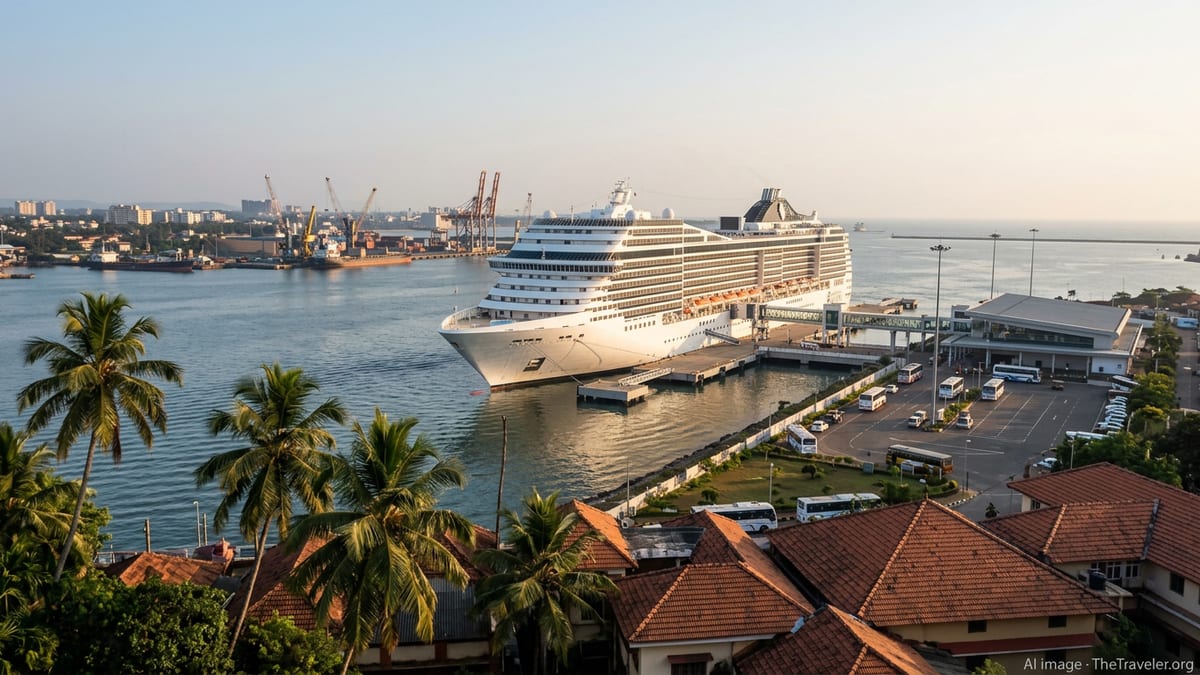
Stronger 2025–26 Season Marks a Turning Point
After several subdued years following the pandemic and disruptions linked to the Red Sea crisis, the 2025–26 cruise season is emerging as a clear inflection point for New Mangalore Port. Port officials report a busier schedule of foreign-flagged calls between December and May, with confirmed berths from multiple international operators and steady passenger flows.
The season opened with a Bahamas-flagged vessel carrying several hundred passengers and crew, followed by additional calls that underscored the port’s staying power on the west coast cruise circuit. Recent arrivals have included mid-size luxury ships that fit well with the port’s existing berthing and passenger-handling capacities, while still delivering a visible uptick in foreign tourist arrivals in Mangaluru city.
These movements build on incremental gains recorded since 2023–24, when the port hosted close to ten cruise vessels and more than 5,000 passengers across a single season. The latest schedules suggest that, while volumes are still below pre-pandemic peaks, New Mangalore is firmly back on the radar of itinerary planners seeking diversified Indian ports beyond the traditional gateways.
Officials and cruise operators alike say the trajectory is now decisively upward, with the current season’s performance expected to shape even more ambitious deployment decisions in the next two to three years.
Early 2026 Calls Reinforce Growing Confidence
The arrival of the Bahamas-flagged MS Island Sky in February 2026 has been widely viewed as a symbolic moment for New Mangalore’s cruise resurgence. Carrying just under 100 passengers and around 70 crew, the vessel called on the port as part of a wider west coast itinerary, highlighting Mangaluru’s appeal as a compact, culturally rich stop between larger Indian hubs.
Port representatives noted that the call was the second of the season, reflecting both the resilience and diversification of cruise deployments into India even as global lines continue to adjust routes around geopolitical uncertainty. Passenger feedback gathered by local tour operators indicates strong satisfaction levels with shore experiences, especially for curated excursions into coastal villages, temple towns and plantation areas in the Western Ghats hinterland.
These early 2026 calls are also important from a commercial standpoint. Local tourism businesses report higher per-passenger spending compared with the immediate post-pandemic years, particularly on guided cultural tours, handicrafts and coastal gastronomy. For the port authority, each successful turnaround strengthens the case for pitching New Mangalore as a dependable, hassle-free call on longer regional itineraries.
Industry watchers say that if current scheduling holds and additional short-notice calls are confirmed, the 2025–26 window could end as one of the port’s strongest cruise periods since before Covid-19, further consolidating its status among India’s emerging cruise gateways.
Infrastructure Upgrades Align With Cruise Ambitions
The upward trend in cruise arrivals is closely linked to investments in port and city infrastructure tailored to visitor needs. New Mangalore Port Authority has progressively enhanced its dedicated cruise facilities, including streamlined immigration and customs areas, improved wayfinding, and upgraded security and baggage-handling systems to minimize dwell times for passengers.
Officials point to the port’s modern berths, shore reception zones and visitor amenities as key reasons why it can comfortably accommodate mid-size international cruise ships without congestion. These hard upgrades are being complemented by softer initiatives, such as coordinated welcome ceremonies, cultural performances at the berth, and multilingual assistance desks that help orient first-time visitors to Mangaluru and the surrounding region.
Beyond the port gates, broader urban projects under the Mangaluru Smart City Mission are expected to indirectly benefit cruise tourism. Planned improvements to riverfront areas and better connectivity to popular beaches like Tannirbavi are likely to make shore excursions more seamless and attractive, reducing travel time from the port and opening up new circuits for half-day and full-day tours.
Stakeholders say that as these infrastructure pieces fall into place, New Mangalore can promote itself more aggressively as an efficient, guest-friendly port of call, with the capacity to scale up cruise traffic without compromising on the visitor experience.
Local Economy Feels the Ripple Effects
The revival of ocean cruise tourism is already translating into tangible benefits for Mangaluru’s local economy. Travel agents and tour operators report increased booking volumes for city tours, heritage walks and coastal drives on days when ships are in port, while transport providers see higher demand for taxis, coaches and specialty vehicles catering to small-group excursions.
Restaurants, cafes and coastal shacks have also noticed a lift in business tied directly to cruise calls, especially in neighborhoods near traditional markets, historic churches and temples. Small-scale artisans and handicraft sellers in and around Mangaluru and Udupi are beginning to regard cruise days as important sales opportunities, with some adjusting product lines and packaging to cater specifically to foreign visitors.
According to local industry estimates, each international cruise call can generate tens of thousands of dollars in combined onshore spending, a meaningful injection for a city where tourism competes with port logistics and industrial activity as key economic pillars. As ship calls become more predictable, businesses are starting to invest in staff training, foreign-language skills and digital payment options to better serve short-stay visitors.
Local authorities, meanwhile, are working to ensure that growth remains balanced. Efforts are underway to manage traffic flows on cruise days, protect sensitive coastal and heritage sites, and encourage tour designs that disperse visitors across a wider geography rather than concentrating them in a handful of already busy spots.
Positioning New Mangalore on Global Cruise Maps
With competition intensifying among ports across Asia for a slice of the cruise market, New Mangalore is consciously positioning itself as a distinctive, culturally rich alternative to mega-city calls. Its pitch to global cruise lines emphasizes a combination of manageable vessel sizes, quick turnaround times and access to authentic south Indian experiences within a short drive of the harbour.
Regional tourism authorities are stepping up joint promotions that package New Mangalore together with ports such as Kochi, Goa and Mumbai, creating attractive multi-port itineraries along India’s western seaboard. These collaborative efforts are designed to reassure cruise planners that India can offer both operational reliability and a diverse portfolio of shore excursions within a single voyage.
Looking ahead, stakeholders expect more seasonal variation in deployments, with winter remaining the core window for international calls but shoulder seasons gaining relevance as lines test new routes. Environmental considerations and evolving passenger expectations around sustainability are also set to influence port strategy, from encouraging cleaner-fuel vessels to promoting low-impact, community-based excursions.
For now, the message emerging from New Mangalore is one of cautious optimism. With a stronger 2025–26 season underway and promising signals from early 2026 arrivals, the port appears well on its way to reclaiming and expanding its role as a key stop on the Indian Ocean cruise circuit.