

More news on this day
Oceania Cruises has adjusted the itinerary of an upcoming world cruise to bypass the Red Sea and wider Middle East, reconfiguring the voyage around an expanded program of African and European destinations that industry observers say could provide a fresh boost to cruise tourism in those regions.
Get the latest news straight to your inbox!
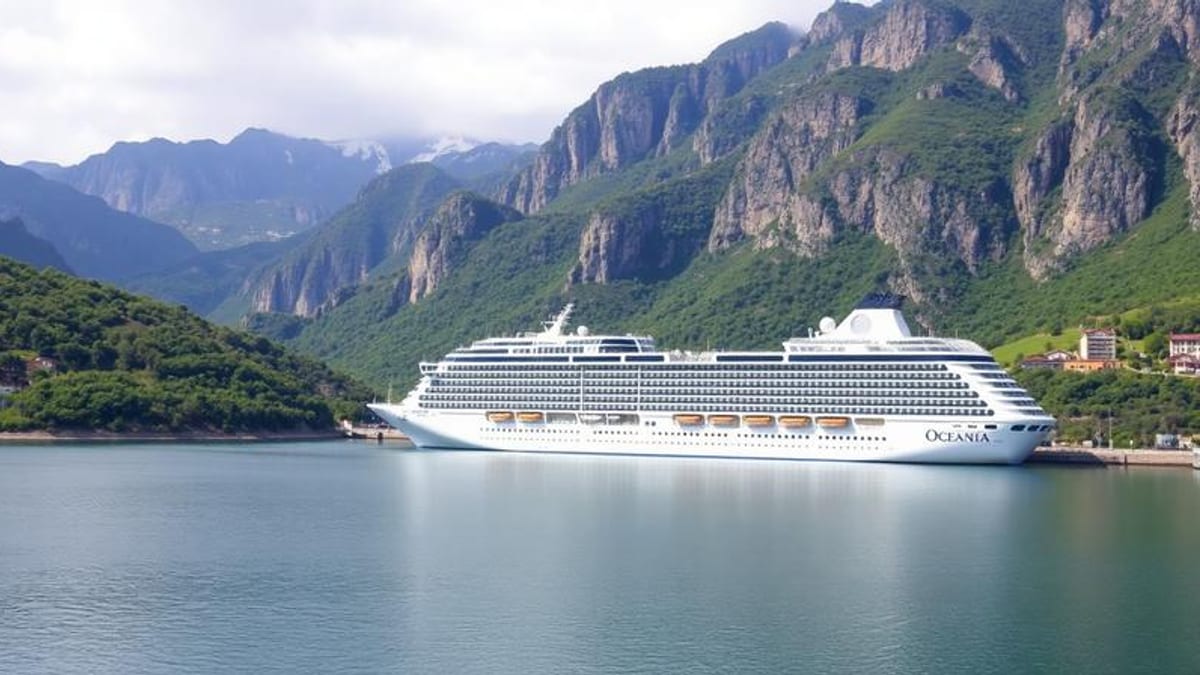
Image by International Cruise News: Latest Cruise Line & Cruise Ship News
Security concerns reshape long-haul cruise planning
The latest changes at Oceania Cruises follow a broader pattern across the sector as operators continue to reassess routes that traditionally rely on the Suez Canal and Red Sea corridor. Publicly available industry reports show that multiple world and grand voyages scheduled for 2025 and 2026 have already been diverted away from the area in response to ongoing geopolitical tensions and maritime security incidents.
While traffic through the Suez Canal has begun to recover in recent months, recent maritime and security assessments indicate that uncertainty in parts of the region is still influencing commercial routing decisions. Cruise planners, which typically lock in world-cruise itineraries several years in advance, are increasingly favoring alternative routings that avoid last-minute disruptions and complex overland substitutions.
For Oceania, the recalibrated world cruise replaces an east–west transit through the Red Sea with a longer leg around Africa, turning a potential operational risk into an opportunity to showcase ports that have historically seen fewer calls from upper-premium lines. Published schedules for 2026 and 2027 already highlighted a stronger Africa and Atlantic focus, and the new world-cruise routing appears to build on that strategic direction.
Travel trade coverage suggests that guests booked on affected voyages are being notified with revised schedules, with options to retain their booking under the new routing or consider alternative sailings. The focus, according to these reports, is on preserving voyage length and overall value while removing exposure to the most volatile transit zones.
New emphasis on African coastal destinations
By routing its world cruise around the Cape of Good Hope instead of through the Red Sea, Oceania is set to add a string of calls along Africa’s extensive coastline. Trade publications that have analyzed the revised pattern point to increased time in South and West Africa in particular, mirroring similar pivots already confirmed by other global cruise brands for 2026 world voyages.
These itinerary shifts are expected to translate into more frequent calls at established cruise hubs such as Cape Town, as well as growing interest in smaller ports on the South Atlantic and Indian Ocean coasts. Tourism analysts note that world cruises tend to be high-spend products, with guests often booking longer and higher-value shore programs, which can provide a concentrated boost to local tour operators, guides and hospitality businesses.
Northwest Africa and Atlantic island chains are also likely beneficiaries of the new routing. World-cruise schedules that avoid the eastern Mediterranean and Middle East commonly weave in additional calls in countries such as Morocco, along with extended time in the Canary Islands, Madeira and other traditionally seasonal destinations that are well suited to shoulder-season visits.
Regional tourism bodies have for several years promoted Africa as one of cruising’s last largely untapped growth frontiers. The expanded Oceania itinerary, layered on top of similar rerouting by other world-cruise operators, is seen in industry analysis as accelerating that trend by concentrating more premium-capacity days in African ports over the next two to three years.
European segments gain more depth and variety
The decision to bypass the Red Sea also alters the European components of Oceania’s world cruise. Instead of entering the continent via the eastern Mediterranean and Middle East gateways, the ship is expected to connect into Europe from the western or northwestern approaches, opening more opportunities for extended time in Atlantic-facing regions before moving into classic Mediterranean circuits.
Oceania’s broader 2026 and 2027 deployment plans, outlined in its published voyage collections, already emphasize in-depth exploration of both marquee and secondary European ports. The revised world-cruise map fits neatly into that framework, with additional days available to layer in less-visited coastal towns alongside traditional capital-city calls.
Travel commentators note that this can benefit local economies in smaller European ports that are better suited to handling mid-sized vessels. Ports in Portugal, Spain, France and the British Isles, for example, often look to world and grand voyages to supplement their mainstream summer cruise seasons, especially during spring and autumn when ships reposition across oceans.
The reworked routing also reduces scheduling pressure around transit dates through choke points such as the Suez Canal. Without the need to meet fixed convoy slots, itinerary planners have more flexibility to adjust port sequences, add overnights, or design thematic segments that connect African, Atlantic and western Mediterranean cultures in a way that appeals to seasoned cruisers.
Passenger expectations and booking dynamics
For guests booked on the affected Oceania world cruise, the most immediate impact is a change in port list and regional focus rather than a reduction in overall voyage length. Early commentary in trade media suggests that the line aims to keep the cruise’s grand-voyage character intact, preserving the sense of a continuous, multi-continent journey even as specific transit corridors are avoided.
Some travelers who originally chose the itinerary for Middle East and Red Sea experiences may opt to review alternative sailings or future seasons that could restore those regions once conditions stabilize. Others, however, are expected to welcome the expanded African and European content, which can be harder to find in concentrated form on traditional world-cruise maps that favor Asia, the Pacific and the Suez route.
Industry analysts point out that itinerary changes of this scale can influence booking behavior across the wider market. As more world cruises position Africa and the eastern Atlantic as core components rather than secondary detours, destination awareness typically rises, which can in turn support more regional and segment voyages focused on those coasts.
Travel advisors report growing interest among experienced cruisers in routing variety and perceived safety as much as in specific iconic landmarks. The Oceania revision is being interpreted in that context, with the line presenting the new path as a curated alternative that emphasizes cultural immersion and scenic coastal cruising over transiting a high-profile but operationally sensitive corridor.
Broader implications for cruise tourism
Oceania’s decision feeds into a wider rebalancing of global cruise itineraries that has been under way since security issues in and around the Red Sea first began affecting deployment plans. In the short term, the most visible effect is a clustering of high-value itineraries around Africa and western approaches to Europe, as lines test demand and port infrastructure in markets that historically have seen more limited world-cruise traffic.
Port authorities and tourism boards across Africa and parts of Europe have been promoting infrastructure upgrades, shore-excursion development and streamlined passenger processes to capitalize on the shift. Publicly available planning documents and maritime briefings indicate a growing emphasis on attracting longer-stay calls and overnight visits from premium and luxury brands that can spend more time in port than mainstream, high-volume ships.
In the longer term, the success of Oceania’s revised world cruise, together with similar rerouted voyages at other lines, is likely to influence how operators design global itineraries even if conditions in the Middle East improve. Cruise schedulers may continue to favor diversified routings that do not rely on a single corridor, both to spread risk and to showcase a broader mix of destinations to repeat guests.
For now, the reimagined Oceania world cruise underscores how security considerations and destination development can intersect to reshape global cruise tourism. By steering away from the Red Sea and Middle East and leaning into a stronger African and European program, the line is helping to shift the spotlight toward coastal regions that have long sought a larger share of the world-cruise market.