

More news on this day
Polar cruise specialist Oceanwide Expeditions is preparing to add two new sustainable vessels to its fleet, a move that signals growing investment in lower-impact Arctic and Antarctic exploration as demand for small-ship voyages to the polar regions continues to rise.
Get the latest news straight to your inbox!
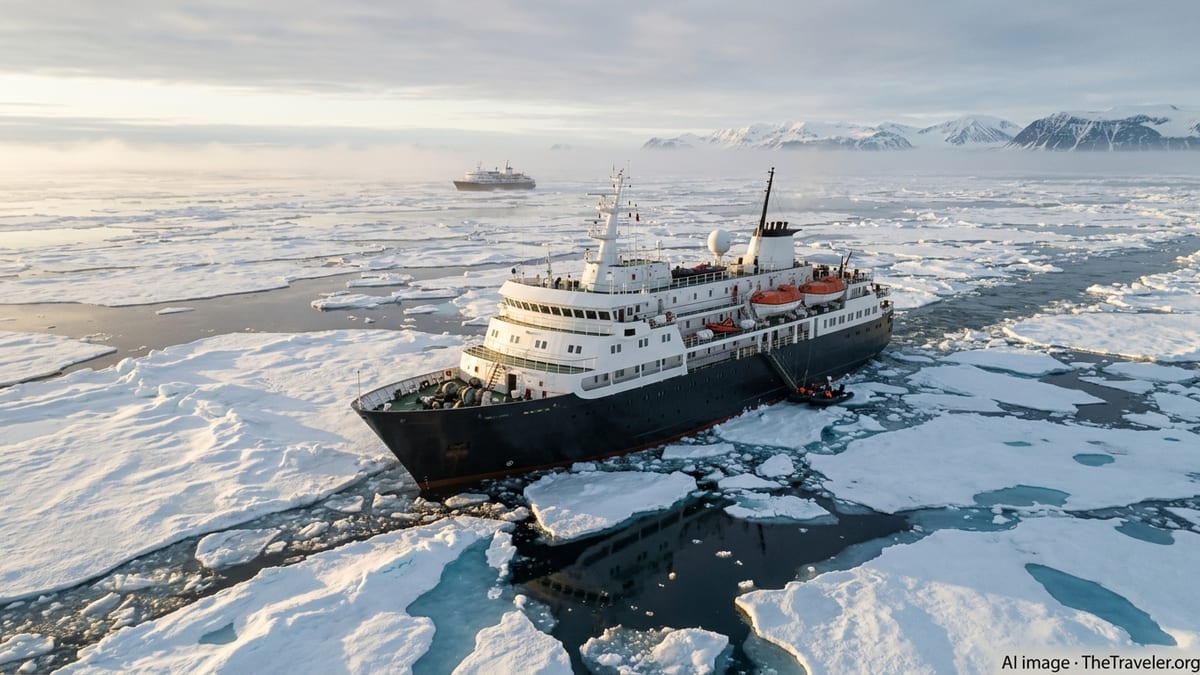
Newbuilds Target Cleaner, More Efficient Polar Operations
Publicly available industry data and recent orderbook analyses indicate that Oceanwide Expeditions is working on a pair of next-generation expedition vessels designed to tighten the company’s environmental footprint while expanding capacity in both the Arctic and Antarctic. The new ships are expected to follow the technical template of Hondius and Janssonius, the operator’s most modern Polar Class 6 vessels, but with further refinements aimed at fuel efficiency and reduced emissions.
Reports from cruise industry publications describe a focus on optimized hull forms, upgraded propulsion systems and advanced energy management designed to cut fuel consumption compared with earlier generations of expedition ships. These design choices follow a broader trend across the polar cruise sector, where operators are moving away from older, heavily fuel-intensive tonnage in favor of purpose-built vessels with smaller environmental footprints.
Although final delivery dates and names have not yet been widely detailed, the new vessels are being positioned as part of Oceanwide’s long-term growth strategy in the high latitudes. As regulatory requirements tighten and travelers become more conscious of their environmental impact, newbuilds that promise cleaner operation are becoming critical to maintaining access to sensitive polar environments.
The additional capacity would also give Oceanwide more flexibility in how it schedules complex itineraries that weave through the Antarctic Peninsula, South Georgia, the Weddell Sea, Svalbard and Greenland, while keeping passenger numbers relatively low on each individual ship.
Sustainability Features Inspired by Existing Flagships
Oceanwide already highlights Hondius as one of the most environmentally friendly vessels in the polar seas, citing its modern engines, high ice class and energy-efficient hotel systems. Janssonius, delivered as a sister ship, further cemented a fleet model based on compact, ice-strengthened vessels with contemporary technical standards. Industry coverage suggests the two newbuilds will extend this concept, adopting similar dimensions and ice classification while introducing upgraded technology in key areas.
In practice, this is expected to mean more efficient propulsion, enhanced waste and water treatment systems, and further attention to noise and vibration reduction to minimize disturbance to wildlife. Several expedition cruise lines are also experimenting with low-sulfur fuels, shore-power capability for port calls and digital tools for voyage optimization, and observers expect Oceanwide’s new vessels to align with this direction of travel.
These changes come as international rules on emissions, wastewater and fuel quality grow more stringent, especially in polar regions. The International Maritime Organization has been phasing in restrictions on heavy fuel oil in the Arctic and reinforcing standards for Antarctic operations, pushing operators toward cleaner engines and improved onboard systems.
For Oceanwide, integrating such measures at the design stage allows the company to avoid extensive retrofits later, while also giving travelers clearer assurances that their journeys are being conducted within modern sustainability parameters.
Supporting an Expanding Polar Program
Oceanwide’s current polar program already leans heavily on small, ice-strengthened ships such as Hondius, Janssonius, Ortelius and Plancius, along with the historic sailing vessel Rembrandt van Rijn. Recent seasons have seen the operator launch new Antarctic itineraries that reach remote regions of the Weddell Sea and Queen Maud Land, as well as expanded Arctic routes in Svalbard, Greenland and the high Arctic pack ice.
Reports on the company’s 2025 and 2026 Arctic and Antarctic seasons show demand for longer, more adventurous voyages that combine wildlife watching with photography, hiking and in-depth ice exploration. Small-ship capacity is often fully utilized during peak months, and additional tonnage is expected to make scheduling more resilient while accommodating future growth in bookings.
The two new sustainable vessels would likely be deployed across both hemispheres, alternating between Antarctic summers and Arctic summers in line with prevailing sea-ice conditions. This pattern mirrors how existing ships are used, allowing Oceanwide to maximize utilization while giving guests a broader menu of dates and itineraries.
By keeping ship sizes modest compared with mainstream cruise vessels, the company can continue to land guests by Zodiac in locations that cannot host large ships, a fundamental part of the expedition model that also helps disperse visitor impact at shore sites.
Technology and Data to Navigate Changing Ice
The development of new vessels is taking place against a backdrop of rapid change in polar sea ice and weather patterns. Oceanwide has recently been associated with the adoption of new digital tools for ice navigation, including the IcySea platform, which aggregates satellite imagery and ice charts to help bridge teams plan safer, more efficient routes through drifting pack ice.
Observers expect that similar decision-support technologies will be native to the bridge systems on the upcoming vessels, integrated with radar, satellite communications and voyage-planning software. The goal is to shorten transits, avoid heavy ice where appropriate and reduce fuel burn without compromising safety.
In addition, the next-generation ships are likely to feature improved stabilization to enhance comfort in rough seas, particularly in the notorious Drake Passage between South America and the Antarctic Peninsula. More stable platforms can indirectly support sustainability goals by allowing ships to maintain planned speeds and routes rather than detouring or slowing dramatically for passenger comfort.
As Arctic and Antarctic research continues to highlight the fragility of polar ecosystems, the ability to combine sophisticated navigation data with efficient hull and engine design is increasingly seen as a key element in responsible expedition travel.
What Travelers Can Expect on Future Sailings
For guests, the arrival of two new sustainable vessels is expected to translate into more departure dates, refreshed interiors and an evolution rather than a reinvention of Oceanwide’s expedition style. Industry commentary suggests that the ships will maintain the operator’s informal atmosphere, relatively low passenger counts and focus on time off the ship in Zodiacs, on shore landings and in citizen-science activities.
Cabins and public areas are likely to reflect contemporary Scandinavian-influenced design, with large observation lounges and exterior decks built to maximize wildlife and landscape viewing. At the same time, behind-the-scenes systems such as ventilation, insulation and lighting are being prioritized for energy efficiency and guest comfort.
These developments underscore how expedition cruising is moving into a new era in which sustainability is no longer an optional add-on but a central part of ship design and route planning. As Oceanwide Expeditions prepares to bring two new vessels into service, travelers looking to reach the polar regions are being presented with more options that balance adventure with environmental responsibility.