

More news on this day
Oceanwide Expeditions is sharpening its focus on sustainability in the Arctic and Antarctic, highlighting new-generation vessels and traditional sailing ships as part of a broader effort to cut emissions and lessen the impact of polar tourism.
Get the latest news straight to your inbox!
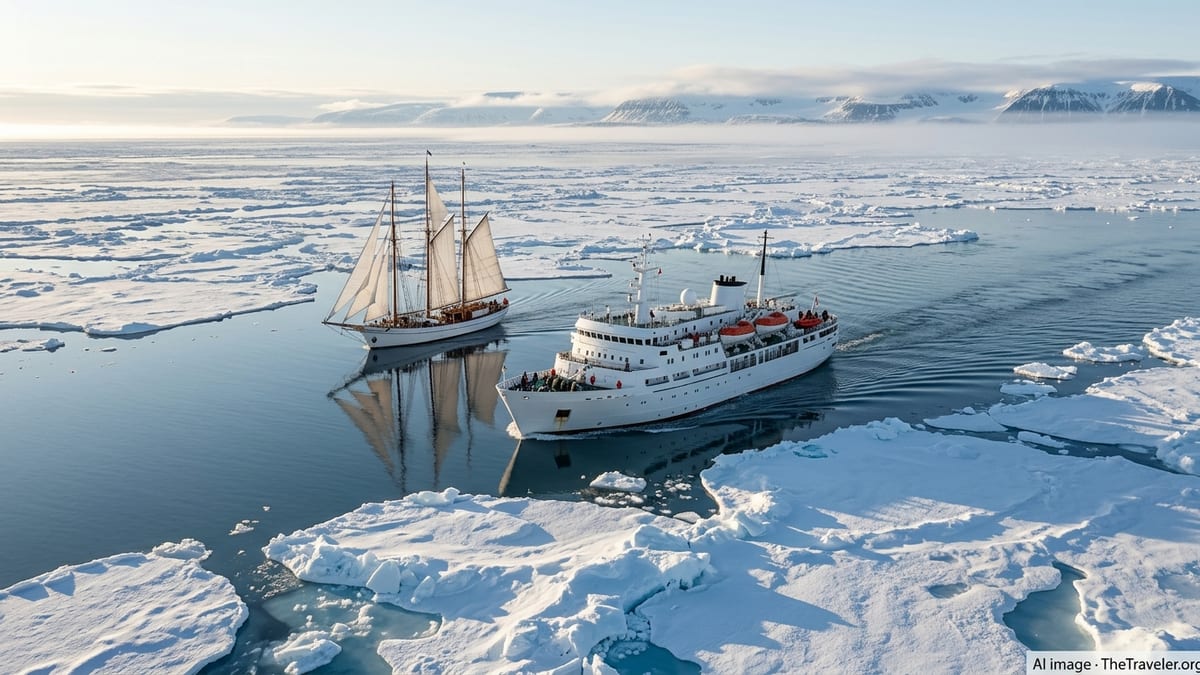
Eco-Engineered Polar Ships Target Lower Emissions
Recent updates to Oceanwide Expeditions’ fleet place fuel efficiency and emissions reduction at the center of its polar operations. Publicly available information shows that its newer ice-strengthened ships, such as m/v Hondius and sister vessel m/v Janssonius, have been designed from the keel up with energy-saving technology and strict polar safety standards in mind. Both ships exceed the requirements of the International Maritime Organization’s Polar Code while maintaining the small-ship flexibility favored by expedition travelers.
The company describes Hondius as incorporating Tier III engines that cut nitrogen oxide emissions, flexible power management to match output with demand, and shaft generators that reduce reliance on separate diesel units. Reports indicate that these systems, combined with measures such as LED lighting and steam-based heating, have helped trim average fuel consumption per passenger by more than one-third compared with older tonnage.
Older vessels in the fleet are also being retrofitted. Technical updates to ships such as Ortelius include the installation of newer, lower-emission engines and efficiency upgrades that aim to improve fuel economy while maintaining ice-going capability. Industry summaries note that these investments reflect a broader trend across the expedition cruise sector, where operators are under pressure to show measurable steps toward reduced greenhouse gas output.
Alongside propulsion changes, Oceanwide Expeditions reports the use of low-sulphur marine gas oil across its fleet, limiting sulphur content to below widely adopted regulatory thresholds. This move aligns the company with tightening international standards on airborne pollutants from shipping and is increasingly viewed by environmental groups as a baseline requirement for vessels operating in fragile polar regions.
Traditional Sail Power Returns to the Polar Itinerary
While much attention focuses on new ship technology, Oceanwide Expeditions is also leveraging wind power on its sail-equipped vessels to limit fuel use where conditions allow. The company operates smaller, traditional sailing ships such as Rembrandt van Rijn and Noorderlicht on certain Arctic routes, positioning them as low-impact alternatives for travelers willing to trade some onboard amenities for a more elemental style of navigation.
These sailing-focused programs rely on wind propulsion whenever feasible, supplemented by engines mainly for maneuvering, safety, or unfavorable weather. For itineraries around Svalbard and other high-latitude destinations, operators describe how sail-assisted travel can significantly reduce engine hours, especially during stable summer conditions, cutting emissions on a per-passenger basis.
The revival of sail in commercial polar travel mirrors broader maritime experiments with wind-assisted propulsion. Across the industry, a growing number of projects are testing rigid wing sails, kites, and rotor systems to trim fuel burn on conventional ships. Oceanwide Expeditions’ use of classic rigged vessels fits within this wider movement toward harnessing natural forces at sea rather than relying solely on fossil fuels.
For travelers, sail-based expeditions are marketed as both an environmental and experiential choice. Smaller passenger numbers, quieter passages under sail, and closer engagement with weather and sea conditions appeal to visitors seeking a slower, more immersive form of Arctic exploration that aligns with rising expectations around responsible tourism.
Digital Tools and Science Partnerships Support Safer, Smarter Voyages
Sustainable polar cruising increasingly depends not only on ship hardware but also on data and planning. In recent seasons, Oceanwide Expeditions has adopted new digital tools to refine routing and reduce risk, including a partnership with specialist providers offering near-real-time sea ice and weather information for its expedition bridges. Industry reports describe the use of software that combines satellite imagery with forecasting models to give bridge teams a clearer view of ice concentration, drift, and navigable leads.
These tools are designed to support dynamic routing, allowing captains and expedition leaders to adapt itineraries more precisely to sea ice conditions. More efficient paths through ice can cut fuel consumption and transit times, while also helping ships avoid sensitive wildlife areas or regions where ice pressure could pose safety concerns. Analysts note that this form of data-driven navigation is becoming a hallmark of advanced expedition operations in both the Arctic and Antarctic.
Oceanwide Expeditions is also a member of regional trade bodies such as the Association of Arctic Expedition Cruise Operators and the International Association of Antarctica Tour Operators. These groups coordinate voluntary guidelines on topics ranging from wildlife approach distances to waste management and landing site rotation, aiming to reduce cumulative visitor impact at popular sites.
In parallel, the company highlights collaborations with scientific projects and citizen science initiatives on selected voyages. Published accounts describe visiting researchers using Oceanwide vessels as platforms for observing marine life, monitoring invasive species, and collecting environmental samples. Guests are sometimes invited to contribute to long-term data sets, aligning leisure travel with research that may inform future conservation measures.
Competitive Field Drives Innovation in Green Polar Travel
The push toward cleaner polar operations is unfolding across a competitive landscape of expedition cruise brands. Over the past decade, rival operators have launched hybrid-powered ships, vessels using alternative fuels such as liquefied natural gas, and advanced hull forms designed to reduce drag in ice-infested waters. These developments have raised expectations among travelers and regulators alike, setting new benchmarks for environmental performance in remote regions.
Oceanwide Expeditions positions its strategy within this context, with a focus on compact vessels and high ratios of time spent off the ship. Analysts suggest that smaller passenger capacities can help minimize per-landing impact on wildlife sites, even as overall visitation to the poles continues to rise. At the same time, the company’s reliance on a mix of modern expedition ships and refitted older hulls highlights the challenges of balancing commercial realities with pressure to decarbonize more rapidly.
Industry observers point out that a fully zero-emission deep-sea expedition vessel is not yet commercially mainstream, and progress remains incremental. Measures such as efficiency gains, low-sulphur fuels, and better route planning are viewed as interim steps while shipyards and operators explore scalable alternatives, including battery hybridization and future low- or zero-carbon fuels.
For travelers assessing polar options, sustainable credentials are becoming a more prominent factor in booking decisions, joining safety record, itinerary design, and onboard experience. Reports from polar-focused travel advisers indicate that questions about ship technology, emissions, and environmental certifications now feature regularly in client inquiries.
What the New Standard Means for Future Polar Explorers
As demand for polar tourism grows, Oceanwide Expeditions’ evolving fleet strategy offers a glimpse of how operators may seek to define a “new standard” for sustainable exploration. The combination of purpose-built, efficiency-focused ships, sail-assisted voyages, and science partnerships reflects an effort to link environmental performance directly with the appeal of visiting the world’s most remote seascapes.
Observers note that maintaining this trajectory will likely require continued investment in both technology and training. Crew familiarization with new bridge systems, engineering teams capable of managing increasingly complex onboard power setups, and expedition staff adept at interpreting environmental guidelines all form part of the shift toward lower-impact operations.
Future regulatory changes are also expected to shape how such standards evolve. International bodies continue to debate tighter rules on black carbon emissions, grey water discharge, and fuel types allowed in polar waters. Operators already experimenting with reduced-emission technologies and alternative propulsion approaches, including expanded use of wind assistance, may find themselves better positioned as these frameworks crystallize.
For now, the direction of travel is clear. Companies like Oceanwide Expeditions that emphasize efficiency-focused ship design, responsible routing, and sail-powered itineraries are helping to redefine what responsible access to the Arctic and Antarctic looks like, even as the industry works toward more ambitious long-term climate goals.