

More news on this day
Oceanwide Expeditions is preparing to introduce two eco-sail expedition ships featuring hybrid propulsion and wind-assisted technology by 2027, signaling a new phase of sustainability-focused growth in the cruise tourism sector.
Get the latest news straight to your inbox!
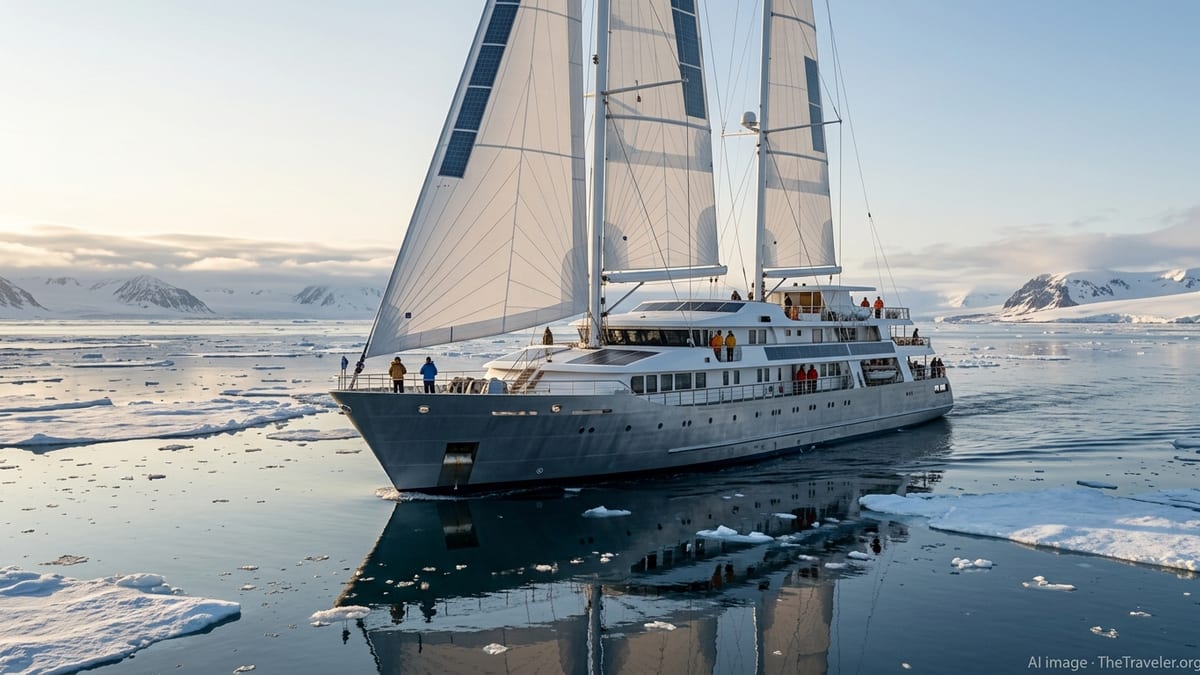
Hybrid Eco-Sail Design Targets Lower Emissions in Polar Regions
Publicly available information about Oceanwide Expeditions’ environmental, social, and governance strategy shows a clear emphasis on reducing fuel consumption and overall emissions across its polar fleet. The planned eco-sail vessels extend this approach by pairing wind power with a hybrid mechanical and battery-assisted propulsion system, aiming to cut fuel use and greenhouse gases on sensitive Arctic and Antarctic routes.
The new ships are expected to rely on sail-assisted propulsion as a primary efficiency tool, using large, highly efficient rigging to harness wind energy while automated controls optimize sail trim in challenging polar conditions. When wind is insufficient, hybrid systems drawing on low-sulfur marine fuels and advanced energy storage are designed to maintain stability and range without reverting to conventional high-consumption engines.
Industry reports on similar sail and hybrid concepts indicate that combining wind propulsion with advanced hull forms and battery systems can reduce fuel consumption by 20 to 30 percent or more compared with traditional tonnage of similar size. Applied to small expedition ships carrying relatively few passengers, these savings have an outsized effect on per-guest emissions, a key metric for climate-conscious travelers choosing expedition cruises.
The eco-sail design also supports stricter rules in regions governed by organizations such as the Association of Arctic Expedition Cruise Operators and the International Association of Antarctica Tour Operators, where operators are encouraged to adopt best-available technology to protect fragile wildlife habitats and ice-dependent ecosystems.
Commercialization in 2027 Aligns With a Wave of Green Ship Launches
The targeted commercialization window in 2027 places Oceanwide’s eco-sail ships within a broader period of rapid innovation in low-carbon cruise technology. Across the industry, a cluster of vessels scheduled around the mid-2020s to late decade feature hybrid engines, battery banks, rigid sails, and solar-integrated surfaces, indicating that early research and demonstration projects are now maturing into commercially viable products.
Several recent expedition and boutique ships entering service or nearing completion highlight this trend, with hybrid diesel-electric propulsion, Azipod maneuvering systems, and wind-assisted rigs increasingly common in newbuild specifications. Analysts following marine propulsion developments note that the years between 2026 and 2028 are shaping up as a turning point, as orders shift from conventional tonnage toward vessels that can operate on a mix of marine fuels, electricity, and renewable energy captured directly at sea.
Positioning its eco-sail launches in 2027 gives Oceanwide access to maturing technologies that have already been tested on earlier hybrid and sail-assisted ships. This timing allows shipyards and equipment manufacturers to refine systems such as battery management software, automated sail handling, and integrated navigation tools that balance comfort with energy efficiency on remote itineraries.
The commercialization horizon also aligns with forecasts that regulatory pressure on maritime emissions will intensify through the late 2020s. By fielding new vessels that meet stricter efficiency targets, expedition operators can maintain access to environmentally sensitive ports and landing sites that may become more restrictive for older, higher-emitting tonnage.
Sustainability as a Driver of Expedition Cruise Demand
Expedition cruising has grown steadily within the wider cruise sector, and sustainability credentials increasingly influence how travelers choose between operators. Reports on consumer behavior in adventure and polar travel show that guests are asking more detailed questions about emissions, fuel choices, and the impact of ship operations on wildlife, sea ice, and coastal communities.
Oceanwide Expeditions already positions its small-ship model as a lower-impact alternative to large cruise vessels, arguing that smaller passenger counts, slower cruising speeds, and education-focused programming help reduce environmental pressure while increasing awareness. Introducing eco-sail ships with hybrid propulsion extends this positioning, offering a concrete technological answer to questions about decarbonization and responsible access to polar regions.
Market observers note that vessels with visible sustainability features such as sails, solar surfaces, and quiet hybrid propulsion often become a selling point in their own right. Travelers seeking meaningful experiences in remote destinations may view these technologies not just as an environmental upgrade, but as part of the adventure, reinforcing a sense of traveling in step with the natural forces that shape the polar environment.
As hybrid and sail-assisted ships gradually enter service, itinerary planners also gain more flexibility to design routes that favor slow travel and extended time in areas of high scenic value, since lower fuel consumption and efficient energy management can reduce the cost of longer voyages.
Potential Impacts on Cruise Tourism Growth and Competitive Dynamics
The launch of two eco-sail ships under a well-established polar brand has potential implications that reach beyond Oceanwide’s own fleet. Analysts tracking cruise capacity suggest that sustainable expedition tonnage is emerging as a separate segment, with operators competing as much on environmental performance and scientific partnerships as on amenities and price.
By adding specialized eco-sail capacity, Oceanwide contributes to a gradual shift in how growth is measured in the cruise industry. Instead of focusing solely on berth numbers and ship size, metrics such as emissions per passenger night, fuel consumed per nautical mile, and the percentage of time vessels can operate on wind or stored electricity gain prominence in competitive positioning.
This shift could influence investment decisions across the sector. If eco-sail expedition vessels prove commercially successful when they begin operating in 2027, shipowners and financiers may be more willing to back additional projects that integrate sail power, hydrogen-ready engines, or expanded battery systems. That, in turn, could accelerate the development of supporting infrastructure, from shore power in remote ports to specialized maintenance services for complex hybrid rigs.
Destination partners in Arctic and Antarctic gateway communities may also view eco-sail tonnage favorably when considering future limits on ship calls. Ports and local authorities assessing cumulative impacts from growing visitor numbers often differentiate between conventional ships and those using advanced emission-reduction technology, which can shape how landing slots and port calls are allocated in peak seasons.
What Eco-Sail Expansion Means for Travelers and Destinations
For travelers, the arrival of two eco-sail expedition ships in 2027 is likely to broaden the range of lower-impact options in the premium adventure segment. Prospective guests can expect itineraries that emphasize slow transits under sail where conditions allow, quieter approaches to wildlife viewing areas, and onboard programs that interpret the ship itself as an example of emerging clean maritime technology.
Pricing for early sailings will depend on construction and operating costs, but analysts generally note that small hybrid expedition vessels occupy the higher end of the market, reflecting both their limited capacity and technical sophistication. However, as more ships adopt similar systems, economies of scale in equipment production and operational know-how could gradually bring costs down, potentially making eco-sail voyages accessible to a wider audience over time.
For destinations, particularly in the polar regions, hybrid eco-sail ships may help reconcile continued tourism growth with environmental limits. Lower emissions, reduced underwater noise, and tighter integration of scientific activities into guest programs can support local and regional efforts to monitor climate change, protect wildlife, and manage visitor flows more effectively.
While the overall share of global cruise emissions represented by expedition ships remains relatively small, the sector often serves as a proving ground for technologies that can later be scaled to larger vessels. The forthcoming Oceanwide eco-sail newbuilds scheduled for commercialization in 2027 are positioned within this experimental but increasingly influential niche, where innovation at small scale can inform the future trajectory of cruise tourism worldwide.