

More news on this day
Oceanwide Expeditions is preparing to introduce a new generation of eco-sail expedition vessels from 2029, combining hybrid propulsion with wind-assisted technology in a bid to shrink the environmental footprint of polar and remote-destination cruising.
Get the latest news straight to your inbox!
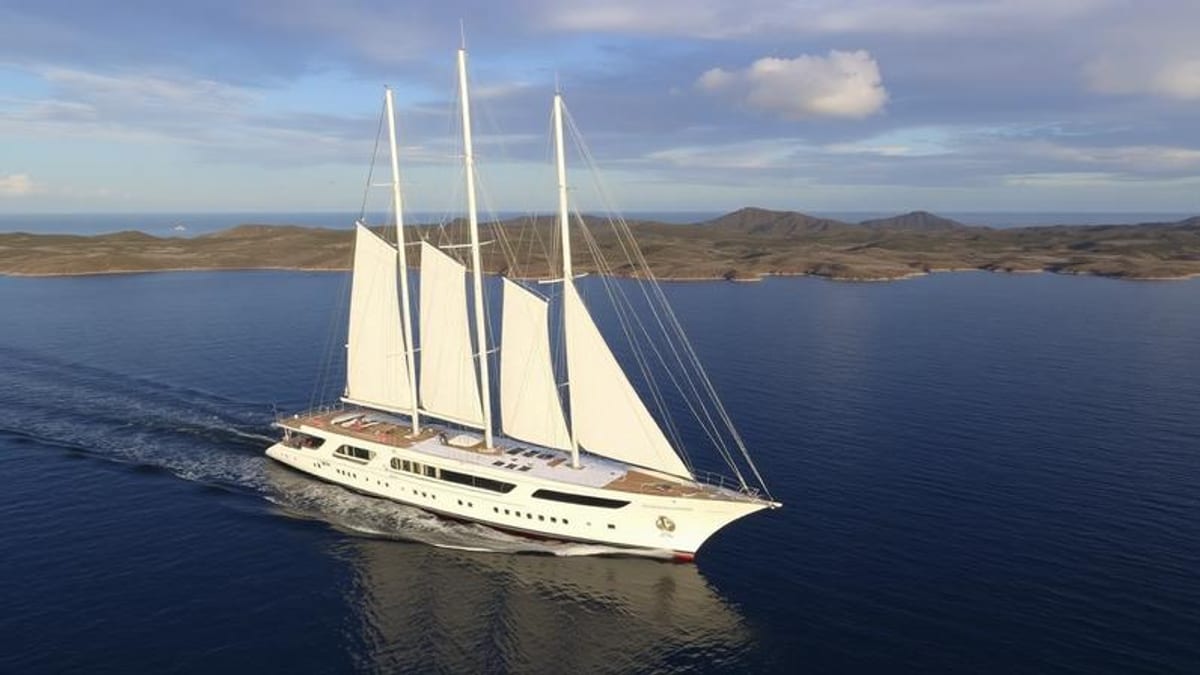
Image by International Cruise News: Latest Cruise Line & Cruise Ship News
Hybrid Eco-Sail Vessels Target Lower-Impact Polar Voyages
According to publicly available information on the company’s long-term fleet strategy, Oceanwide Expeditions plans to deploy purpose-built eco-sail vessels in 2029 and 2030 that pair wind-assisted propulsion with advanced hybrid power systems. The new ships are being positioned as small-scale expedition platforms designed for polar regions and other fragile environments, where emissions, underwater noise, and fuel use are under growing scrutiny from regulators and travelers.
Early outlines of the concept indicate that the vessels are expected to use sail-assisted systems as a primary or significant source of propulsion when conditions allow, backed by low-emission hybrid engines and battery storage. This approach mirrors broader trends in green shipping, where rigid or solid sails, optimized hull forms, and battery-supported propulsion are being combined to cut fuel consumption while maintaining reliability in challenging seas.
The eco-sail vessels are projected to serve Oceanwide’s core destinations, including Antarctica and the Arctic, where stricter fuel rules and heightened awareness of climate impacts are reshaping deployment plans across the industry. By introducing wind-assist and hybrid technology on relatively small, expedition-focused ships, the company is seeking to align its growth with rising expectations for climate-conscious travel.
Publicly shared sustainability materials from Oceanwide emphasize that the company sees education-focused, small-ship expeditions as a way to support conservation while acknowledging that any cruise activity carries a carbon cost. The forthcoming eco-sail ships are described as a central pillar in tightening the link between its environmental goals and future fleet expansion.
Building on Fuel-Efficiency Upgrades Across the Existing Fleet
The eco-sail program follows a series of incremental technical upgrades across Oceanwide’s existing vessels aimed at cutting fuel burn and emissions. Recent work on the ice-strengthened ship Ortelius, for example, has included replacing long-serving stainless-steel propeller blades with new bronze blades engineered for better propulsion efficiency, alongside extensive hull blasting to restore a smoother underwater profile.
Industry coverage of these projects notes that the combined effect of hydrodynamic improvements and optimized propulsion can translate into measurable fuel savings over an expedition season. Even single-digit percentage gains are considered significant in polar cruising, where itineraries cover long distances at relatively low speeds in ice-affected waters.
These retrofits form part of a wider environmental, social, and governance roadmap in which Oceanwide has stated that it is working to quantify and eventually offset its direct operational emissions over the coming decade. The company’s published strategy outlines a focus on vessel investments, operational efficiencies, and low-impact tourism practices rather than rapid expansion of ship capacity at any cost.
By first squeezing more efficiency from the current fleet and then moving toward purpose-built eco-sail designs, Oceanwide appears to be following a staged approach to decarbonization that mirrors patterns seen among other specialist expedition brands. The announcement of the 2029 and 2030 vessels is being interpreted by observers as a signal that sail-assisted and hybrid propulsion are transitioning from experimental features to mainstream tools in the expedition segment.
Sustainable Cruise Tourism Accelerates Toward 2030 Milestones
The timeline for Oceanwide’s new eco-sail vessels broadly aligns with wider maritime and cruise-sector targets clustered around 2030. Cruise industry sustainability papers highlight that meeting international climate objectives will require an increasing share of the fleet to rely on alternative fuels, energy-efficiency technologies, and hybrid solutions by that date, alongside port-side infrastructure and carbon-accounting frameworks.
Elsewhere in the market, other operators and shipyards have revealed concepts for wind-assisted or sail-powered cruise and expedition ships that are due to debut before or around 2030. Some luxury and expedition lines are working on designs that blend solid-sail or wing-sail rigs with liquefied natural gas, hydrogen or advanced battery systems, while others are focusing purely on hybrid-electric power and extensive shore-power connectivity.
In this context, Oceanwide’s eco-sail initiative positions the company within an emerging cohort of operators testing how far wind power can be scaled for passenger vessels without compromising safety, comfort, or schedule reliability. Analysts following the sector suggest that lessons learned from these early-generation eco-sail ships are likely to inform second- and third-wave designs later in the 2030s.
For destinations, particularly in the polar regions, the accelerating shift toward quieter, lower-emission ships is increasingly seen as a prerequisite for maintaining public support and regulatory approval for tourism growth. Local authorities and scientific communities have drawn attention to black carbon, underwater noise, and spill risks associated with conventional fuel-intensive vessels, reinforcing the commercial case for companies investing in greener tonnage.
Hybrid Propulsion and Wind Assist Gain Ground in Expedition Design
The technology mix anticipated for Oceanwide’s eco-sail vessels draws on a growing body of experience from both passenger and cargo shipping. Hybrid expedition ships are already operating with large marine battery systems that allow low-speed maneuvering, short periods of all-electric sailing, and optimized engine loading. Separately, a rising number of commercial vessels are installing rigid sails, rotor sails, or automated soft sails to capture wind energy and cut fuel use.
Studies shared by maritime research groups and energy agencies suggest that wind-assist systems can reduce fuel consumption by double-digit percentages on suitable routes, while hybrid propulsion and advanced energy-management software further trim emissions. Although performance varies with route, speed, and weather, these technologies are increasingly viewed as complementary rather than competing solutions.
Expedition cruise ships present a distinct design challenge because they must balance robust ice or high-latitude capability with comfort, scientific equipment, and a relatively small passenger capacity. Integrating tall rigs, battery rooms, and reserve fuel systems into compact hulls demands careful trade-offs between range, stability, and interior space. The 2029 and 2030 eco-sail vessels are expected to showcase how these competing demands can be reconciled in a new generation of ships.
Oceanwide’s move also underscores how quickly once-niche ideas such as sail-assist are becoming part of mainstream naval architecture conversations. Classification societies, shipyards, and technology suppliers are increasingly publishing guidelines and concept studies for cruise and passenger vessels that rely on wind as a structural element of their decarbonization pathways.
Travelers Look for Lower-Carbon Ways to Explore Remote Regions
For prospective guests, the arrival of eco-sail expedition ships is likely to add a new dimension to the appeal of polar and remote-region cruising. Surveys and booking data across the wider industry indicate that a growing share of travelers now weigh environmental performance and company sustainability policies alongside price and itinerary when choosing a voyage.
Eco-sail vessels give operators an opportunity to make emissions reductions tangible, allowing travelers to see sails deployed, battery systems engaged, and energy-saving measures explained in real time. Educational programming on board, already a hallmark of Oceanwide’s itineraries, can incorporate more detail on how hybrid propulsion and wind assist reduce impacts on wildlife and climate-sensitive ecosystems.
While experts emphasize that even the greenest ships cannot make long-distance travel impact-free, they note that smaller, more efficient vessels paired with strict operational standards can significantly lower per-passenger footprints. As more eco-sail and hybrid ships enter service between now and 2030, travelers seeking lower-carbon options to visit ice, wildlife, and wilderness destinations are expected to gain a wider range of choices.
Oceanwide Expeditions’ plan to bring eco-sail vessels into service from 2029 and 2030 signals that the company intends to compete in this space by pairing technical innovation with its long-established focus on small-group exploration. The evolution of these ships, from blueprint to sea trials and full deployment, will be closely watched by both industry peers and a growing audience of climate-aware travelers.