

More news on this day
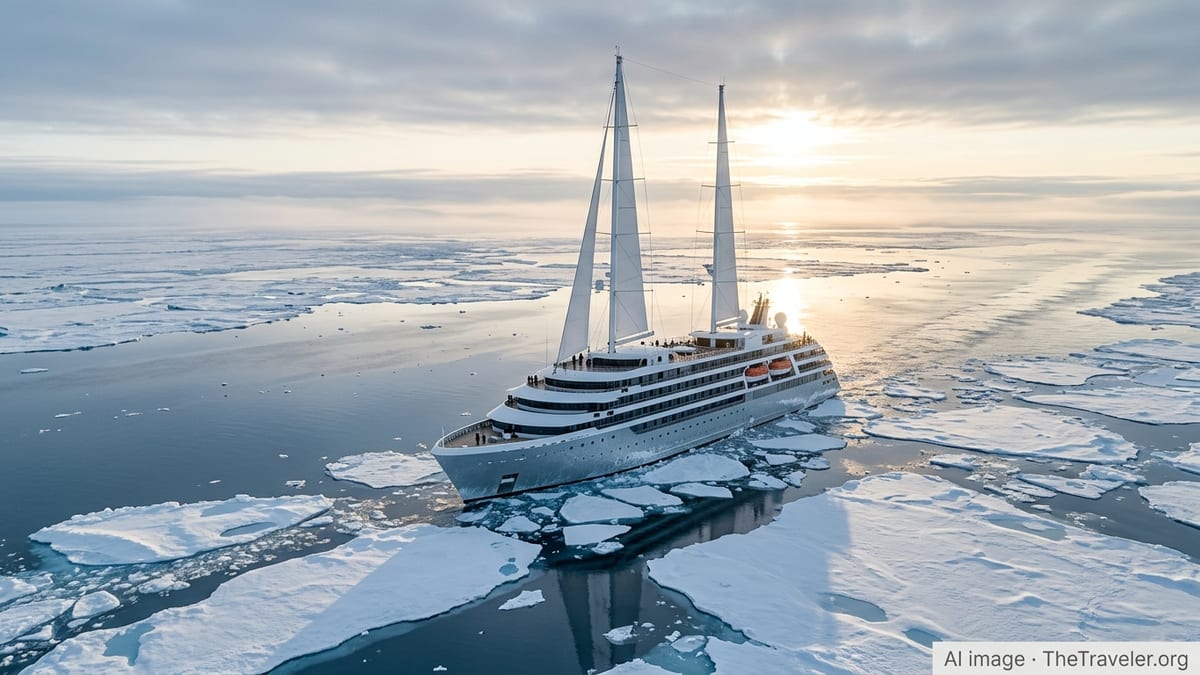
Oceanwide Expeditions is preparing to reshape the expedition cruise landscape, with industry reports indicating the operator has secured an exclusive shipyard agreement to construct a new generation of eco-sail vessels slated for delivery in 2027.
Get the latest news straight to your inbox!
A Strategic Shipyard Partnership Focused on 2027
Available industry data and trade coverage suggest Oceanwide Expeditions has moved from incremental retrofits toward a more ambitious hardware strategy, centering on purpose-built eco-sail ships to join its fleet around 2027. This prospective agreement would reserve shipyard capacity specifically for Oceanwide, a notable step in a sector where prime yard slots are increasingly committed years in advance.
Expedition cruise orderbooks published in recent months show growing pressure on specialist shipyards, as operators race to lock in delivery dates for small, ice-capable and environmentally advanced vessels. Against that backdrop, an exclusive arrangement would give Oceanwide more control over build timelines and technical specifications, particularly important when integrating novel sail-assist and energy systems.
Although detailed commercial terms have not been widely disclosed, indications from comparable expedition contracts suggest a multi-vessel framework, often structured as an initial firm order with options. For an operator focused on polar voyages, securing such a pipeline through 2027 positions the company to refresh capacity while international regulations tighten on emissions and fuel quality.
The move comes as Oceanwide continues to operate and upgrade its existing fleet for Arctic and Antarctic itineraries, signaling that the company intends to layer newbuild capacity on top of life-extension investments rather than replace assets overnight.
Eco-Sail Design: From Concept to Polar-Capable Reality
The forthcoming ships are expected to combine traditional expedition design with modern sail-assist technology, reflecting wider maritime trends in wind propulsion. Across the cruise and yacht sectors, shipyards in Europe are advancing rigid-wing and hybrid sail rigs designed to cut fuel consumption by harnessing consistent ocean winds, particularly in high-latitude regions.
Reports and technical studies on emerging expedition hardware show that sail systems can work in concert with low-emission engines, battery banks and advanced hull forms to reduce overall fuel burn. In practice, this translates into optimized routes and speeds, with automated controls adjusting sail surfaces in changing polar conditions while maintaining passenger comfort and safety.
For ice-capable eco-sail vessels, shipyards must also reconcile wind-assist structures with requirements for Polar Class hulls, strengthened bows and protected superstructure. Publicly available information on recent expedition newbuilds indicates a preference for compact, efficient footprints, allowing vessels to navigate narrow fjords and pack ice while retaining space for zodiacs, science equipment and observation lounges.
If Oceanwide’s 2027 vessels follow this trajectory, they are likely to feature a blend of electric power, waste-heat recovery, shore-power readiness and advanced wastewater treatment, along with digital tools to monitor and minimize environmental impact throughout each voyage.
Rising Regulatory and Market Pressure for Greener Expedition Ships
The timing of the eco-sail project aligns with a convergence of regulatory and market signals. The International Maritime Organization’s decarbonization measures, coupled with evolving regional rules for sensitive areas like Antarctica and the Arctic, are pushing operators toward lower-emission fleets. Trade publications tracking expedition newbuilds through 2027 highlight a steady shift away from purely diesel designs toward hybrid and alternative-energy configurations.
At the same time, consumer-facing research across the cruise industry indicates that travelers increasingly weigh environmental performance when choosing high-end expedition products. For polar voyages that market themselves on pristine landscapes and wildlife, claims of reduced emissions and smaller footprints are becoming core to commercial positioning rather than optional enhancements.
Oceanwide has already been associated with efficiency upgrades on existing vessels, including propulsion and hydrodynamic improvements aimed at reducing fuel use in extreme environments. The reported pivot to fully new eco-sail ships would extend that strategy, offering an opportunity to market 2027 itineraries as both adventurous and technologically advanced.
Industry analysts note that such investments are capital-intensive, but may provide long-term resilience as carbon pricing, fuel costs and access rules evolve. Operators with next-generation hardware on order for the late 2020s are often described in sector coverage as better placed to adapt to future emission benchmarks without sacrificing range or trip length.
Implications for Polar Itineraries and Passenger Experience
The introduction of eco-sail vessels by 2027 is expected to influence how Oceanwide designs its Arctic and Antarctic programs. Sail-assist technology, when combined with efficient hulls and energy systems, can potentially enable longer itineraries or deeper exploration of remote regions without proportionally increasing fuel consumption.
Publicly available itineraries for upcoming seasons across the expedition market show a gradual move toward more exploratory routes, with extended voyages into less-visited seas and ice zones. With additional range and efficiency, Oceanwide could expand similar concepts, marketing 2027 sail-assisted voyages as quieter, slower-travel options that enhance wildlife viewing and photography opportunities.
Onboard, passengers are likely to encounter the visible presence of sails and associated control systems, which may become a feature of the experience in their own right. In other sectors, operators have reported that guests show strong interest in bridge tours, energy dashboards and interpretive programs that explain how wind propulsion and energy management reduce emissions.
For Oceanwide, integrating eco-sail narratives into its existing focus on science, climate and polar history could create a more cohesive product story. The ships themselves would serve as practical demonstrations of the low-impact principles often highlighted in expedition lectures and shore briefings.
A Competitive Signal in the Expedition Cruise Arms Race
The reported exclusive shipyard deal comes at a time when multiple expedition brands are refreshing fleets and announcing new hardware for the period around 2027. Orderbooks tracked by cruise industry analysts show a clustering of small, ice-capable vessels scheduled for delivery in the mid to late 2020s, reflecting sustained demand for adventure cruising despite broader market volatility.
In this context, Oceanwide’s eco-sail program functions as a competitive statement as much as a sustainability initiative. By securing yard capacity and focusing on wind-assisted propulsion, the operator aligns itself with a technologically progressive segment of the market rather than incremental refurbishments alone.
Trade commentary on recent expedition launches has emphasized that differentiation increasingly depends on technical and environmental features, not only itineraries and onboard amenities. If the 2027 Oceanwide vessels enter service as anticipated, they would join a cohort of advanced ships that set new expectations for what small-scale polar cruising can look like in terms of energy use and environmental performance.
While full technical specifications and interior details are expected to emerge closer to delivery, the combination of exclusive yard access, eco-sail ambitions and a 2027 target date suggests that Oceanwide is positioning itself for the next phase of growth in sustainable expedition travel.