

More news on this day
The suspension and curtailment of services on the historic Odontotos rack railway linking Diakopto and Kalavryta in the northern Peloponnese is increasingly seen as a serious threat to the mountain town’s tourism-driven economy, with published reports pointing to sharp declines in visitor traffic, pressure on seasonal employment and mounting losses for local businesses.
Get the latest news straight to your inbox!
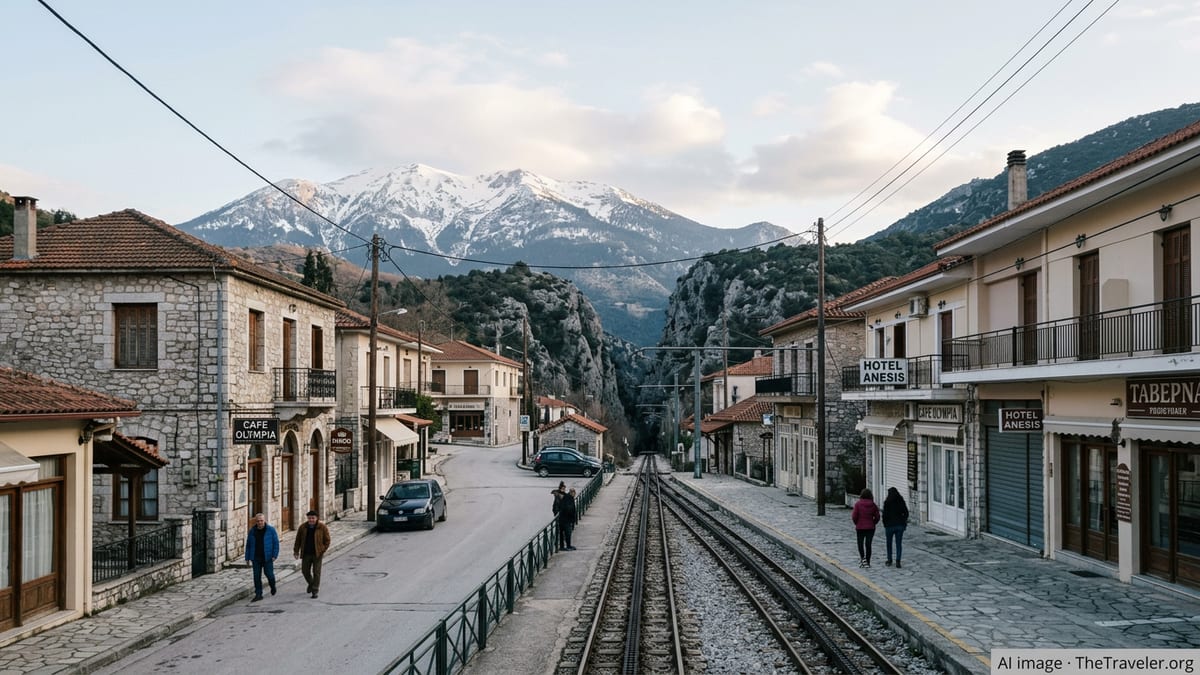
Historic Railway Disruptions Undercut a Flagship Attraction
Kalavryta’s Odontotos rack railway, in operation since the late 19th century and long promoted as one of Greece’s most scenic train journeys, has been central to the town’s appeal as a year-round destination. Running through the Vouraikos Gorge between the coastal town of Diakopto and the upland settlement of Kalavryta, the narrow-gauge line has attracted domestic and international visitors who combine the ride with hiking, village stays and winter sports.
Over the past two years, however, the line has experienced a series of disruptions. Landslides in May 2025 led to a full suspension of services on the Diakopto–Kalavryta section, according to Greek media coverage, while earlier weather-related interruptions in late 2024 highlighted the vulnerability of the infrastructure. More recently, Hellenic Train announcements and local reporting have described reduced winter schedules, with trains operating only in the morning and midday, limiting the flexibility that day-trippers and tour groups once enjoyed.
These interruptions have shifted the Odontotos from a reliable, high-frequency attraction to a service perceived as uncertain and difficult to plan around. Travel features in national and international outlets continue to recommend the journey, but itinerary planners and independent travelers increasingly flag the need to verify operations in advance. Local stakeholders argue that repeated disruptions risk eroding the railway’s reputation and, by extension, the visibility of Kalavryta as an accessible alpine-style escape from Athens.
The timing of the service reductions is particularly sensitive. Kalavryta has been positioning itself as a stronger all-season destination, leveraging its ski center, religious sites and nature tourism to draw visitors beyond the peak winter holidays. Any constraint on the signature rail link complicates efforts to smooth out the seasonality that traditionally defines the local economy.
Tourist Arrivals Drop as Access Becomes Less Reliable
Recent coverage in Greek tourism and travel industry outlets indicates that the suspension of key Odontotos departures, especially an afternoon service popular with day visitors, has had a measurable effect on traffic to Kalavryta. Reports cite a daily reduction in tourist arrivals of around 30 percent after timetable changes and safety-related suspensions were introduced in late 2025, underscoring how closely the town’s visitor flows are tied to the railway connection.
Kalavryta’s tourism model relies heavily on short-break and weekend visitors from Athens and other parts of mainland Greece, many of whom previously combined a morning highway drive to Diakopto with an afternoon train ride into the mountains. The loss or compression of afternoon services makes this pattern harder to sustain. Industry commentary suggests that some travelers have diverted to alternative destinations with more predictable access, while others have cancelled plans altogether when faced with uncertainty over the train’s status.
Travel trade publications describe a ripple effect across the local accommodation market, with smaller guesthouses and family-run hotels reporting softer bookings outside peak holiday weekends. For properties that built marketing campaigns and package deals around the Odontotos experience, last-minute suspensions have complicated pricing and availability management. The perception of risk around transportation appears to be discouraging spontaneous trips, a key segment for mountain towns competing for domestic visitors.
At the same time, regional tourism analysts point out that Kalavryta’s broader accessibility by road remains relatively good. This raises concerns that, if the railway’s reliability issues persist, tour operators and independent travelers may continue to visit the wider region while skipping the train ride, weakening a core differentiator for Kalavryta within the competitive landscape of mainland Greek mountain destinations.
Local Employment and Seasonal Incomes Under Pressure
Publicly available information from local business associations and tourism-focused media points to mounting pressure on employment in Kalavryta as a result of reduced visitor numbers linked to the Odontotos disruptions. Many hospitality businesses in the town operate with a strongly seasonal model, hiring additional staff for the winter ski season, key religious holidays and spring weekends when the gorge attracts hikers.
With cancellations rising and arrivals falling during periods when higher flows were expected, hotels, guesthouses and restaurants are reportedly scaling back on temporary hiring or shortening contract durations. This has direct consequences for residents who depend on seasonal work to supplement incomes from agriculture, small-scale trade or other local activities. Younger workers in particular face fewer opportunities in a town where year-round, full-time hospitality jobs are limited.
Supporting services such as taxi operators, excursion providers and guides that once relied on predictable train timetables are also affected. When services are reduced or suspended, pre-arranged transfers between the railway station and the ski center or nearby villages may no longer be viable at previously agreed volumes, leading to lower earnings for transport operators. The knock-on effect extends to suppliers of food, linens and maintenance services, who see orders shrink in line with hotel occupancy.
Labour market challenges in Kalavryta reflect broader concerns raised in national and international assessments of Greek tourism, which emphasize the fragility of seasonal employment and the need to strengthen resilience to shocks. In a town where a historic railway underpins a significant share of visitor demand, service instability magnifies these structural vulnerabilities.
Seasonal Business Revenue Hit Across Hospitality and Retail
Local and sectoral reporting from late 2025 notes that businesses across Kalavryta’s hospitality and retail sectors are already registering significant revenue losses that operators attribute in part to the Odontotos interruptions. The impact is most visible during key weekends and holiday periods, when restaurants, cafes and souvenir shops traditionally rely on rail-borne visitors to reach break-even levels before quieter weeks.
Hoteliers have described slower turnover in their restaurants and lounges, as fewer day-trippers stay late enough in town to consume evening meals when afternoon trains are not running. Street-level businesses around the station area, including bakeries, snack bars and small shops, report reduced footfall at times of day that previously coincided with train arrivals and departures. For enterprises that planned inventory and staffing around historical patterns of passenger flows, the mismatch is translating into wasted stock or underutilized labor.
Winter-specific businesses, such as ski equipment rental outlets and apparel stores, face an even sharper challenge. Their peak sales windows are concentrated into a few high-traffic weekends, making them particularly sensitive to any constraint on access. When train suspensions coincide with marginal snow conditions or broader economic pressures on domestic travel, the cumulative effect can be quickly felt in cash flow and investment decisions for the following season.
Observers note that while some entrepreneurs are attempting to pivot by targeting self-drive visitors or expanding online sales, the geographic and demographic realities of Kalavryta limit how much of the lost rail-related revenue can be recouped. Without a clear horizon for fully restored, reliable Odontotos services, many businesses are approaching future seasons cautiously, delaying upgrades or expansion plans that were previously linked to anticipated growth in visitor numbers.
Debate Grows Over Infrastructure Investment and Future Strategy
The economic strain linked to the Odontotos disruptions has intensified debate over the future of rail-linked tourism infrastructure in the Peloponnese. Policy discussions at the national level over the condition of the Greek railway network, coupled with European analyses of transport safety and maintenance, have cast a spotlight on funding needs for lines that serve both residents and visitors.
Local associations in Kalavryta and regional tourism organizations are increasingly calling, through public statements and demonstrations, for a long-term plan that would secure the line’s operation and reduce the risk of abrupt suspensions. Proposals reported in Greek media include targeted reinforcement of slopes along the Vouraikos Gorge, more frequent inspections, and better integration of rail timetables with road-based alternative transport options during maintenance windows.
Analysts also connect the Odontotos case to broader efforts to diversify Greek tourism away from overcrowded island destinations and towards mainland and off-season travel. For that strategy to succeed, destinations like Kalavryta require reliable, climate-resilient access. The combination of landslide risk, aging infrastructure and limited redundancy in transport links suggests that more systematic investment may be necessary to protect tourism-based livelihoods in mountain regions.
For now, Kalavryta’s experience serves as a test of how quickly authorities and operators can respond to infrastructure shocks in a way that preserves both visitor confidence and local economic stability. As the town approaches upcoming winter and spring seasons, business owners and workers face continued uncertainty over whether the iconic train that once symbolized Kalavryta’s connection to the wider world will again support, rather than constrain, its ambitions for sustainable tourism growth.