

More news on this day
New Zealand’s decision to upgrade RNZAF Base Ohakea into a fully staffed, 24-hour alternate airport for wide body jets is being billed by aviation leaders as a small investment with outsized benefits for the country’s airline network and tourism economy.
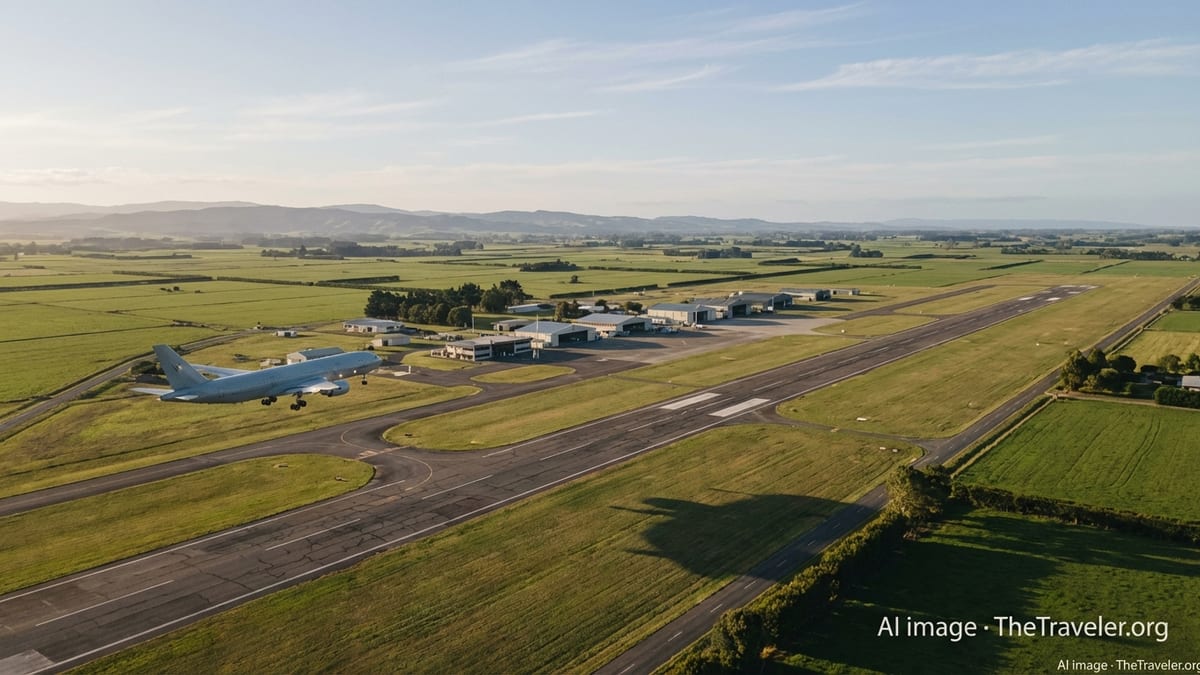
Strategic Upgrade to a Quiet Workhorse of New Zealand Aviation
The government confirmed on 26 February 2026 that Ohakea, a Royal New Zealand Air Force base near Palmerston North, will receive funding for round-the-clock air traffic control, transforming it into a permanent 24/7 alternate for international wide body aircraft. Today the base can only be used by commercial flights as a nominated alternate between early morning and late evening, limiting its value to long haul services that traverse the Pacific overnight.
The upgrade, costed at around 4.6 million New Zealand dollars over two years, will allow Airways New Zealand to recruit and train additional controllers so that Ohakea can be staffed continuously. The government describes the move as removing a long standing constraint that has made planning efficient routes to Auckland and Christchurch more difficult for airlines, especially during the busy overnight window for transpacific arrivals.
Associate Transport Minister James Meager framed the change as an aviation resilience project that also has a clear economic payoff. With Ohakea available at all hours as a diversion option, airlines will be able to operate into New Zealand with greater confidence and fewer operational penalties when weather or disruption affects the country’s main international gateways.
For a base that many travellers have never heard of, the shift is significant. Ohakea already has one of the longest runways in New Zealand, a modern terminal built in 2014 and a central North Island location that makes it a practical safety net for aircraft bound for both Auckland and Christchurch. The new funding essentially turns those quiet assets into an all hours backstop for the national network.
Fuel Savings, Emissions Cuts and Stronger Airline Economics
A key benefit of the Ohakea upgrade lies in how airlines calculate fuel loads and route planning. Under international safety rules, long haul flights must carry enough fuel not only to reach their intended airport, but also to divert to an alternate if that airport becomes unavailable. Without a viable alternate in range overnight, airlines have been forced to carry extra fuel, which adds weight and reduces the amount of passengers or cargo they can carry.
Industry estimates suggest that making Ohakea available 24 hours a day could allow each long haul flight heading to New Zealand to reduce fuel carriage by four to six tonnes while still complying with safety requirements. That translates into lower operating costs, the potential to restore seats or freight that had been traded away for fuel weight, and a direct reduction in carbon emissions on some of the world’s longest sectors.
The Board of Airline Representatives of New Zealand, which speaks for major international carriers serving the country, has welcomed the announcement as a practical fix that helps keep New Zealand on the map for competitive long haul services. Airline planners have become increasingly sensitive to fuel and emissions performance as carbon costs rise and sustainability commitments tighten, and the presence of a reliable 24/7 alternate is one more factor that can tip route decisions in New Zealand’s favour.
For travellers, the impact will be felt less in visible construction and more in schedule stability and choice. With more efficient fuel planning and a robust diversion option, airlines gain additional flexibility to operate year round services into peak tourism seasons, even when weather patterns and disruption risks are elevated.
Tourism and Regional Economies Stand to Gain
Tourism operators are watching the Ohakea announcement closely, not because it will suddenly host waves of holidaymakers, but because of what it signals for New Zealand’s broader connectivity. The decision forms part of an Aviation Action Plan that aims to rebuild and grow the country’s global links after several turbulent years for air travel.
By improving the economics of flying to New Zealand, the upgrade is expected to support both the retention of existing routes and the attraction of new ones into Auckland and Christchurch, the country’s primary international gateways. More capacity and better reliability on these long haul services can flow through to stronger visitor arrivals, benefiting sectors from hospitality and adventure tourism to events and education.
Regions close to Ohakea, including Palmerston North and the wider Manawatū, may also see indirect gains. While the base will remain first and foremost a defence facility and alternate airport, having a well equipped, internationally capable airfield in the central North Island strengthens the case for future charter operations, emergency diversions and special event traffic that bring visitors and spending into nearby communities.
Local business groups have long argued that reliable air links are a foundation for regional growth, particularly for export heavy sectors such as agriculture and food processing that depend on fast freight connections. Even as Ohakea stays primarily in the background, its role in keeping New Zealand’s main passenger and cargo corridors running smoothly is likely to be welcomed by exporters nationwide.
Building a More Resilient and Connected Air Network
The Ohakea decision comes amid a broader rethink of aviation resilience. Recent years have highlighted how vulnerable long haul networks can be to weather events, infrastructure failures and staffing shortages. Diversion scenarios that once seemed rare have become more common, and governments have been pushed to ensure that alternative options are robust and well staffed.
For New Zealand, sitting at the edge of the South Pacific with limited large airports, having a third viable runway for wide body jets that is available day and night helps reduce dependency on any single gateway. In practice, that means more options for controllers and pilots when heavy rain, fog or technical issues close Auckland or Christchurch, and a lower risk of aircraft having to divert to distant airports outside the country.
The investment in 24/7 air traffic control also underscores closer cooperation between civilian aviation authorities and the defence sector. The Royal New Zealand Air Force will continue to operate the base, while Airways New Zealand will provide the specialised staff required to manage mixed military and civilian traffic safely around the clock, a model that has been used in other countries where military airfields support civil contingencies.
As recruitment and training ramp up over the next 18 months, attention will turn to how smoothly Ohakea can be integrated into airline planning systems and contingency playbooks. If the transition goes as expected, by mid 2027 New Zealand will have a more resilient and efficient aviation backbone that quietly supports thousands of flights and millions of journeys every year.
Timeline and What Comes Next for Travellers
Officials expect the extended air traffic control service at Ohakea to be operational within about a year and a half, dependent on hiring and certifying additional controllers. During that period, airlines, navigation providers and airport operators will update flight plans, manuals and training to reflect the new 24/7 alternate option.
Travellers are unlikely to see Ohakea appear as a bookable destination on mainstream airline schedules in the near term. Its primary civilian function will remain as a safety valve, taking diversions when major hubs are temporarily unavailable and then quickly returning passengers to their intended airports once conditions improve.
Even in that behind the scenes role, the base is poised to have a measurable impact on the travel experience. A more flexible diversion network can reduce extended holding patterns, unscheduled fuel stops and long delays when bad weather or technical issues strike. It also underpins the confidence airlines need to commit to new long haul services that expand options for visitors heading to New Zealand.
For an investment that represents a fraction of the cost of building a new runway or terminal at a major civilian airport, the Ohakea upgrade is emerging as one of the more quietly consequential aviation stories in the region, with ripple effects that could shape how, and how often, the world flies to Aotearoa in the decade ahead.