

More news on this day
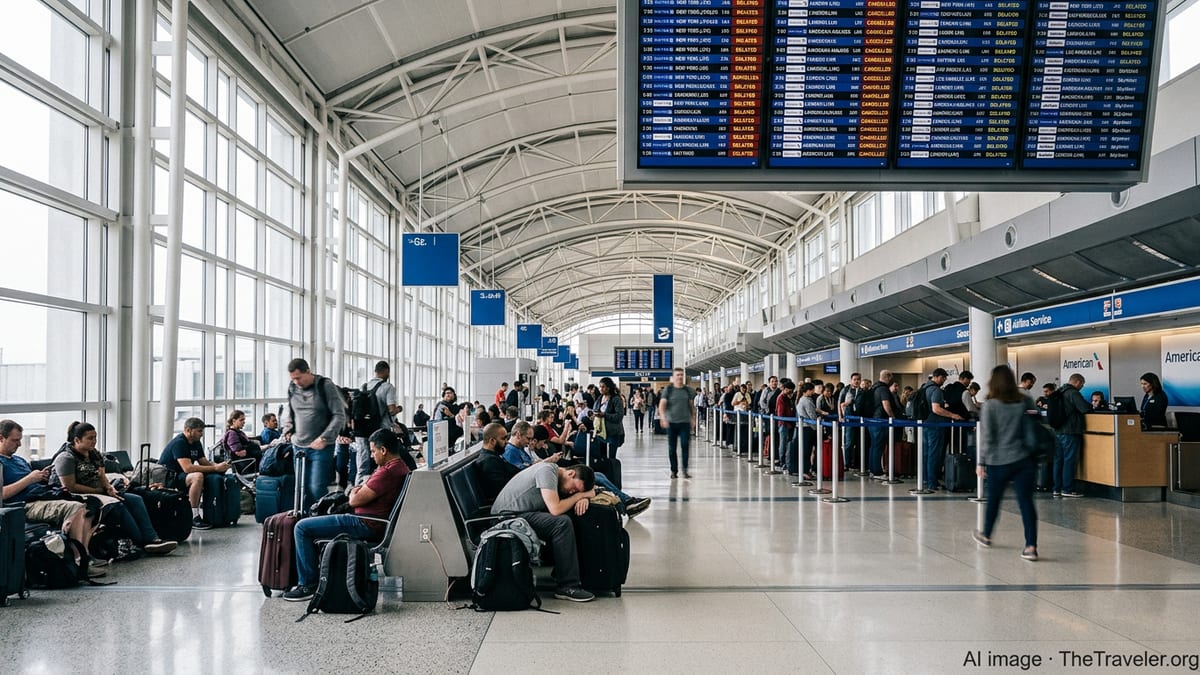
Thousands of passengers were left marooned in terminals at Chicago O’Hare International Airport on March 9 as more than 250 delays and at least 15 cancellations involving United Airlines, American Airlines and SkyWest disrupted key routes to New York, Los Angeles, London and other major US cities.
System Strains at a Crucial Midwestern Hub
Operational data from airline status boards and flight-tracking services on Monday showed a fresh wave of disruptions building over the morning and early afternoon at O’Hare, one of the country’s busiest hubs. United, American and regional operator SkyWest, which feeds traffic into both networks, accounted for a significant share of departures and arrivals running late, many of them by more than an hour.
The delays followed a bruising weekend for US aviation in which severe weather and congestion triggered hundreds of cancellations nationwide, including at Chicago. Although conditions improved by Monday, recovery operations remained fragile, and tight turnarounds left little margin when inbound aircraft or crews arrived late from earlier segments.
With O’Hare serving as a linchpin for domestic and transatlantic connectivity, relatively small schedule distortions quickly cascaded into missed connections and rolling delays, particularly on heavily trafficked business routes. Airline agents spent much of the day rebooking customers whose onward flights had already departed or whose aircraft were still waiting on distant tarmacs for departure slots.
By early afternoon, departure boards in multiple terminals showed clusters of amber and red status lines for United, American and SkyWest services, with “crew availability,” “air traffic control” and “late inbound aircraft” among the reasons relayed to passengers over public-address systems.
Links to New York, Los Angeles and London Hit Hard
Some of the most acute disruption was concentrated on trunk routes linking Chicago with New York, Los Angeles and London, markets where O’Hare functions as a critical bridge for both business and leisure travelers. Services to New York-area airports, including LaGuardia and Newark, reported mounting delays as congestion along the East Coast combined with knock-on impacts from earlier traffic-management initiatives.
Westbound flights to Los Angeles and other West Coast gateways also felt the strain, with aircraft arriving late from previous rotations and then queuing for departure as ground crews juggled compressed turnaround windows. For fliers using Chicago as a mid-continent connection point between the Northeast and California, a delayed inbound segment from New York could mean a missed transcontinental departure and an unplanned overnight stay.
Across the Atlantic, London-bound operations faced a narrower but still significant band of disruption. Long-haul services typically offer fewer daily frequencies than domestic shuttles, leaving travelers with limited alternatives when a flight is cancelled or heavily delayed. At O’Hare, airline staff fielded questions from anxious passengers about missed connections onward to European and Middle Eastern destinations.
Travel analysts noted that the combination of weather-related backlogs from the weekend and persistent air-traffic-management challenges at busy coastal hubs created what one observer described as a “multi-node bottleneck,” in which a delay on a Chicago–New York leg could ripple outward to affect a London arrival several hours later.
Passengers Face Long Lines, Confusion and Limited Options
Inside O’Hare’s terminals, the operational challenges translated into a familiar but still jarring tableau of travel disruption. Snaking queues formed at customer-service counters for United and American as stranded passengers sought rerouting options, meal vouchers and updated information on their itineraries. Self-service kiosks offered some relief but could not resolve more complex multi-segment bookings.
Families returning from school holidays clustered around charging stations, their devices plugged into every available outlet while they refreshed airline apps in search of new departure times. Business travelers paced near the windows, making hurried calls to reschedule meetings in New York, Los Angeles and London as their boarding times slipped further into the evening.
With hotel inventory near the airport already tight after the weekend’s storms, some travelers reported difficulty securing overnight accommodation when rebooked on flights departing the following morning. Others opted to re-route through alternative hubs such as Denver, Dallas or Houston, accepting longer total travel times in exchange for a confirmed seat out of Chicago.
Despite public frustration, front-line staff for United, American and SkyWest spent much of the day attempting to triage cases based on urgency, prioritizing passengers with imminent international departures or limited mobility while also managing new waves of customers arriving with each fresh delay announcement.
Airlines and Regulators Under Pressure to Bolster Resilience
The latest O’Hare disruption added to growing pressure on major US carriers and aviation regulators to harden the system against recurring shock events, whether triggered by severe weather, staffing shortfalls or infrastructure constraints. Chicago’s role as a central hub means that prolonged disorder there can reverberate through networks serving dozens of domestic and international cities.
In recent months, lawmakers and consumer advocates have stepped up calls for stronger passenger protections during mass disruption events, including clearer communication standards and more consistent policies on meal and hotel vouchers when delays or cancellations fall within an airline’s control. Travelers left sleeping on terminal floors have become an increasingly visible symbol of a system many perceive as stretched close to its limits.
Industry analysts argue that regional airlines such as SkyWest, which operate flights on behalf of multiple major carriers, are particularly exposed when crew or aircraft shortages occur at one hub and then echo across their partner networks. Because these operators feed traffic into both United and American at O’Hare, disruptions can spread quickly between brands, making it harder for travelers to switch to an alternative carrier when problems arise.
For now, airlines are focusing on clearing backlogs and repositioning crews and aircraft in time for the busy spring travel period. Whether the latest turmoil at O’Hare prompts more structural changes to scheduling practices, staffing levels and infrastructure investment remains an open question for travelers who depend on the Chicago hub for connections to New York, Los Angeles, London and beyond.