

More news on this day
Chicago O’Hare International Airport is facing another bruising day of disruptions, with 447 flights reportedly delayed and 11 canceled across major carriers, unleashing a fresh wave of travel chaos on key routes linking New York, Los Angeles, London, Paris and Toronto.
Get the latest news straight to your inbox!
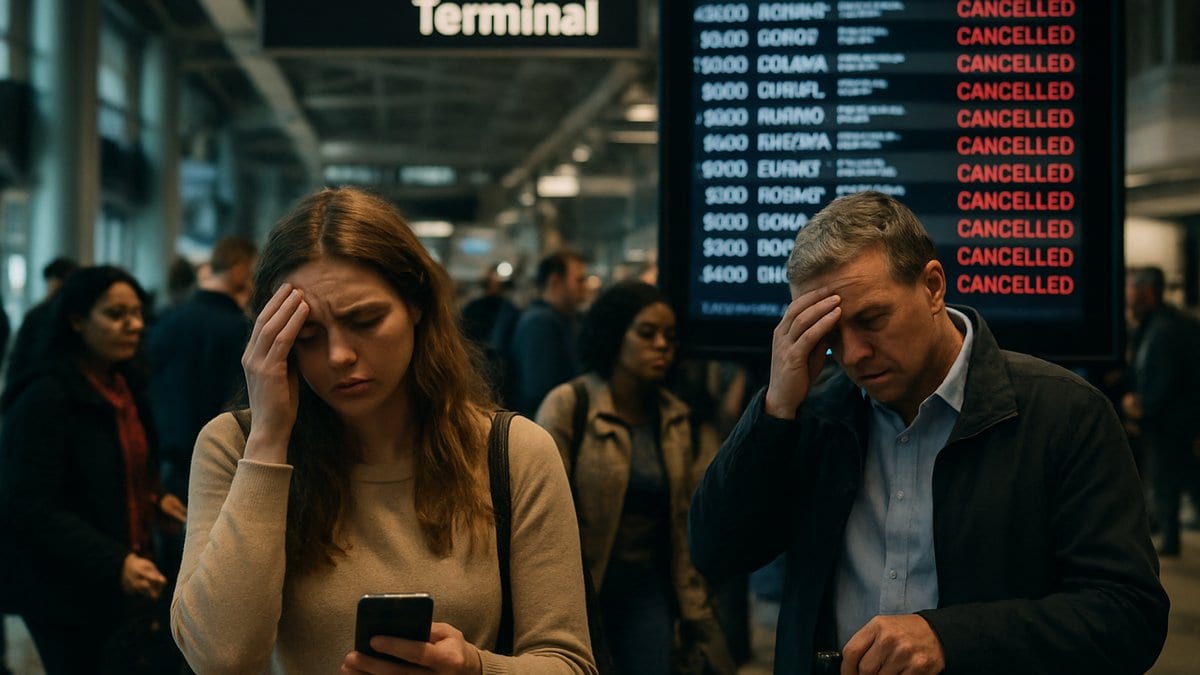
Severe Disruptions Center on a Key Global Hub
The latest disruption at O’Hare comes on the heels of a series of high‑impact operational days across the United States, where spring storms and airspace constraints have combined with already stretched airline schedules. Publicly available tracking data over recent weeks has repeatedly placed Chicago among the nation’s hardest‑hit hubs for delays and cancellations, alongside Atlanta and the New York airports.
According to published coverage of recent events, O’Hare has seen days with hundreds of delayed flights and dozens of cancellations, affecting passengers across the United States, Canada and Europe. These figures have varied from one disruption day to another, but the pattern is consistent: when Chicago stalls, large parts of the national and transatlantic network feel the impact.
Current reports highlighting 447 delays and 11 cancellations fit into that wider trend rather than standing alone as a freak occurrence. Aviation analysts note in recent reporting that O’Hare’s role as a central connecting point for United and American, and as a key station for Delta, makes even a modest number of cancellations disproportionately disruptive for connecting traffic.
For travelers on the ground, the statistical picture translates into crowded concourses, long lines at customer service desks and mounting uncertainty about when flights will actually depart. Social media posts and passenger accounts from recent disruption days at O’Hare describe departure boards dominated by late flights and rolling delay estimates that change from one hour to the next.
United, American and Delta Networks Under Strain
United Airlines and American Airlines maintain large hub operations at Chicago O’Hare, while Delta Air Lines runs a smaller but still significant schedule. Publicly accessible flight‑tracking tallies from recent days of heavy disruption show that these three carriers often account for the majority of traffic into and out of the airport, meaning they absorb most of the operational stress when conditions deteriorate.
Coverage of earlier episodes this season shows days when United, American and Delta collectively saw hundreds of delayed departures and arrivals tied to O’Hare alone, as weather and air traffic control programs slowed the flow of aircraft. In some of those instances, cancellations at O’Hare were relatively limited but long delays cascaded across the network, forcing crews and aircraft to miss their scheduled pairings later in the day.
Reports also indicate that even when the number of outright cancellations stays comparatively low, high delay totals can be just as damaging. A single late‑running aircraft that begins its day at O’Hare might be scheduled to operate back‑to‑back flights to the East Coast, the West Coast and then onward to an international gateway. When the first leg runs substantially late, each subsequent sector risks missing its allotted slot, particularly at congested airports like New York LaGuardia or Los Angeles International.
Industry data reviewed in recent analyses suggests that major carriers have increased aircraft utilization in recent years, leaving less slack in the system to absorb disruption. That means a day with 447 delayed flights at a hub can reverberate through the network well into the following morning, even if weather or staffing conditions improve.
Ripple Effects Hit New York, Los Angeles and Transatlantic Cities
O’Hare’s extensive route map ensures that domestic and international passengers far from Chicago feel the impact when the airport struggles. Flight‑tracking and schedule data show dense daily links from O’Hare to New York, Los Angeles, London, Paris and Toronto, served primarily by United, American and partner carriers.
Recent travel reports have highlighted how disruptions in Chicago have spilled over to New York’s major airports, where arrivals from O’Hare have arrived late or been rerouted, leading to missed connections on onward domestic and international services. Similar patterns have been observed on westbound flights into Los Angeles, where late‑evening arrivals from Chicago have triggered rebookings and overnight stays for passengers who miss last‑flight‑of‑the‑day connections.
On the transatlantic side, O’Hare functions as a major gateway for services to London Heathrow and Paris Charles de Gaulle. Published aviation data shows that these city pairs rank among O’Hare’s busiest long‑haul routes, carrying large volumes of business and leisure travelers. When departures from Chicago are held on the ground due to storms or traffic‑flow initiatives, those flights can miss overnight slots over the North Atlantic, which are tightly managed for safety and capacity reasons.
Toronto has also featured in recent disruption tallies. O’Hare’s frequent services to Canada’s largest city are operated both by U.S. legacy carriers and Star Alliance partners, linking two of North America’s biggest aviation markets. Reports indicate that even short‑haul cross‑border flights have not been immune from cascading delays, with some passengers arriving hours late or being shifted to later departures when inbound aircraft from Chicago fail to arrive on schedule.
Weather, Airspace Constraints and Staffing Challenges
While the precise mix of causes behind any single disruption day can vary, recent coverage across travel and business media has pointed to a familiar set of pressure points driving O’Hare’s latest problems. Spring weather patterns in the Midwest have produced fast‑moving storm systems, periods of low visibility and strong crosswinds that restrict the number of safe arrivals and departures per hour.
In response, air traffic managers frequently implement ground‑delay programs that meter flights into Chicago, forcing airlines to hold aircraft at their departure airports until space opens in the arrival flow. Publicly available data from previous events shows how quickly this can inflate delay totals, as aircraft wait for takeoff slots and then face further congestion upon landing.
At the same time, ongoing staffing constraints have been documented in both airline and air traffic control operations. Travel industry analyses over the past year have noted that shortages of pilots, flight attendants, ground handlers and controllers can limit the ability to recover from even a single wave of weather‑driven disruption. When an aircraft and crew are out of position at a hub like O’Hare, it can take multiple flight rotations to restore normal patterns.
Experts cited in recent transportation reports also emphasize the compounding effect of tight schedules. With airlines flying fuller timetables than in prior years, there is less room to swap aircraft or crews at the last minute. As a result, days that might once have produced a moderate number of delays now generate figures in the hundreds, even when cancellations remain in the double digits.
What Travelers Can Expect and How to Prepare
For passengers booked through Chicago on United, American, Delta or their partners, current disruption patterns suggest that operational volatility may persist through the spring travel period. Travel media coverage of recent events at O’Hare and other major hubs underscores that even routine afternoon thunderstorms can quickly turn into multi‑airport headaches when schedules are tight and airspace is crowded.
Recent consumer‑focused guidance from travel analysts consistently recommends checking flight status frequently, using both airline mobile apps and independent tracking tools. Many carriers have been waiving same‑day change fees or offering flexible rebooking options during major disruption events, particularly when weather or air traffic control programs are involved, but passengers generally need to take the initiative to secure earlier or more reliable alternatives.
Industry commentary also suggests that travelers with critical same‑day connections, especially those routed through hubs like O’Hare, may wish to build in longer layovers or choose earlier departures where possible. Early‑morning flights tend to be less exposed to knock‑on effects from previous delays, though they are still vulnerable if aircraft or crews failed to reach their overnight locations the evening before.
With O’Hare’s latest count of 447 delays and 11 cancellations feeding fresh disruption into already stressed airline networks, passengers heading to or through Chicago are being urged in public advisories and media coverage to remain flexible, monitor conditions closely and be prepared for last‑minute changes. Given O’Hare’s central role in domestic and transatlantic aviation, even a single troubled day in Chicago can reshape travel plans far beyond the Midwest.