

More news on this day
While major U.S. airports urge travelers to arrive three or even four hours before departure amid grinding TSA staffing shortages, one Midwestern airport is taking the opposite tack and publicly warning passengers not to show up too early.
Get the latest news straight to your inbox!
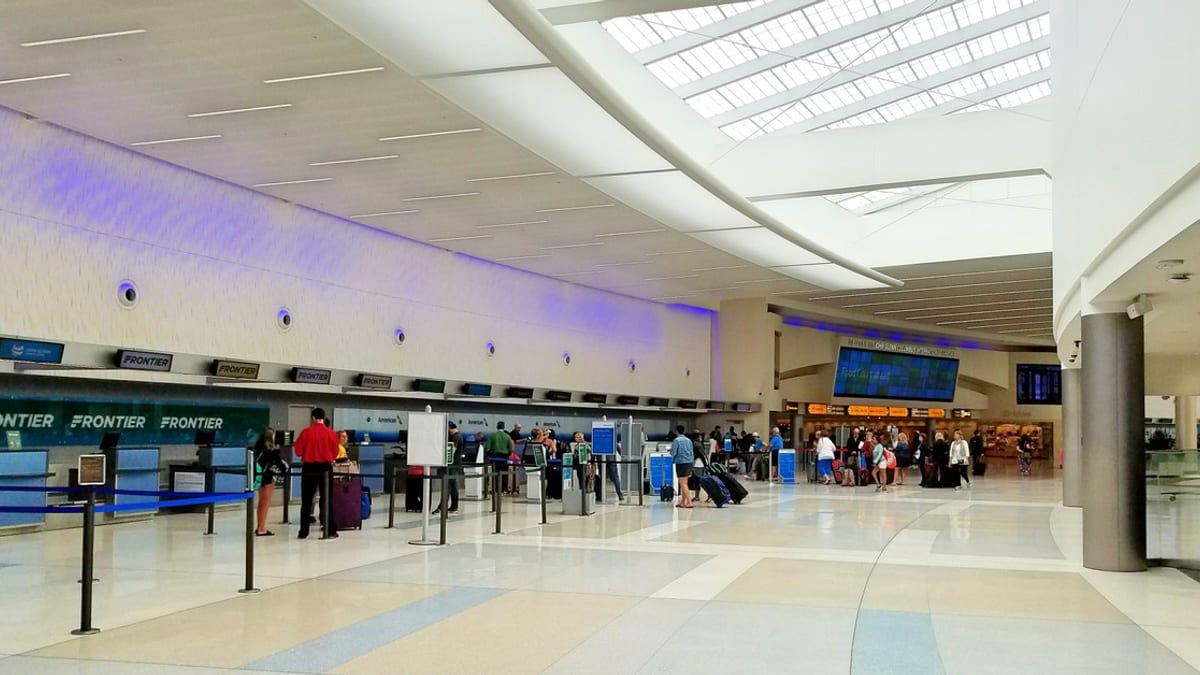
Image by TheTravel
Columbus Airport Urges Travelers to Resist Panic Arrivals
At John Glenn Columbus International Airport in Ohio, publicly available information shows that managers are asking travelers to scale back how early they arrive for flights, even as images of long security lines dominate national coverage. Instead of recommending extra buffer time, the airport has circulated messaging that “90 minutes before departure is all you need” for most flights, counter to the trend at many large hubs.
According to recent coverage from the Associated Press, the airport has gone so far as to share a visual chart advising passengers on optimal arrival times, emphasizing that showing up hours ahead of schedule can actually make security bottlenecks worse during peak periods. The guidance stands in sharp contrast to the three to five hour arrival windows that many passengers are now accustomed to hearing.
The Columbus campaign frames extremely early arrivals as part of the problem rather than the solution. By spacing out passenger flow instead of front-loading it into the earliest morning hours, airport managers suggest that they can keep TSA queues moving more steadily, reduce crowding in constrained checkpoint areas and lower the risk that some travelers will be delayed by lines triggered by others arriving far in advance.
This message has drawn attention precisely because it runs against a widely repeated rule of thumb for air travel in the United States. For years, both airlines and security officials have advised passengers to err on the side of extreme caution, particularly during holidays, summer peaks and other busy periods. The Columbus approach flips that logic, suggesting that panic-driven behavior is now feeding the very congestion travelers are trying to avoid.
Elsewhere, Airports Tell Passengers to Add Hours for TSA Screening
The Ohio airport’s stance comes at a moment when many other U.S. hubs are warning passengers to build in unprecedented amounts of time for TSA screening. Reports from news outlets including Alaska’s News Source and Axios indicate that travelers at Hartsfield Jackson Atlanta International Airport have recently been urged to allow as much as four hours for both domestic and international screenings as TSA staffing issues deepen.
Similar messages have emerged in Houston, New Orleans and Baltimore. Published coverage describes George Bush Intercontinental Airport in Houston as a symbol of the current disruption, with travelers facing public warnings of security waits stretching to three or four hours during particularly strained periods. In New Orleans, local reports note that the security line at Louis Armstrong New Orleans International has periodically backed up into parking structures, with airport messaging advising arrivals at least three hours before departure.
Even where wait times have remained relatively modest, many airports are still counseling early arrivals as a precaution. Reporting on Baltimore Washington International, for example, highlights guidance to show up three hours prior to departure, despite trackers at times displaying only minimal waits. The dominant narrative across these facilities is that uncertainty created by staffing shortages, missed paychecks and fluctuating absenteeism justifies a significant time cushion.
Against this backdrop, the Columbus warning not to arrive too early reads as a notable outlier. It underscores that there is no single national standard for how best to balance passenger behavior with checkpoint capacity during a prolonged disruption of screening operations.
Shutdown Fallout and TSA Staffing Shortages Drive the Crisis
The conflicting travel advice is unfolding against the wider backdrop of an ongoing partial federal government shutdown and its impact on TSA staffing. Coverage from national outlets such as the Associated Press and ABC News indicates that unscheduled absences among TSA officers have more than doubled since the shutdown began, with many screeners calling in sick or leaving their jobs amid prolonged pay interruptions.
As officers have stepped away from checkpoints, airports across the country have reported shuttered lanes and reduced operating capacity at already congested terminals. Publicly available wait time trackers and on the ground reporting describe scenes of snaking lines, passengers queued for several hours, and in some cases missed flights, particularly at large hub airports that rely heavily on fully staffed checkpoints to process tens of thousands of travelers per day.
In response to mounting frustration, the Transportation Security Administration has released its own messaging, including a recent video campaign warning that travelers could encounter unusually long waits. That official guidance generally reinforces the longstanding convention of arriving significantly ahead of departure, even as it stops short of mandating a specific number of hours for all airports.
Academic work on airport queues, such as recent optimization research published on preprint servers, has highlighted how sensitive security lines can be to both staffing levels and passenger arrival patterns. When a high proportion of travelers cluster far in advance of departure, they can overwhelm available lanes during certain windows and trigger cascading congestion, especially if staff numbers are reduced. The situation now playing out in U.S. terminals appears to mirror those theoretical dynamics.
Columbus Strategy Highlights Debate Over How Early Is Too Early
The decision by John Glenn Columbus International to publicly caution against overly early arrivals has helped focus attention on a question that many travelers routinely ask but rarely find answered with precision: how early is too early. By promoting a 90 minute guideline, Columbus is effectively arguing that there is a threshold beyond which additional buffer time offers diminishing returns and may even degrade the experience for everyone in line.
Reports indicate that the airport’s messaging stresses the importance of matching arrival times to actual flight schedules rather than generalized anxiety about long lines in other parts of the country. That position implicitly suggests that travelers should consider conditions at their specific departure point, not just national headlines, when deciding what time to leave home.
The approach is not without risk. If TSA staffing or passenger volumes were to deteriorate further in Columbus, the airport might need to revise its guidance on short notice. For now, however, the message positions the airport as an experiment in using calibrated passenger behavior, rather than only additional staff or infrastructure, to manage security queues.
For travelers, the contrasting messages across different airports highlight the need to check local advisories close to departure and to recognize that more time is not always synonymous with more certainty. At least in Columbus, the unusual warning against arriving too early suggests that a carefully timed arrival could be the smoothest path through security, even as the rest of the country lines up hours in advance.