

More news on this day
Surging oil prices linked to renewed tensions in the Middle East are rippling through the global travel industry, and US cruise operators focused on Caribbean and Alaska itineraries are increasingly in the spotlight as investors weigh how a sustained oil rally could affect fares, capacity plans, and on-board spending in the coming seasons.
Get the latest news straight to your inbox!
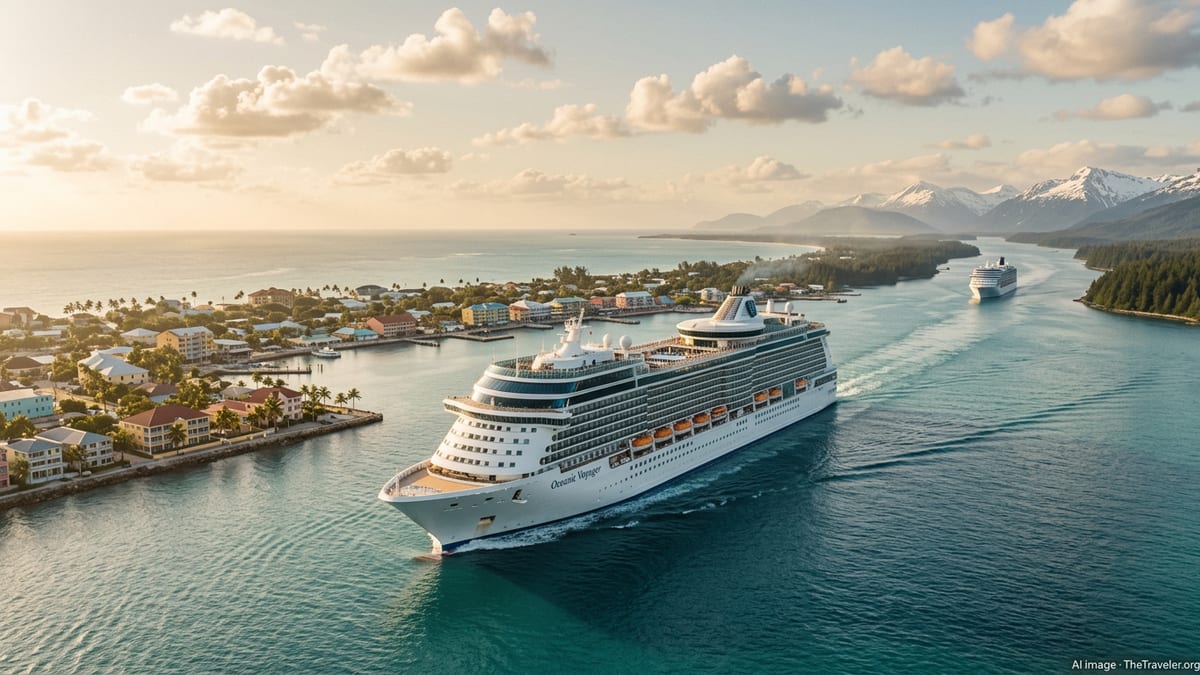
Oil Rally Collides With Cruise Recovery
The latest spike in crude prices, driven in part by disruption risks around the Strait of Hormuz and broader instability in energy markets, has pushed benchmark Brent above 100 dollars a barrel for the first time in several years, according to widely cited energy market data. That jump has quickly filtered into fuel markets, a critical cost line for cruise companies whose ships burn large volumes of marine fuel on long-distance itineraries.
Publicly available financial filings and research coverage indicate that fuel represents a high single digit to low double digit share of operating expenses for the largest cruise groups. When oil prices move sharply higher, cruise operators have limited short term flexibility, especially on sailings already on sale or nearly sold out for upcoming Caribbean and Alaska seasons where published fares are locked in months ahead.
Investor-focused commentary in recent days has highlighted travel and leisure stocks as some of the most sensitive to the oil shock, with cruise companies often grouped alongside airlines. Reports show share prices for major US listed cruise operators, including Carnival, have come under pressure as markets reassess 2026 profit guidance in light of higher fuel assumptions.
This renewed cost headwind is colliding with a strong demand backdrop. Industry updates through late 2025 and early 2026 showed record pricing and occupancy across North America and Europe, with many brands reporting that a large portion of 2026 capacity was already booked at historically high fares. The tension between robust demand and a rising fuel bill is now central to the outlook for Caribbean and Alaska cruise pricing.
Carnival’s Fuel Exposure Draws Attention
Among major US cruise operators, Carnival Corporation is drawing particular scrutiny because of its approach to managing fuel costs. Recent analyst reports and investor presentations emphasize that Carnival does not hedge its fuel purchases in the way some peers do, leaving earnings more directly exposed to swings in oil and marine fuel prices.
Equity research commentary published in March notes that while Carnival has benefited from previously favorable fuel trends and continuous investments in energy efficiency, the sudden oil rally has flipped that tailwind into a potential margin squeeze. One widely circulated analysis characterizes the company as effectively a “direct conduit” for oil price volatility, with every additional dollar in fuel cost flowing quickly into its cost base.
At the same time, Carnival’s recent earnings releases highlight record revenue, rising yields, and a strong booking curve heading into 2025 and 2026. Public updates show that nearly half or more of 2026 capacity is already sold at prices above prior year levels, including on core Caribbean programs and popular Alaska sailings. That revenue strength provides some cushion, but it also means there is limited scope to reprice already booked guests in response to higher fuel.
Market commentary in the past week has also raised the prospect that if elevated fuel prices persist for several months, operators without significant hedging could eventually revisit tools that were used during previous oil spikes, such as targeted fuel surcharges or further onboard price adjustments. For now, observers note that cruise ticket prices for many 2026 sailings have not yet fully reflected the latest fuel moves, suggesting the financial impact will build gradually as itineraries operate.
Caribbean Itineraries Face Cost and Capacity Questions
The Caribbean remains the volume engine for US based cruise operators, with year round sailings from Florida, the Gulf Coast, and East Coast ports feeding a dense network of three to seven night itineraries. Public deployment announcements for 2025 and 2026 show Carnival and its peers adding new ships and expanded programs in the region as they lean into strong US demand.
Higher fuel prices complicate this growth story. Caribbean routes involve frequent port calls and relatively short sea days, but ships still consume substantial fuel on repositioning legs and on high speed runs to keep tight schedules. Energy market analysts point out that short, competitively priced Caribbean cruises are often marketed as value vacations, which can make it harder to pass through sudden cost spikes via higher base fares without affecting demand.
Industry coverage suggests that cruise companies have already been nudging up Caribbean pricing through bundled offerings, dynamic fare management, and higher onboard charges, from drinks and dining packages to shore excursions. These changes were initially driven by inflation and post pandemic debt reduction, but the fresh fuel shock may reinforce that trend, particularly for departures in late 2026 and beyond that have not yet been fully priced.
There is also growing focus on capacity mix. Commentary around Norwegian Cruise Line’s recent guidance, for example, highlighted missteps in Caribbean deployment and weaker bookings at certain price points. Analysts tracking the sector are now watching whether operators adjust ship assignments, shift some capacity toward higher yielding itineraries, or use late season discounts to keep Caribbean ships full if consumers start to push back against higher total trip costs.
Alaska Cruises Confront Long Distances and Tight Seasons
Alaska cruises are among the most fuel intensive itineraries in the North American market, involving long voyages from homeports such as Seattle, Vancouver, and San Francisco, plus scenic cruising days in fjords and glacier areas where maneuvering and slow speeds still consume significant energy. The season is also compressed, typically running from late spring through early autumn, leaving less time to recover from cost shocks.
Advance booking data shared in company updates over the past year indicate that Alaska sailings for 2025 and 2026 have been selling well at higher yields, reflecting limited berthing capacity and strong interest from US and international travelers. That demand resilience has encouraged lines like Carnival to keep substantial tonnage in the region, operating weeklong roundtrip routes as well as one way cruises tied to land tours in Alaska and Canada.
With oil now sharply higher, analysts note that the economics of these long haul itineraries could tighten. Unlike some Caribbean voyages where shorter duration or port mix can be adjusted relatively quickly, Alaska routes are more constrained by geography and port infrastructure. Fuel efficiencies from newer ships and operational tweaks can help, but there is less room to redesign itineraries without affecting the core experience that travelers expect.
Travel advisors and cruise specialists following the market say that if elevated fuel prices persist, the impact on Alaska may surface first in the form of higher advertised fares for future seasons and fewer aggressively discounted shoulder season sailings. Travelers eyeing bucket list glacier cruises for 2026 or 2027 may find that booking earlier, locking in promotions, and watching for itinerary shifts becomes even more important.
What Travelers Should Watch Next
For travelers considering Caribbean or Alaska cruises, the immediate effect of the oil spike is more visible in financial markets than in ticket prices. Many guests already booked for 2026 sailings are locked into existing fare terms, and there is no broad industry move yet toward reinstating fuel surcharges. However, history shows that if fuel remains elevated for an extended period, operators may look for ways to recoup costs through future pricing and onboard revenue strategies.
Publicly available commentary from analysts and investor presentations suggests several signposts to monitor. These include any changes to guidance on fuel expense in upcoming earnings reports, adjustments to capacity plans for key regions, and language around potential pricing actions. Observers are also watching whether cruise stocks stabilize once energy markets find a new equilibrium, or whether further oil gains deepen concerns about 2026 profitability.
Travelers planning new bookings may wish to pay attention to how far out they are purchasing, since itineraries in late 2026 and 2027 are more likely to be repriced as operators incorporate higher fuel assumptions. Some experienced cruisers report tracking fare trends closely and rebooking when permitted if prices dip, a tactic that could remain relevant if volatility in both energy and travel demand continues.
For now, the core appeal of Caribbean sun and Alaska scenery remains intact, but the cost backdrop is changing rapidly. As cruise companies navigate this new phase of the recovery with an eye on fuel bills, travelers can expect a more dynamic pricing environment and potentially sharper differences between operators in how they balance value, itinerary choices, and financial discipline.