

More news on this day
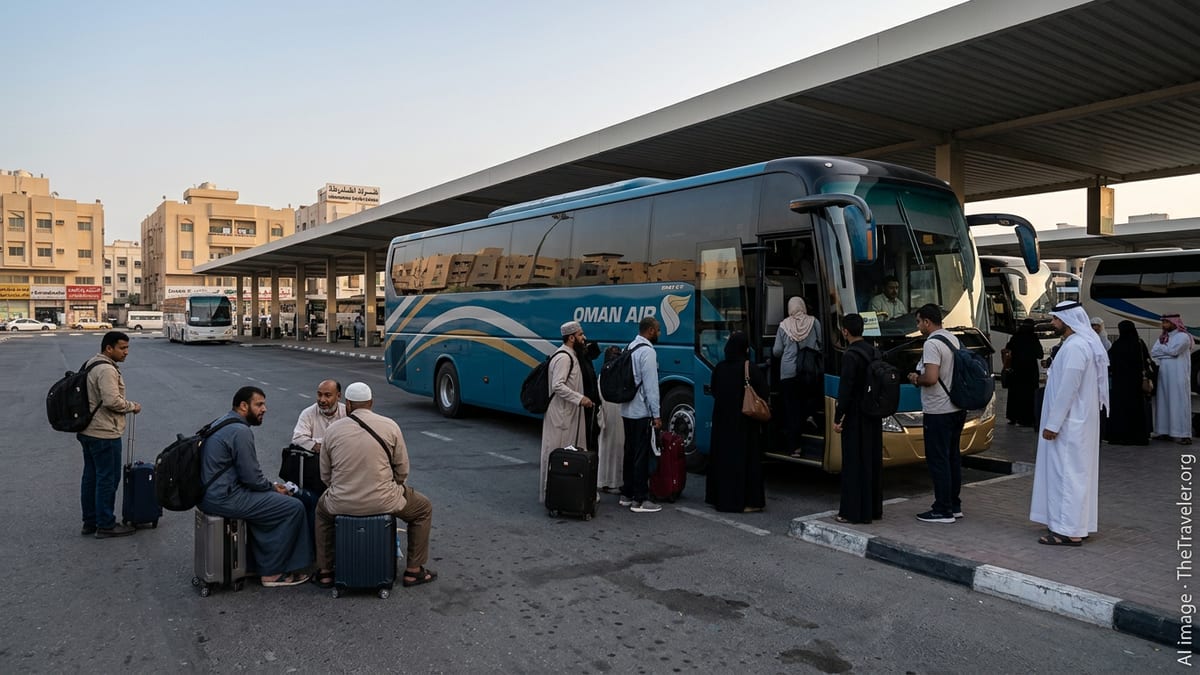
Oman Air has introduced a new bus transfer service from the United Arab Emirates to Muscat, giving stranded travelers a critical overland link to reach international flights as regional airspace disruptions continue to wreak havoc on Gulf aviation.
New Overland Lifeline Amid Ongoing Flight Cancellations
With swathes of Middle East airspace intermittently closed and carriers cancelling or rerouting services, Muscat has rapidly emerged as a key diversion hub for travelers trying to leave the region. Oman Air, working with Omani ground transport operators, has begun running dedicated bus services from the UAE to Muscat to help passengers rejoin the global network from the Omani capital.
The initiative is aimed particularly at passengers in the UAE who hold confirmed Oman Air or partner-airline tickets from Muscat but have found themselves unable to depart from Dubai or other Gulf gateways. By shifting the first leg of their journey from air to road, these travelers can still access long-haul departures that are operating largely on schedule out of Muscat International Airport.
Industry advisories circulated to corporate travel managers and freight clients in early March describe Muscat as a “key diversion and relief hub,” explicitly flagging bus-air transfer solutions from the UAE as one of the main tools being used to keep people moving. While precise schedules and capacity are being adjusted daily, the message from Oman-based airlines is clear: if passengers can reach Muscat overland, there are still options to get them on flights.
Sharjah Departure Point Targets Stranded Passengers Across the UAE
The new bus link is centered on Sharjah, the emirate that borders both Dubai and the northern route toward Oman. Departures are running from Al Jubail Bus Station, the main Muwasalat hub in Sharjah, which offers enclosed waiting areas and basic retail facilities for passengers assembling for the long overland leg to Muscat.
Sharjah was chosen in part because of its connectivity to other emirates via intercity buses, taxis and ride-hailing services, allowing travelers from Dubai, Ajman and the Northern Emirates to converge on a single, managed departure point. From there, the Oman Air-organised coaches head east toward the UAE–Oman border, before continuing south via Sohar and on to Muscat.
Travelers using the service report that it is available to those with valid Oman Air bookings originating in Muscat, with bus seats treated as part of an integrated journey rather than a separate ticket. That arrangement is designed to prevent opportunistic overbooking at the bus stage and to ensure that overland transfers are reserved for passengers who actually have confirmed onward flights from Muscat.
Advisories Urge Early Border Arrival and Flexible Planning
Passengers opting for the UAE–Muscat bus service are being warned to build in significant buffer time. Oman Air has advised those crossing the land border to plan to reach the frontier as much as 12 hours before their scheduled flight departure from Muscat, reflecting the possibility of delays at both immigration and on the road.
Reports from recent travelers describe lengthy processing times at the UAE exit and Oman entry posts, as well as sporadic congestion on the highways leading toward Sohar and Muscat. While the bus transfers are supervised and coordinated, neither the airline nor local authorities can guarantee how quickly each crossing will be completed, especially at peak times or when convoys of coaches arrive in clusters.
Travel experts recommend that passengers keep their travel documents and printouts of their flight confirmations easily accessible, and that they travel with sufficient food, water and medications for a long day in transit. With timetables and flight rosters shifting as security assessments change, the ability to adapt en route has become as important as securing the initial booking.
Relief Flights and Extra Capacity from Muscat
Once in Muscat, stranded passengers are tapping into a growing patchwork of relief operations mounted by airlines using the Omani capital as a staging point. Oman Air has added capacity on several long-haul routes from Muscat, including extra services to major European and Asian hubs, to absorb travelers who have been unable to depart from their original Gulf gateways.
International carriers are also leaning on Muscat. European and Asian airlines have announced ad hoc flights and additional rotations from the city in recent days, framing Muscat International Airport as a relatively stable platform from which to operate evacuation-style services for their nationals and ticketed customers caught up in the disruption elsewhere in the region.
For UAE-based travelers who can reach Muscat by bus, this surge in outbound capacity has effectively turned the Omani capital into a secondary departure point, even for journeys that were never originally planned to touch Oman. That, in turn, has raised the importance of the cross-border bus operations in keeping the overall evacuation and rebooking effort functioning.
What Stranded Travelers in the UAE Need to Know
For travelers in the UAE considering Oman Air’s new bus transfer, the first step is to confirm that their onward flight from Muscat is operating and that their ticket remains valid. Airline call centers, mobile apps and airport information desks can provide updated schedules and rebooking options, but passengers should be prepared for long wait times as carriers handle an unprecedented volume of changes.
Those who secure a seat on a Muscat-bound flight are typically instructed by Oman Air to register for the associated ground transfer, rather than simply turning up at the bus station. This helps the airline balance bus capacity with flight loads and reduces the risk of travelers being left behind at the terminal or the border.
Travelers are also being urged to monitor official advisories from both UAE and Omani authorities regarding land border operating hours, visa rules and any temporary restrictions that might affect cross-border movement. While the new bus service is a vital lifeline for many, it remains subject to the same security and immigration frameworks that govern all movement between the two countries.
For now, though, the Sharjah–Muscat connection is offering a rare piece of predictability in an otherwise volatile travel landscape, letting stranded passengers in the UAE swap grounded aircraft for rolling coaches in the hope of finally catching a flight out of the region.