

More news on this day
Oman Air is pressing ahead with its Saudi growth strategy from April 2026, positioning Dammam as a key gateway for travelers seeking resilient connections into the kingdom despite wider Gulf aviation disruptions.
Get the latest news straight to your inbox!
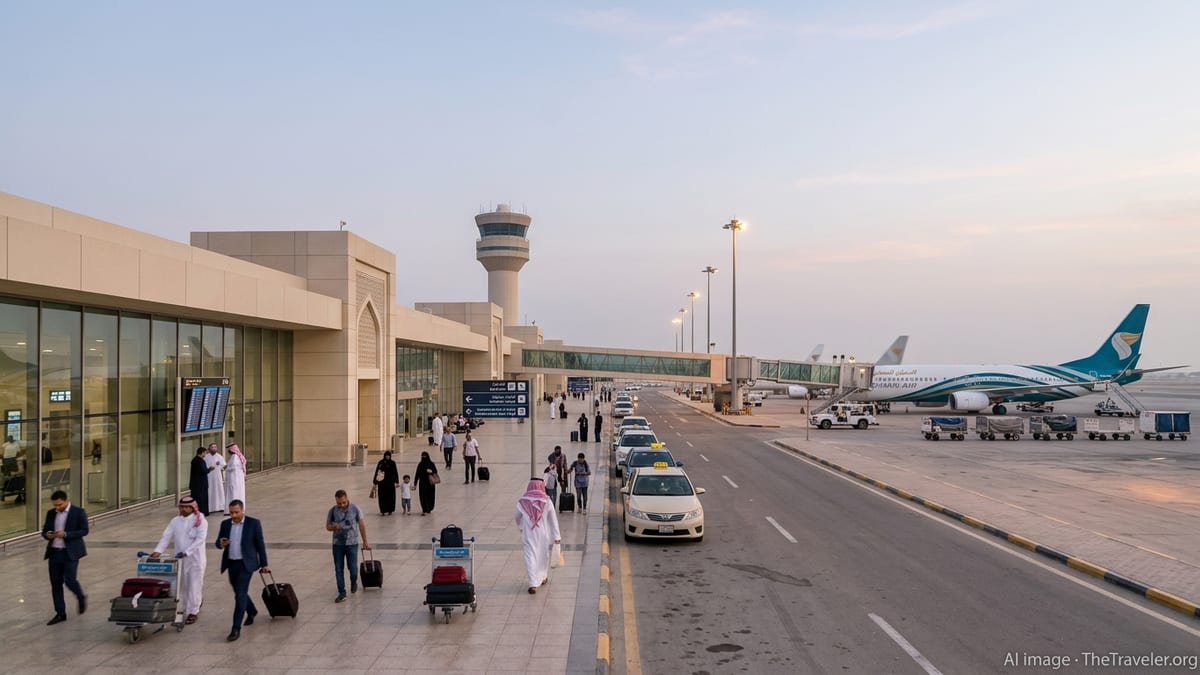
Dammam Emerges as a Strategic Safety Valve
While parts of the Gulf’s aviation network continue to wrestle with rolling schedule changes and temporary route suspensions, publicly available timetables and travel advisories indicate that Dammam’s King Fahd International Airport is emerging as a crucial pressure valve. Airlines affected by restrictions or capacity cuts elsewhere in the region are increasingly routing passengers through the Eastern Province, where Saudi airspace and core airport operations have remained comparatively stable.
For Oman Air, this dynamic is creating an opening rather than an obstacle. Industry coverage shows the carrier has already faced cancellations on several routes into March 2026 as operators across the Gulf navigate airspace risk assessments and operational constraints. Yet, instead of pausing its Saudi ambitions, the airline is reinforcing its network pillars, with Dammam acting as a reliable bridge between Oman, the Gulf interior and onward international services.
Schedules for late March and early April 2026 show that Dammam is absorbing additional regional traffic, including temporary operations for airlines normally based elsewhere in the Gulf. In this environment, Oman Air’s service pattern through Dammam takes on heightened strategic weight, giving the carrier flexibility to re-accommodate passengers and sustain two-way flows between Muscat and Saudi Arabia even as neighboring hubs remain under scrutiny.
The result is a subtle but important shift in how travelers view the Eastern Province airport. What was once primarily a feeder for local demand and road traffic from Bahrain is increasingly viewed as a viable contingency gateway for regional journeys, particularly for passengers willing to cross the causeway or reposition from constrained hubs to keep their plans intact.
Muscat–Saudi Links Strengthened by Taif Launch
Oman Air’s confidence in Saudi connectivity is underpinned by its newest route to the kingdom, the Muscat–Taif service that began on 31 January 2026. Airline announcements describe Taif as the carrier’s fifth Saudi destination, joining Jeddah, Riyadh, Dammam and Madinah, confirming that the kingdom has become one of Oman Air’s most important regional markets.
The Taif route operates three times weekly on Boeing 737 aircraft and has been framed in official communications as part of a broader push to deepen intra-Gulf travel. Aviation and tourism outlets note that Taif’s higher-altitude climate and proximity to Mecca make it attractive for both leisure visitors and religious travelers, while Muscat’s growing role as a connecting hub opens additional long-haul options for Saudi passengers.
Travel industry reporting highlights how Oman Air is using Muscat as a mid-size gateway linking Gulf origin points to emerging destinations in Africa and Asia. New and upgraded routes to cities such as Kigali and Singapore, combined with established services around the Gulf, are creating a network in which Saudi cities function as key spokes. Within that pattern, Dammam is particularly important for business, energy sector travel and the sizeable expatriate communities along Saudi Arabia’s eastern seaboard.
By April 2026, the combined effect of Taif’s launch and the continued operation of flights to Jeddah, Riyadh, Dammam and Madinah means Oman Air is one of several regional carriers directly feeding Saudi Arabia’s Vision 2030 tourism and investment objectives, even as short-term security and airspace concerns reshape how and where aircraft move.
Dammam as a Resilient Gateway Amid Regional Turbulence
The months leading into April 2026 have underscored how quickly Gulf aviation can be disrupted by geopolitical events. Regional security analyses and airline notices point to a mix of missile and drone activity, tightened risk assessments and precautionary suspensions affecting selected routes and neighboring hubs. In response, multiple carriers have adjusted schedules, shifted operations or temporarily consolidated flights via alternative airports.
Within this volatility, Dammam stands out as a comparatively resilient node. Online traveler forums and airline updates consistently reference the Eastern Province city as a practical alternative for passengers whose original journeys were planned through more affected hubs. For some, this involves crossing the King Fahd Causeway by road before continuing by air from Dammam, effectively turning the airport into a fallback exit route for the wider Gulf.
For Oman Air, a stable Dammam operation provides a hedge against network shocks elsewhere. The carrier can continue carrying point-to-point traffic between Muscat and Saudi Arabia’s industrial heartland, while also offering Saudi-based passengers access to Oman’s domestic network and onward services to Asia, Africa and Europe. This flexibility is particularly valuable for corporate and essential travel that cannot be easily deferred.
Observers of the region’s aviation sector note that the pattern mirrors a broader shift: smaller or secondary hubs that remain operational during moments of stress can gain outsized importance, winning new passenger segments that may continue to favor those gateways even after the immediate disruption passes.
Saudi Tourism Ambitions Meet Omani Gateway Strategy
Saudi Arabia’s aviation and tourism plans for the second half of the decade call for tens of millions of additional visitors annually, supported by new national carriers, expanded airport capacity and a wave of route launches announced for 2025 and 2026. Trade and tourism publications outline how new infrastructure in Riyadh, Jeddah and across emerging leisure destinations is being paired with aggressive route development incentives.
Within that context, Oman Air’s deepening presence in the kingdom positions Muscat as a complementary gateway rather than a direct rival. Travelers from Europe, the Indian subcontinent and Southeast Asia can connect via Muscat to reach multiple Saudi cities with one-stop itineraries, spreading inbound traffic beyond the busiest Saudi hubs and supporting regional dispersal of tourism spending.
Taif’s addition from early 2026 is seen by analysts as a further step in this direction, appealing to visitors interested in cooler summer escapes, mountain landscapes and easier access to the holy cities. With Dammam serving the energy corridor and Jeddah and Madinah handling western Saudi demand, Oman Air is gradually building a web of entry points that align with Saudi Arabia’s efforts to diversify visitor journeys beyond a single city focus.
This dovetails with Oman’s own tourism strategy, which aims to attract more high-value visitors to Muscat, Salalah and the country’s interior regions. By funnelling Saudi travelers and transit passengers through Muscat, the airline helps to create opportunities for stopovers, side trips and longer itineraries that benefit both countries’ visitor economies.
What April 2026 Means for Travelers Using the Dammam Gateway
For passengers looking ahead to trips from April 2026, the emerging picture is one of cautious opportunity. Operational updates suggest that schedules remain fluid across parts of the Middle East, and travelers are being encouraged by airlines and travel agents to monitor bookings closely in the weeks before departure. However, the relative steadiness of Dammam’s operations, alongside Oman Air’s continued Saudi expansion, provides a measure of reassurance.
Using Dammam as a starting or fallback point, travelers can access Muscat and connect onward to a widening range of destinations on Oman Air, including the new Taif link and increasingly competitive connections to South and Southeast Asia. For those in Bahrain or eastern Saudi cities, ground access to Dammam offers a pragmatic way to sidestep disruptions at other hubs without abandoning travel plans altogether.
At the same time, publicly available industry analysis stresses the importance of flexibility. Ticket conditions, rebooking policies and travel insurance coverage remain central considerations in a landscape where security assessments can change quickly. Passengers routing through Dammam and Muscat are advised to build in time buffers and remain open to alternative connections that airlines may offer at short notice.
If current trends hold, April 2026 could mark a turning point in how regional travelers perceive the Muscat–Dammam axis. Rather than a niche corridor, it is evolving into a resilient pathway linking Saudi Arabia’s eastern gateway with Oman’s ascendant hub, giving Oman Air an opportunity to defy headwinds and quietly strengthen its hand in the competitive Gulf skies.