

More news on this day
Hundreds of air travelers have been left stranded in Oman after Oman Air cancelled six key flights on short notice, causing fresh disruption at Muscat’s Seeb International Airport and affecting already fragile connections to Bahrain International and Dubai International airports.
Get the latest news straight to your inbox!
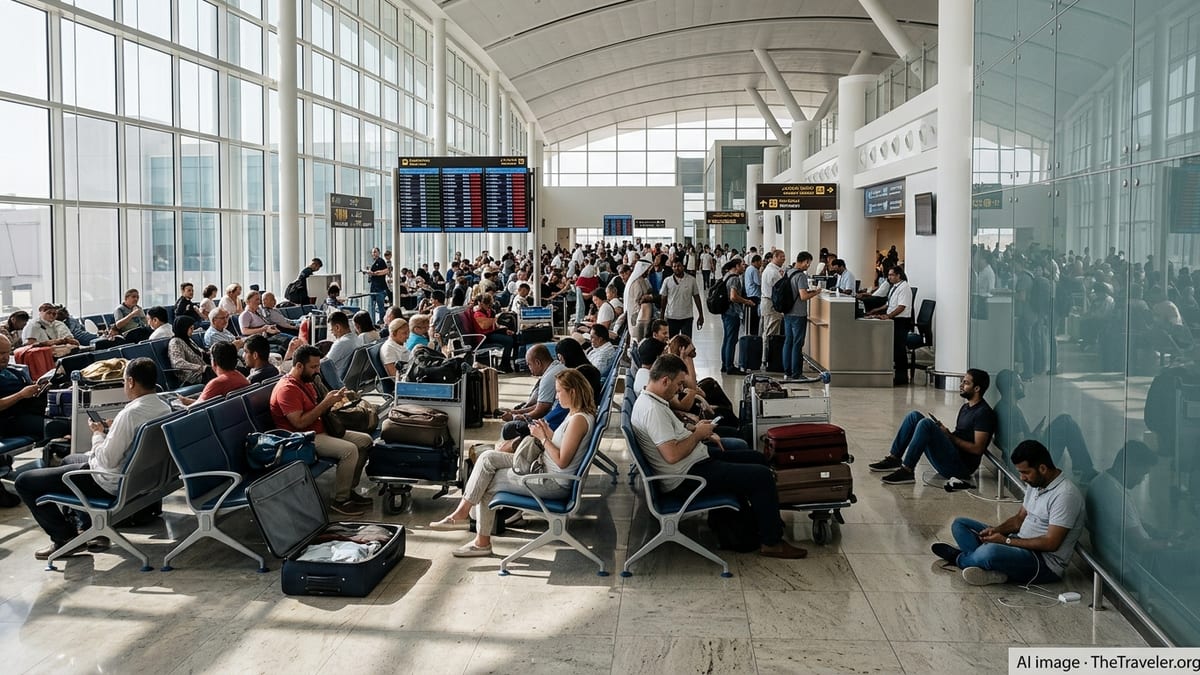
Wave of Oman Air Cancellations Deepens Regional Travel Turmoil
According to published coverage and live flight-tracking data, Oman Air withdrew a cluster of regional services linking Muscat with major Gulf hubs, including Bahrain and Dubai, as part of a fresh round of operational changes this week. The cancellations, involving at least six flights in a 24-hour window, have generated long queues, missed onward connections, and extended layovers for passengers transiting through Seeb International Airport, the primary gateway to Oman.
Publicly available information shows that the airline is adjusting schedules in response to a volatile operating environment across the Gulf, where airspace restrictions, shifting overflight corridors, and heightened security postures are continuing to affect flight routings. While Oman’s airspace remains technically open, industry advisories indicate that some international carriers have already thinned out services to and from the country, placing additional pressure on remaining flights and hubs.
Travel forums and social media updates from passengers at Muscat describe departure boards populated with “cancelled” and “rescheduled” notices for a series of short-haul Gulf routes, including rotations that usually feed traffic onward to Europe and Asia. For many travelers, Muscat was intended as a brief stop between long-haul sectors; instead, overnight stays and multi-day delays are being reported as the new reality.
As of late March, the disruptions coincide with broader instability in regional air traffic stemming from military tensions and security incidents around the Strait of Hormuz and across several Gulf states. These challenges have prompted waves of suspensions and schedule cuts by various airlines, turning Muscat into both a refuge and a pressure point in the evolving network reshuffle.
Seeb International Struggles With Backlogs and Extended Layovers
Reports from passengers inside Seeb International Airport indicate crowded check-in halls and congested transfer areas as travelers attempt to rebook or reroute after last-minute cancellations. Some describe lengthy waits at airline service desks and customer care counters, as limited staff work to accommodate disrupted itineraries onto a shrinking pool of available seats.
Travel discussion threads recount instances of layovers stretching from a few hours into more than a day, particularly for those who arrived in Muscat from Europe or Asia expecting seamless onward connections to neighboring Gulf destinations. With six Oman Air flights removed from the schedule in a short span, the loss of capacity on high-frequency regional links has amplified the impact of each individual cancellation.
Published advisories from airport and aviation stakeholders in the region have been urging passengers to verify flight status before heading to the airport and to prepare for longer processing and transit times. For Muscat, this has translated into a new rhythm of travel where same-day connections can no longer be taken for granted, especially for routes intersecting with more heavily affected airspaces.
The sudden gaps in the timetable have also disrupted crew rotations and aircraft utilization patterns, creating further knock-on effects. Industry observers note that once a hub accumulates enough off-schedule aircraft and out-of-position crews, even a modest number of cancelled flights can cascade into a broader operational slowdown.
Key Routes to Bahrain and Dubai Face New Uncertainty
The cancellations involving services to Bahrain International and Dubai International are especially significant, as these routes serve as vital short-haul connectors within the Gulf’s dense aviation network. According to publicly available schedules, Oman Air normally operates multiple daily frequencies on these sectors, feeding passengers into the global networks of partner and competitor carriers based in Bahrain and Dubai.
With six Oman Air flights pulled from circulation, travelers bound for these hubs are increasingly being told to expect rerouting through alternative cities or substantial delays while the airline works to consolidate passengers on fewer departures. Passengers already holding tickets on Muscat to Bahrain or Muscat to Dubai services have reported being offered rebookings on later dates, circuitous routings via third countries, or, in some cases, partial refunds and the suggestion to seek alternatives with other airlines.
The situation is further complicated by the fact that Bahrain and Dubai have each experienced intermittent disruptions tied to regional security events and airspace management measures over recent weeks. Travel advisories highlight temporary suspensions and diversions relating to incidents near major airports, which have tightened landing slots and restricted the ability of carriers to absorb displaced passengers at short notice.
For business travelers and residents who rely on the short sector between Muscat and neighboring hubs for work commutes, medical trips, and family visits, the reduced reliability of these routes is reshaping travel plans. Some are turning to cross-border road journeys combined with flights from less affected airports, while others are postponing non-essential trips altogether.
Regional Security Tensions and Weather Add to Operational Pressures
The latest Oman Air cancellations are unfolding against a backdrop of heightened security concerns and complex operational constraints across the Middle East. Publicly accessible reports on regional airspace status describe a patchwork of closures, restrictions, and reroutings affecting multiple countries since late February, following a series of missile and drone strikes and related military activity around key transport and energy hubs.
These conditions have forced airlines to reconsider flight paths, add significant detours, and in some cases suspend routes entirely when overflight permissions cannot be guaranteed or insurance thresholds are exceeded. Extra fuel requirements for longer routings, tighter crew duty-time limits, and the need for new contingency alternates are all increasing the operational burden on carriers based in and serving the Gulf.
Recent weeks have also brought episodes of severe weather to parts of Oman, including heavy rainfall and flooding that have disrupted ground transport within the country and around the capital area. While Muscat’s airport has remained open, the combination of infrastructure interruptions and regional airspace volatility has created a fragile operating environment in which even routine schedule adjustments can reverberate widely.
Analysts tracking the situation note that Oman’s geographic position on the edge of the Strait of Hormuz places its national airline at the intersection of global east–west traffic flows and sensitive regional security lanes. The need to keep Muscat commercially connected while navigating a dynamic risk landscape is shaping the conservative stance many carriers are now taking toward certain high-density routes.
What Travelers Using Muscat, Bahrain and Dubai Need to Know Now
For passengers with upcoming trips routed through Muscat, Bahrain, or Dubai, publicly available advisories and traveler experiences point to several practical implications of the latest Oman Air cancellations. First, same-day tight connections in these hubs now carry a higher risk of misconnection, particularly on itineraries that mix different airlines or rely on short transfer windows of less than three hours.
Second, the pattern of short-notice cancellations and rolling schedule changes suggests that itineraries may shift multiple times in the days leading up to departure. Travelers are increasingly being encouraged by airlines and airport operators to monitor bookings frequently, keep contact details updated, and consider flexible fare options that allow changes without high penalties.
Third, with six Oman Air flights already removed from the schedule and further adjustments possible as conditions evolve, capacity on remaining services is likely to tighten. This raises the prospect of higher last-minute fares and limited seat availability on alternative routings, especially during peak travel days when demand from stranded passengers accumulates.
Finally, regional transport advisories concerning land borders and road connections indicate that those attempting to reach Muscat, Bahrain, or Dubai by car or bus to catch flights should allow for substantial additional time. Extended processing at border crossings and sporadic road disruptions can quickly erase any buffer built into travel plans, leaving passengers vulnerable if flight times are brought forward or moved to different days at short notice.
As Oman Air and other Gulf carriers continue to recalibrate their operations, the situation remains fluid. For now, the cancellation of six Oman Air flights at Seeb International Airport underscores how fragile regional connectivity has become and how quickly localized schedule changes can ripple out across the wider Middle East travel network.