

More news on this day
Oman Air has announced the launch of a new twice-weekly direct service between Muscat and Tashkent, introducing a convenient gateway that links the Gulf with Uzbekistan’s capital for both business and leisure travelers.
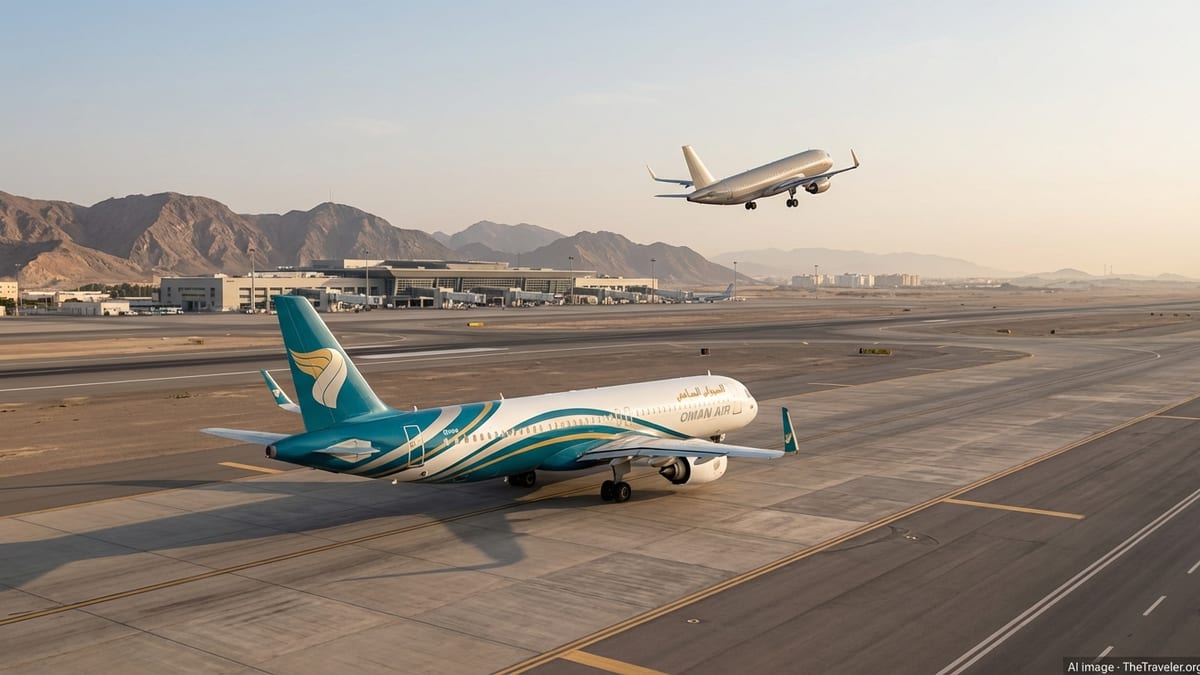
New Muscat–Tashkent Link Enhances Regional Connectivity
The new Muscat–Tashkent route adds Central Asia to Oman Air’s expanding network and underscores Muscat International Airport’s ambition to position itself as a competitive hub between Europe, Asia, and the Middle East. By launching a nonstop connection to Uzbekistan’s capital, the airline is tapping into a market that is gaining prominence as a crossroads for trade, logistics, and tourism in the wider Eurasian region.
The twice-weekly schedule is designed to offer a reliable option without saturating capacity, aligning with Oman Air’s measured approach to network growth. For travelers in both directions, the direct link eliminates the need to route through larger, more congested hubs, reducing total journey times and simplifying itineraries. It also complements the carrier’s efforts to strengthen point-to-point traffic alongside connecting flows through Muscat.
Industry analysts view the move as part of a broader shift in Gulf and Central Asian aviation, where national carriers are increasingly prioritizing bilateral connectivity over purely long-haul expansion. By connecting Muscat and Tashkent directly, Oman Air is positioning itself within this emerging corridor and offering an alternative to traditional North–South and East–West transit routes.
The service is expected to support not only origin-and-destination demand but also transfer traffic linking Uzbekistan with Oman Air’s network in the Indian Subcontinent, Southeast Asia, and parts of Europe. This multilayered role gives the route a strategic weight beyond its twice-weekly frequency.
Schedule Designed for Business and Leisure Travelers
The Muscat–Tashkent flights will operate twice a week, with timings calibrated to accommodate both weekday corporate trips and extended leisure stays. Early-morning or late-evening departures at one or both ends of the route are expected to allow travelers to maximize business hours on the ground, while offering convenient weekend options for those planning short breaks.
For business travelers, the schedule is intended to support two- to four-day trips that cover meetings, site visits, or trade negotiations without the need for cumbersome overnight connections in third countries. The direct routing minimizes downtime and enables passengers to arrive closer to their final appointments, particularly in Tashkent’s growing financial, industrial, and logistics districts.
Leisure travelers benefit from the fact that twice-weekly frequencies naturally lend themselves to three- or four-night itineraries in either destination. Visitors from Uzbekistan can plan long weekends in Oman, taking advantage of Muscat’s coastal resorts, desert excursions, and cultural attractions, while Omani and Gulf residents gain easier access to Tashkent’s historic sites and to overland journeys that extend into Samarkand, Bukhara, and other cities.
By integrating the new route into its wider timetable, Oman Air is also aiming to secure smooth onward connections. Arrival and departure windows have been crafted to link with popular regional services, enabling passengers to build multi-leg trips that remain coherent and time efficient.
Strategic Importance for Trade, Investment, and Diplomacy
The direct Muscat–Tashkent connection carries important economic and diplomatic implications for both Oman and Uzbekistan. In recent years, the two countries have sought to expand cooperation in energy, logistics, mining, agriculture, and tourism, and air connectivity is widely seen as a prerequisite for translating policy agreements into tangible business flows.
For Oman, the route supports a broader diversification strategy that encourages outbound investment and trade beyond traditional Gulf partners. Central Asia’s resource wealth, infrastructure projects, and industrial modernization programs create opportunities for Omani firms in engineering, logistics, and services sectors that specialize in operating in emerging markets.
Uzbekistan, for its part, gains a non-stop air bridge to the Arabian Peninsula, where investors are actively seeking new markets and partnerships. Direct flights make it easier for government delegations, corporate executives, and project teams to travel, conduct due diligence, and maintain long-term cooperation without the friction of indirect itineraries.
The route also reinforces people-to-people ties and cultural exchange. Shorter, more predictable travel between Muscat and Tashkent encourages academic exchanges, tourism-based cultural programs, and joint events showcasing heritage, music, and cuisine. As these softer links grow, they can underpin more durable diplomatic and commercial relationships.
Supporting Oman’s Vision for Tourism and Aviation Growth
The Muscat–Tashkent service aligns closely with Oman’s national tourism and transport strategies, which call for expanding the country’s role as a premium destination and as a regional aviation hub. Authorities have pursued a step-by-step expansion of international routes that balance demand potential with sustainable growth, and Central Asia represents a logical next frontier.
By adding Tashkent to its map, Oman Air is diversifying its inbound tourism base beyond core markets in Europe, the Gulf, and the Indian Subcontinent. Uzbek travelers are increasingly seeking beach, adventure, and cultural holidays, and Oman’s coastal landscapes, mountain ranges, and heritage sites are well-positioned to cater to this demand, especially during the cooler months.
For Muscat International Airport, each new direct route increases the attractiveness of the hub for transfer passengers and airline partners. The ability to offer a seamless connection from Tashkent to destinations such as London, Paris, Frankfurt, and key cities in South Asia enhances Muscat’s competitive position relative to larger regional hubs, while maintaining a less congested and more manageable passenger experience.
Officials and industry observers note that the Tashkent route will be monitored closely for performance, with the potential for additional frequencies or seasonal adjustments if demand proves robust. The twice-weekly start allows Oman Air to test the market, build brand recognition in Uzbekistan, and fine-tune its product offering before committing further capacity.
Gateway to Central Asia’s Culture and Heritage
Beyond the strategic and commercial rationale, the Muscat–Tashkent flights open up new cultural and experiential possibilities for travelers. Tashkent serves as a natural entry point into Uzbekistan’s celebrated Silk Road cities, making it attractive for history enthusiasts, photographers, and culturally curious visitors from Oman and the wider Gulf.
From Tashkent, travelers can access high-speed and regional rail services or domestic flights to Samarkand, Bukhara, and Khiva, where ancient madrasas, mosques, and caravanserais have been carefully restored. Tour operators in both countries are expected to respond to the new air link by packaging itineraries that combine Oman’s coastline and deserts with Uzbekistan’s historic cityscapes and mountain landscapes.
Conversely, visitors from Uzbekistan visiting Oman gain exposure to a different strand of Islamic heritage and Arabian culture. Muscat’s old town, traditional souqs, coastal forts, and mountain villages offer a contrasting yet complementary experience to Central Asia’s architectural and cultural traditions, creating opportunities for dual-destination marketing.
As awareness grows, niche segments such as adventure travel, educational tours, and culinary tourism are likely to benefit. Hiking in Oman’s Hajar Mountains, exploring wadis, or joining guided journeys across Uzbekistan’s steppes and valleys can be packaged together, presenting the Gulf–Central Asia corridor as a multi-faceted travel experience.
Improved Options for Long-Haul and Transit Passengers
The new route is not only about point-to-point traffic. For many passengers, Muscat will serve as a key transit hub between Uzbekistan and long-haul destinations in Europe, the Middle East, Africa, and Asia. By scheduling Muscat–Tashkent flights to connect efficiently with its wider network, Oman Air aims to capture flows that might otherwise pass through other Gulf or regional hubs.
Passengers originating in Tashkent gain streamlined options to reach destinations such as London, Frankfurt, Zurich, and major cities in India and Southeast Asia with a single transfer in Muscat. Similarly, travelers from Oman Air’s existing network now have the possibility to add Uzbekistan to their itineraries without backtracking or adding complex routing.
For long-haul travelers, the combination of modern aircraft, coordinated connection times, and a relatively compact hub environment can significantly reduce overall travel fatigue compared with multiple-stop itineraries. Shorter transfer walks, simpler wayfinding, and coordinated ground services at Muscat International Airport bolster the appeal of connecting via Oman.
In an increasingly competitive marketplace, these details matter. Airlines that can maintain reasonable fares while offering efficient, comfortable connections are better placed to attract repeat customers, and the Muscat–Tashkent link is structured to support that objective.
Economic Opportunities for Tourism and Hospitality Sectors
The launch of direct flights typically produces a measurable impact on local tourism and hospitality sectors, and stakeholders in both Muscat and Tashkent are already positioning themselves to benefit. Hotels, tour companies, transport providers, and destination marketing organizations are expected to develop tailored offerings in response to the new route.
In Oman, city hotels and beach resorts can target Uzbek guests with Arabic and Russian-language marketing, as well as curated packages that combine stays in Muscat with excursions to coastal, desert, or mountain locations. The timing of the flights will allow for check-in-friendly arrival times, making it easier for tour operators to organize group transfers and excursions.
In Tashkent, hospitality providers are likely to emphasize the city’s role as a modern capital with a blend of Soviet-era architecture, contemporary developments, and historic quarters. Restaurants, cultural venues, and tour companies can partner with travel agents in Oman to promote short-stay programs that introduce visitors to the city before they travel deeper into the country.
As traffic builds, ancillary sectors such as airport retail, ground handling, and local transport will also see incremental demand. These ripple effects contribute to employment and revenue generation on both sides of the route, reinforcing the economic rationale for maintaining and potentially expanding the service over time.
Positioning Oman Air in an Evolving Aviation Landscape
The introduction of twice-weekly Muscat–Tashkent flights illustrates how Oman Air is adapting to an aviation landscape shaped by shifting travel patterns and new regional alliances. Rather than focusing solely on high-frequency trunk routes, the airline is adding carefully selected city pairs that connect emerging markets with its hub in a way that is commercially and operationally sustainable.
This strategy complements Oman Air’s broader network moves, which in recent seasons have included strengthening links with Europe, Southeast Asia, and neighboring Gulf and Middle Eastern destinations. By adding Central Asia into this mix, the airline broadens its geographic reach and deepens its relevance to corporate and leisure travelers looking for alternatives to larger, more congested carriers and hubs.
For passengers, the practical outcome is a wider range of options for planning trips that reflect evolving priorities: combining business with leisure, exploring less familiar destinations, and minimizing travel complexity. The Muscat–Tashkent route aligns neatly with these trends, offering a convenient, twice-weekly connection that unlocks new opportunities on both sides of the journey.
As Oman Air continues to refine its route map, the performance of this new service will serve as a barometer for future expansion into additional Central Asian or Eurasian markets. If the Muscat–Tashkent flights meet expectations, they could become a model for how targeted, medium-frequency routes can deliver outsized strategic value for a national airline and its home hub.