

More news on this day
Oman Air will launch twice-weekly direct flights between Muscat and Tashkent from June 1, 2026, a move expected to accelerate visa-free tourism and trade links along the modern Silk Road corridor between Oman and Uzbekistan.
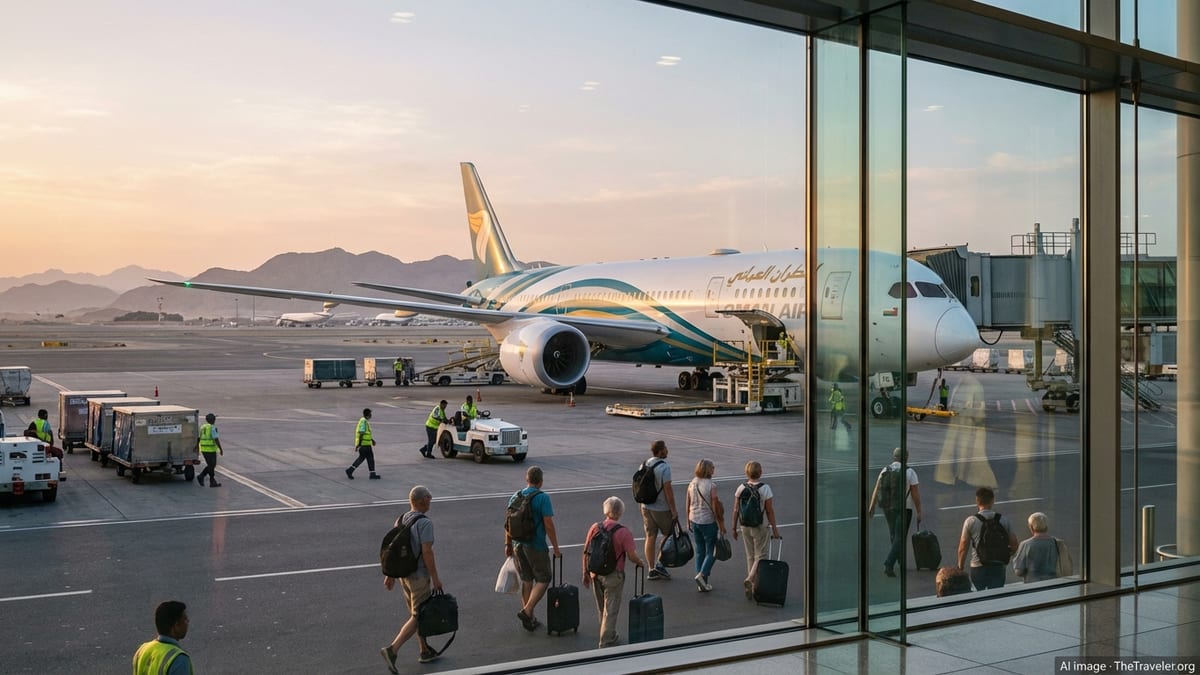
New Route Brings Central Asia Closer to the Gulf
The Muscat–Tashkent service, scheduled to begin on June 1, 2026, will operate twice a week, creating a nonstop four-hour corridor between the Omani and Uzbek capitals. Oman Air confirmed the launch as part of an aggressive network expansion that has seen the carrier unveil eight new international destinations since December 2025.
The new flights mark Oman Air’s first scheduled foray into Central Asia, positioning Muscat as a southern gateway to the region for travelers from the Gulf, India, Europe, and East Africa. Operating from its hub at Muscat International Airport, the airline plans to time connections to feed traffic from key long-haul and regional markets into the Tashkent service.
Oman Air executives describe the route as a carefully targeted addition that balances point to point demand with strategic growth markets. Central Asia has emerged as a rising source market for Gulf tourism while also attracting more Gulf residents seeking culture focused, cooler summer escapes.
Industry analysts note that the move comes as Gulf carriers intensify competition for access to high potential secondary cities. By entering Tashkent early with a nonstop product, Oman Air aims to secure brand presence and capture both leisure and business flows before rivals scale up capacity.
Visa Free Access Unlocks Demand from Oman
The launch of Muscat–Tashkent flights coincides with liberalized entry rules that significantly ease travel for Omani passport holders. Uzbekistan currently allows citizens of Oman to visit visa free for up to 30 days for tourism, under regulations that took effect in mid 2025 and are valid through at least the end of 2026.
The removal of visa barriers is expected to play a pivotal role in stimulating demand on the new route. Omani travelers, including families and young explorers, can now book a short break to Uzbekistan with minimal advance paperwork, relying only on standard passport and entry requirements. Travel consultants in Muscat say this simplicity is a strong selling point in a market where complex visas often deter last minute trips.
The visa free regime also supports outbound group travel, including school and university study tours focused on history and culture, and specialized itineraries for photography, architecture, and culinary enthusiasts. As awareness grows, tour operators in Oman are already preparing bundled packages that combine flights, hotels, rail segments, and guided excursions across Uzbekistan’s key cities.
For Uzbekistan, easier entry for Omani nationals and other Gulf visitors aligns with its broader strategy to draw higher spending tourists from new source markets. The country is investing heavily in hospitality infrastructure and streamlined border procedures to accommodate rising arrivals.
Silk Road Tourism Boom: Linking Muscat to Samarkand and Bukhara
Beyond point to point traffic, Oman Air and tourism stakeholders on both sides hope the new route will catalyze a broader Silk Road travel boom. Tashkent, while a major urban center, also serves as the primary international gateway to Uzbekistan’s historic cities such as Samarkand, Bukhara, and Khiva, long celebrated for their mosques, madrasas, caravanserais, and bustling bazaars.
Travel planners envision Muscat based itineraries that pair Oman’s forts, deserts, and coastline with Uzbekistan’s blue tiled domes and ancient caravan towns, marketed as a dual destination Silk Road experience. Just as visitors once traveled by camel caravans across Central Asia toward the Arabian Sea, modern travelers will be able to trace segments of that route by air, road, and high speed rail.
Uzbek tour operators are preparing to integrate Muscat as a southern extension to classic Silk Road circuits that currently route traffic through Dubai or Doha. By flying directly to Oman, groups can add time in Muscat’s old quarter, Nizwa’s fort and souq, or the beaches and wadis of Dhofar, without significant detours or extra connections.
Officials in both countries see the cultural narrative as central to the route’s success. Joint promotions, co branded campaigns, and participation in international travel fairs are expected to highlight the shared histories of trade, scholarship, and maritime exchange that once linked the ports of the Arabian Peninsula with caravan hubs across Central Asia.
Economic and Trade Links Poised to Deepen
While tourism is a major driver, the Muscat–Tashkent route also carries clear economic and diplomatic significance. Direct air connectivity typically precedes or accelerates growth in trade volumes, business delegations, and investment missions, particularly in sectors such as logistics, energy services, mining, agriculture, and food processing.
Business chambers in both countries are likely to leverage the new flights to organize sector specific forums and buyer seller meetings. For Omani firms, Uzbekistan offers a large domestic market and access to a wider Central Asian region of more than 70 million people. For Uzbek exporters, Muscat can function as both a consumption market and a transshipment hub to other Gulf and Indian Ocean destinations.
The route is also expected to facilitate governmental and technical cooperation, with easier travel for officials, experts, and students participating in exchange programs. Streamlined links can support collaboration in areas such as water management, renewable energy, port development, and tourism training, where both countries see mutual benefit.
As Oman Air continues implementing its transformation strategy and capitalizing on its membership in a global alliance, new destinations like Tashkent are designed to support the airline’s path toward financial sustainability while reinforcing Oman’s role as a nimble connector between the Gulf, Asia, and Europe.
Capacity, Scheduling and Passenger Experience
Oman Air has yet to publicly confirm the aircraft type for the Muscat–Tashkent route, but regional aviation observers expect a narrow body jet suited to the four hour sector and optimized for both economy and business class demand. Twice weekly operations provide a cautious yet viable starting frequency, with the possibility of additional flights if load factors and yields trend positively.
Schedules are expected to be configured to offer overnight or early morning departures that maximize connectivity at Muscat International Airport, allowing same day links from major origin markets. This approach is consistent with Oman Air’s broader network strategy, which emphasizes efficient connections without excessively long transits.
On board, passengers can expect the airline’s established service profile, including regionally inspired cuisine and a product designed to showcase Omani hospitality. For many Uzbek travelers, Muscat will serve as their first point of contact with the Sultanate, making the in flight experience an important introduction to the destination.
As ticket sales ramp up and the first flights approach, travel agents across Oman and Uzbekistan report rising interest in the new route, particularly for summer 2026 travel. With visa free entry for Omani tourists, a rich Silk Road narrative, and growing appetite for cross regional discovery, the Muscat–Tashkent link appears well positioned to become one of the year’s most closely watched new air corridors.