

Oman Air will launch a new year-round route between Muscat and the Russian resort city of Sochi in July 2026, a move designed to cement the carrier’s growing presence in Russia and strengthen tourism and aviation ties between the Middle East and one of its fastest-expanding source markets.
A Strategic New Link Between Muscat and the Black Sea
The national carrier of Oman confirmed that direct flights between Muscat and Sochi are scheduled to begin on 2 July 2026 and will operate throughout the year. The service will initially run weekly, providing a nonstop connection between Oman’s capital and one of Russia’s most prominent leisure destinations on the Black Sea coast.
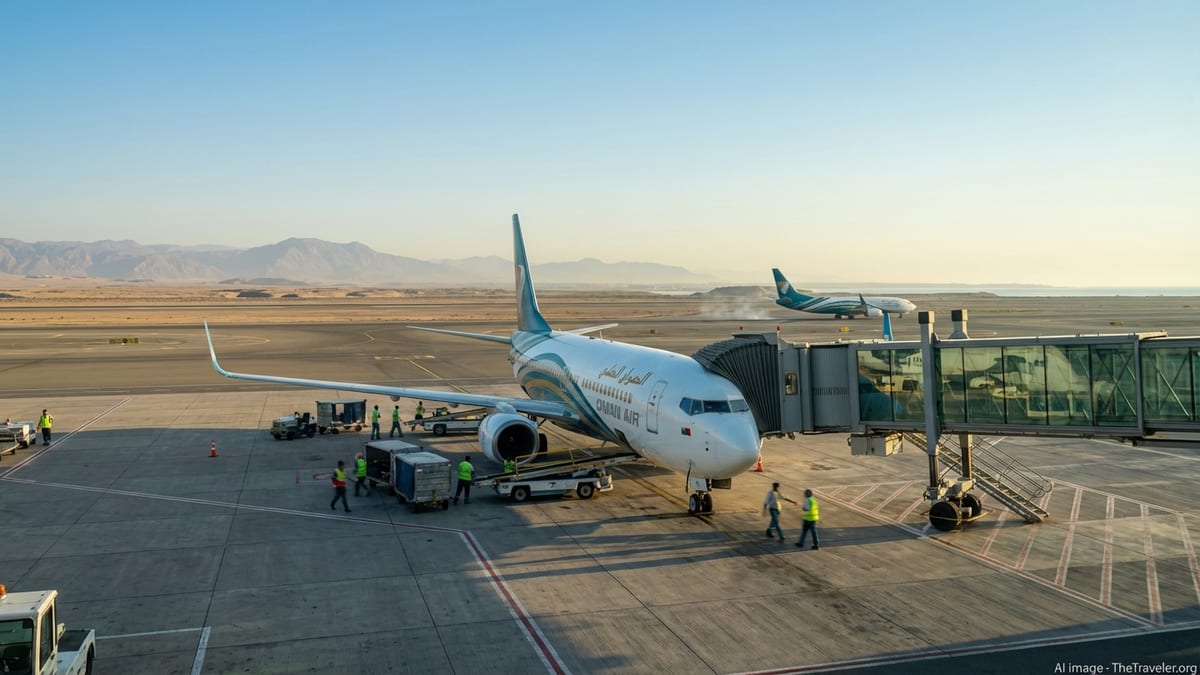
The route will be operated with Boeing 737-8 aircraft, offering a two-class configuration that targets both leisure and business travelers. By choosing a narrow-body jet with strong range and fuel efficiency, Oman Air is positioning the service as a flexible, scalable addition to its network that can be adjusted in line with market demand.
Sochi, best known internationally for hosting the 2014 Winter Olympics, has evolved into a year-round resort city that attracts domestic and international visitors for its beaches, mountain landscapes and conference facilities. For Oman, connecting Muscat to Sochi year-round opens a new pipeline of visitors from Russia’s southern regions while giving Gulf and wider Middle East travelers an additional gateway into Russia beyond Moscow.
The new route comes at a time when Gulf carriers are competing to anchor more point-to-point services into Russia, particularly to secondary cities that complement Moscow and Saint Petersburg. Oman Air’s entry to Sochi marks the first direct, year-round scheduled connection between the Sultanate and this key Russian leisure market.
Building on Growing Russia–Oman Travel Demand
The Muscat–Sochi route is being launched against a backdrop of steadily rising Russian visitor numbers to Oman and the wider Gulf. Tourism officials in Muscat have identified Russia as one of the most promising high-growth markets for the Sultanate, citing a combination of spending power, appetite for winter-sun destinations and interest in desert and coastal experiences.
Oman Air already operates a strong presence in Russia, with direct Muscat–Moscow flights and new seasonal charter services between Moscow and Salalah. Charter operations from the Russian capital to Dhofar began in late 2025 and are projected to bring thousands of holidaymakers to southern Oman during their first season alone. The Sochi service is expected to complement this pattern by diversifying the catchment area beyond Moscow and tapping into travelers from Russia’s southwest.
Industry analysts note that Russian travelers have increasingly diversified their outbound choices in recent years, in part due to changes in traditional holiday markets and shifting currency dynamics. Oman has sought to capitalize on this by simplifying visa processes for many nationalities, supporting targeted marketing campaigns in Russia and working more closely with tour operators specializing in Middle Eastern destinations.
The new Sochi route is expected to feed both direct point-to-point tourism and connecting traffic over Muscat. Russian visitors will gain easier one-stop access via Oman Air to destinations across the Gulf, the Indian Ocean and parts of Asia, while travelers from the Middle East will be able to reach Sochi without relying on connections through other hubs.
Year-Round Operations Signal Confidence in the Market
A notable feature of the Muscat–Sochi launch is the decision to operate the service year-round from the outset. Many airlines initially test new Russian leisure routes on a seasonal basis, focusing on peak summer or winter periods before committing to continuous operations. Oman Air, by contrast, has signaled that Sochi will be a permanent fixture on its network, with the flexibility to ramp up frequencies if demand warrants.
The strategy builds on earlier experience: the carrier previously extended its Muscat–Moscow service to run across all seasons after strong performance in the Russian market. By offering summer and winter flights to the Russian capital, Oman Air turned what had been a predominantly winter route into a full-year operation, indicating that underlying demand was sufficiently resilient.
Sochi’s own tourism profile supports the viability of a year-round schedule. While the city is well known as a summer beach destination on the Black Sea, it also serves as a gateway to the Caucasus Mountains, where ski resorts, nature tourism and wellness facilities drive winter and shoulder-season travel. Oman Air expects this dual-appeal pattern to complement Oman’s own seasonal strengths, particularly during the khareef monsoon in Salalah and the cooler winter months in Muscat.
Year-round operations also underline the airline’s confidence in the broader Russia–Middle East travel corridor. Despite periodic adjustments and temporary suspensions that have affected services in recent years, carriers across the Gulf are now adding capacity back into Russia, reflecting both leisure and business demand as economic ties evolve.
Boosting Oman’s Tourism Vision and Economic Diversification
The Muscat–Sochi route aligns closely with Oman’s long-term vision to position tourism and aviation as central pillars of economic diversification. Under the country’s Vision 2040 roadmap, the government has prioritized investments in airports, hospitality infrastructure and destination marketing to reduce reliance on hydrocarbons and attract higher-spending international visitors.
Officials in Muscat have highlighted direct international connectivity as a core driver of this strategy. In recent years, Oman Air and other carriers have rolled out new nonstop services linking the Sultanate with markets such as Singapore, Iraq and additional Gulf states, alongside capacity growth on key domestic routes. The introduction of Sochi adds another spoke to this expanding network, focusing on a market where Oman sees strong long-term potential.
Tourism authorities forecast that sustained growth from source markets like Russia can generate hundreds of millions of dollars in additional tourism receipts over the coming decade. The combination of charter and scheduled services, including the Muscat–Sochi operation, Moscow–Salalah charters and year-round Moscow flights, is expected to contribute significantly to visitor numbers, particularly during off-peak periods when hotels and tour operators are eager to smooth seasonal swings.
Beyond direct tourism spending, the new route is expected to support ancillary sectors ranging from transport and retail to cultural attractions and events. As more Russian travelers become familiar with Oman’s landscapes and heritage, officials hope to spur repeat visits and encourage longer stays that spread economic benefits across multiple regions of the country.
Strengthening Aviation and Trade Links With Russia
While tourism is the primary driver of the Muscat–Sochi connection, the route also carries strategic implications for aviation cooperation and wider economic ties between Russia and the Middle East. The new service will give Russian businesses improved access to Oman’s logistics infrastructure and free zones, while Omani firms gain a more direct link into one of Russia’s most dynamic regional economies.
Sochi is home not only to resorts and convention venues but also to a growing cluster of services and trade activity tied to the wider Black Sea region. For companies based in Oman, particularly those active in logistics, food imports, construction materials and tourism services, the route offers potential to deepen partnerships and explore joint ventures with Russian counterparts.
On the aviation side, Oman Air’s expanding Russian footprint positions the airline as a more significant player in the Russia–Gulf corridor, historically dominated by larger Gulf carriers. By cultivating direct relationships with Russian tour operators and regional airports, the Omani carrier is carving out a niche focused on high-yield leisure traffic and targeted connectivity rather than pure volume.
Diplomatically, closer air links often move in parallel with expanding bilateral engagement. Officials in both countries have repeatedly emphasized the role of tourism and air transport in broadening people-to-people ties and setting the stage for more robust trade and investment flows. The Muscat–Sochi route gives that agenda another practical tool.
Competitive Landscape: Gulf Carriers Target Russian Leisure Hubs
Oman Air’s Sochi launch comes amid a wider trend of Middle Eastern airlines ramping up service to Russia’s regional centers. Carriers based in the Gulf have recently added or expanded routes to cities such as Kazan, Yekaterinburg and others, signaling an intensified focus on secondary Russian gateways beyond the traditional hubs.
This competition is reshaping how Russian travelers access the Middle East. Instead of relying solely on connections through Moscow, passengers in regional cities are gaining more direct options to Gulf airports, often with convenient onward links to South Asia, Southeast Asia and Africa. For Oman Air, being among the first movers into Sochi with a year-round offering could prove a strategic advantage in building brand recognition and securing tour operator partnerships.
At the same time, Oman’s positioning as a quieter, more nature-focused alternative to some neighboring destinations may resonate with Russian travelers seeking less crowded resorts and more authentic cultural experiences. The country’s mountain wadis, desert camps and preserved historic quarters offer a contrast to the large-scale entertainment complexes that dominate some other Gulf markets.
Industry observers will be watching how Oman Air balances pricing, capacity and partnerships to grow the Sochi route sustainably. With competition intensifying across the region, the ability to offer reliable schedules, stable fares and tailored product offerings for Russian holidaymakers and families will be key to securing repeat business.
Operational Details and Passenger Experience
Oman Air plans to deploy its Boeing 737-8 aircraft on the Muscat–Sochi sector, a modern narrow-body jet known for fuel efficiency and improved onboard comfort. The aircraft is expected to feature a dedicated business class cabin alongside an economy section, with in-flight entertainment and meal service aligned with the airline’s full-service positioning.
From a scheduling perspective, the weekly rotation is anticipated to be timed to connect with Oman Air’s bank of departures from Muscat to onward destinations in the Gulf and Asia. This will allow Russian passengers arriving from Sochi to transfer smoothly to cities such as Salalah, Dubai, Jeddah or points further east, while inbound travelers from those markets gain a one-stop option into the Black Sea resort.
For passengers originating in Oman and the wider Middle East, the route offers a direct leisure option that avoids the need to transit via larger European or Russian hubs. Travel agents in Muscat and other Gulf cities are expected to package Sochi into combined itineraries featuring beach stays, mountain excursions and cultural tours, marketed as an accessible yet distinctive European-style getaway.
The launch is also likely to accelerate cooperation between Oman Air and Russian tour operators, particularly those specializing in charter series and bundled holiday products. Industry sources expect to see joint promotions, co-branded campaigns and attractive fare bundles as the airline seeks to stimulate early demand on the newly opened sector.
Outlook: A Test Case for Deeper Russia–Middle East Connectivity
The Muscat–Sochi route will serve as an important test case for how far Oman Air can expand its presence in Russia beyond the capital and how effectively Oman can position itself as a year-round destination for Russian travelers. If the service performs in line with expectations, additional frequencies or new Russian destinations could follow over the medium term.
For Oman’s tourism planners, the route is one part of a broader strategy to secure more direct air links with high-potential markets, reduce dependence on a narrow set of source countries and smooth seasonal variability. The success of the Moscow–Salalah charters and year-round Moscow schedule has already provided evidence that Russian travelers are ready to embrace Oman’s beaches, monsoon landscapes and desert experiences.
More broadly, the launch underscores a regional realignment in aviation ties between Russia and the Middle East. As carriers across the Gulf add capacity into Russian regional cities, travelers on both sides are gaining greater choice and flexibility, reshaping traditional travel flows that once relied heavily on European hubs. In that evolving landscape, Oman Air’s bet on Sochi is both a commercial move and a signal of the Sultanate’s ambition to sit more prominently on the Russia–Middle East travel map.
With its year-round profile, strategic timing and alignment with national tourism goals, the new Muscat–Sochi route is poised to play a visible role in deepening aviation, tourism and economic ties between Russia and the Middle East in the years ahead.