

More news on this day
Oman Airports has moved a step closer to opening two of the country’s most anticipated regional gateways, unveiling major plans for new terminals at Jabal Akhdar and Masirah Island that officials say will usher in a new era for high-end and adventure tourism.
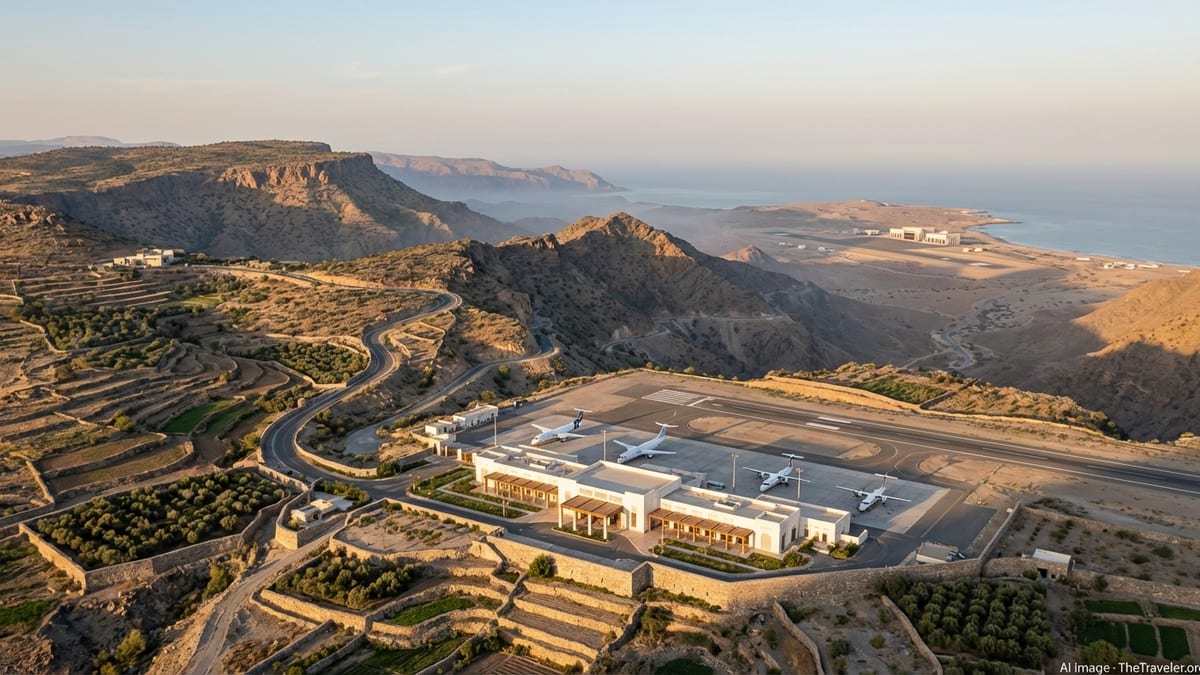
Strategic Tender Marks Breakthrough for Mountain and Island Hubs
In a key milestone for Oman’s aviation expansion, Oman Airports has floated a design-and-build tender for pre-fabricated terminal buildings at Jabal Akhdar and Masirah, giving concrete form to long-discussed plans for new regional airports. The move follows the government’s broader strategy to roll out a network of smaller gateways across the sultanate to support domestic connectivity and disperse visitor flows beyond Muscat.
The new facilities at Jabal Akhdar, perched high in the Al Hajar mountains, and on Masirah Island, off the country’s eastern seaboard, are expected to cater primarily to tourism traffic, charter operations and niche segments such as adventure travel and wellness retreats. Officials describe the tender as an enabling step that will allow construction to proceed on an accelerated timeline once bids are evaluated and contracts are awarded.
The latest push builds on earlier announcements that Oman aims to establish several regional airports by the end of the decade, including locations such as Al Jabal Akhdar and Masirah Island, as part of a national goal to strengthen air access to emerging destinations across the country.
Tourism Vision 2040 Drives New Aviation Investments
The airport plans are closely tied to Oman’s long term tourism blueprint, which targets a bigger share of the national economy from travel and hospitality by 2040. Authorities expect tourism to account for a rising portion of gross domestic product by the early 2030s, supported by new resorts, cultural attractions and improved access to remote natural landscapes.
Industry reports indicate that Oman is preparing for thousands of additional hotel rooms by 2030, with Jabal Akhdar highlighted as one of the country’s fastest developing upscale mountain destinations. Planned projects there include mixed use communities, health and wellness facilities and new branded resorts, all of which will rely on more efficient air links to attract international visitors and shorten transfer times from Muscat.
The creation of new regional gateways is also seen as a way to balance traffic across the country’s airport network. While Muscat International Airport continues to handle the vast majority of passengers, demand spikes linked to seasonal events and domestic holidays have underlined the need for additional points of entry that can serve specialized markets.
Jabal Akhdar Airport to Anchor High Altitude Wellness and Adventure
Among the two projects, Jabal Akhdar carries particular symbolic weight for Oman’s tourism ambitions. The plateau, sitting around 2,000 to 2,400 meters above sea level, has evolved from a relatively secluded mountain stronghold into one of the sultanate’s signature high end destinations, known for its luxury cliffside hotels, terraced farms and cooler summer temperatures.
A regional airport is expected to significantly cut travel time between the capital and the mountain resorts, which currently rely on a winding road journey that can take several hours and requires experienced drivers. Direct air access would open the area to a broader range of visitors, including short break travelers from Gulf cities and long haul tourists looking to combine Muscat with a stay in the mountains.
Developers and hoteliers view a dedicated terminal at Jabal Akhdar as a catalyst for new products such as wellness retreats, hiking and cycling holidays and small conferences in a cooler climate. The use of pre fabricated structures in the terminal design is intended to keep the physical footprint compact, respond to environmental constraints and speed up delivery in the rugged terrain.
Masirah Island Poised to Capture Coastal and Eco Tourism Demand
On the opposite side of the country, Masirah Island is emerging as a natural counterpart to Jabal Akhdar’s mountain appeal. Long known among niche travelers for its kite surfing conditions, nesting sea turtles and laid back fishing villages, the island remains relatively underdeveloped when compared with Oman’s coastal hotspots in Dhofar and Muscat.
The planned terminal on Masirah builds on the presence of an existing airfield, positioning the island to host more regular scheduled and charter services geared toward beach, eco and water sports tourism. Easier air access is expected to support small and mid scale resorts, guesthouses and adventure operators while offering residents more reliable year round connectivity to the mainland.
Tourism analysts say Masirah’s combination of extensive beaches, wildlife rich shores and authentic local culture fits well with Oman’s emphasis on low density, sustainable development rather than mass tourism. A modest, purpose built terminal is seen as a way to carefully manage growth while enhancing safety and passenger experience.
Regional Connectivity and Airline Growth Set the Stage
The latest airport initiatives arrive at a time when Omani carriers are broadening their networks and tapping into new source markets. Recent route announcements linking Muscat with destinations in Central Asia and other regions highlight how the country’s airlines are seeking to position the sultanate as both a tourism destination and a connector between the Gulf and emerging markets.
By adding regional airports at Jabal Akhdar and Masirah, Oman Airports is aiming to ensure that this growth in international capacity translates into benefits for secondary destinations, not just the capital. Aviation planners expect the new terminals to support a mix of domestic flights, seasonal charters and potential point to point services from nearby Gulf hubs as demand matures.
The projects also reinforce a broader narrative of diversification within Oman’s aviation and tourism landscape. As hotel pipelines expand and new attractions come online, the ability to distribute visitors more evenly across the country will be central to maintaining service quality, protecting sensitive environments and sustaining the premium positioning that Oman has been cultivating on the global stage.