

More news on this day
Oman Air’s decision to launch year-round direct flights between Muscat and Sochi from July 2, 2026 is more than a line on a route map. It ties Russia’s Black Sea playground to Oman’s desert-and-coastline hub in a way that could quietly redraw leisure itineraries for Russians chasing winter sun and Gulf travellers eyeing a new resort city on the Caucasus.
A Strategic New Link Between the Gulf and the Black Sea
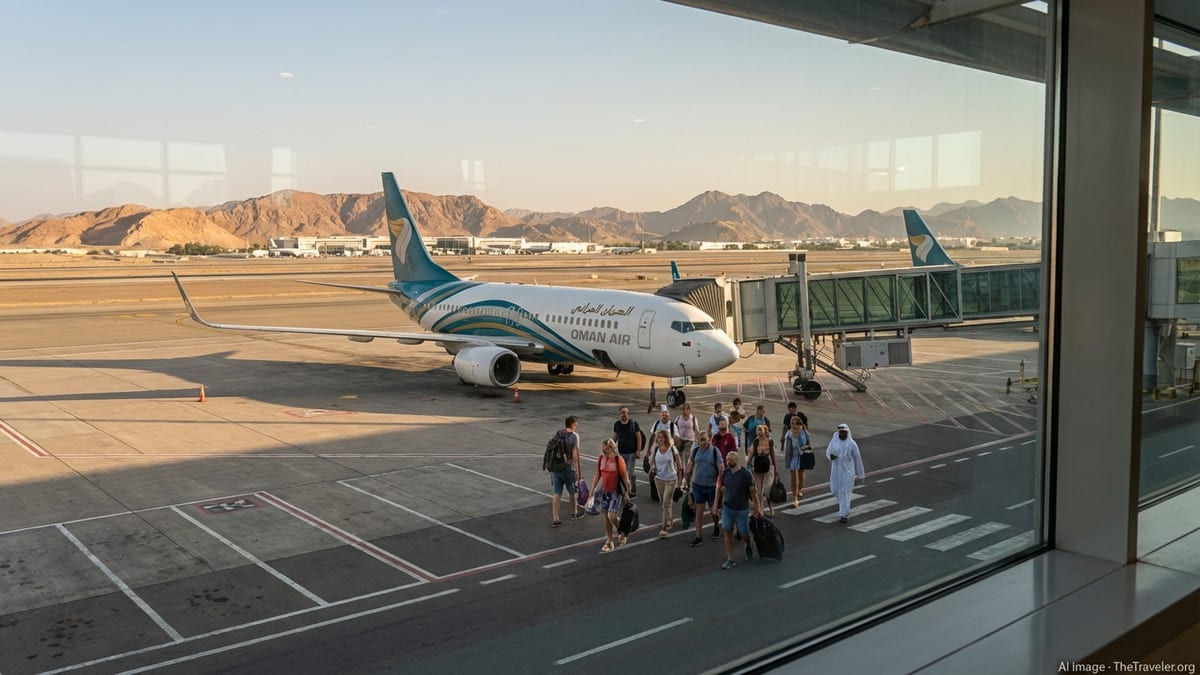
Announced on February 17, 2026 by Oman’s national news agency, the Muscat–Sochi route gives Oman Air its first direct connection to Russia’s leading Black Sea resort just as the carrier consolidates a broader Russia strategy. The flights are scheduled to begin on July 2, 2026 and, crucially for planners, are billed as operating year-round rather than as a limited seasonal service.
For Oman’s aviation planners, Sochi is a logical next step. The airline already serves Moscow on a year-round basis, with up to three weekly flights in summer and as many as six in winter, reflecting strong demand between the two countries. The Sochi launch builds on that base while targeting a different customer profile: holidaymakers and package travellers for whom the combination of sea, mountains and a relatively mild climate is the main draw.
On the Russian side, the new route complements existing links to Oman operated by other carriers, including Red Wings’ weekly Muscat–Sochi service that began in 2025. But Oman Air’s presence, operating from its Muscat hub and feeding into a global network, gives the connection a new dimension, turning Sochi from an end point into a gateway.
How the New Route Will Operate
Oman Air will operate the Muscat–Sochi flights with Boeing 737‑8 aircraft, part of the carrier’s narrow-body fleet that it has increasingly deployed on strategic medium-haul routes. The aircraft type is already used on key markets such as Moscow and Singapore, and offers a two-class configuration with Business and Economy cabins, lie-back seating, seatback or personal-device entertainment and a full-service meal offering.
While the detailed timetable and weekly frequency have yet to be published, Oman Air has signalled that the Sochi service will run throughout the year. That is a notable commitment at a time when many airlines in the region still treat Russian leisure routes as seasonal or charter-only. Year-round operation suggests the carrier is targeting inbound beach-and-desert holidays in Oman during the northern winter, and outbound Gulf traffic to the Black Sea during Russia’s popular summer season.
For travellers, the choice of a 737‑8 means a familiar narrow-body cabin but with updated interiors and lower fuel burn. For Oman Air, using this aircraft keeps operating costs in check and aligns with a wider strategy of optimising its narrow-body fleet on point-to-point routes that can feed traffic into Muscat without the complexity of deploying larger wide-bodies.
Why Sochi and Muscat Are a Natural Fit
Sochi has steadily repositioned itself in recent years as Russia’s flagship leisure destination, offering a mix of seaside promenades, family-friendly resorts and easy access to the Caucasus foothills. For Russian travellers who already know Muscat as a stop on the way to Southeast Asia or the Indian Ocean, the new route works in the opposite direction, turning Oman into the jumping-off point for a Black Sea holiday.
Muscat, in turn, has been marketed aggressively as a warm winter escape, combining Indian Ocean beaches, dolphin-filled coastal waters and dramatic Hajar mountain scenery within a few hours of the airport. Oman’s tourism authorities view Russia as one of the most promising growth markets, and the new Sochi route slots into a broader push that has already seen Moscow upgraded from a seasonal to a year-round destination on Oman Air’s network.
The two cities also complement each other seasonally. When Sochi’s beaches are at their busiest in mid-summer, many Oman-based residents are looking to escape the Gulf heat; when temperatures dip along the Black Sea, Russians are increasingly seeking direct, visa-simplified access to warm destinations such as Oman, Salalah and the wider Arabian Sea coast.
What This Means for Russian Travellers
For travellers starting in Russia, the most immediate impact of Oman Air’s Muscat–Sochi route is greater choice. Russians already have growing access to Oman through direct flights into Muscat and seasonal or charter services to Salalah. The addition of a scheduled Sochi service on Oman’s own flag carrier gives holidaymakers and tour operators a new tool for building two-centre itineraries that might combine a week on the Black Sea with time in the Arabian desert or on Muscat’s nearby beaches.
Oman Air’s network also changes how Sochi-based travellers can think about long-haul trips. From Muscat, the airline links into a web of destinations across Southeast Asia, the Indian subcontinent, East Africa and Europe, including Bangkok, Phuket, Kuala Lumpur, Manila, Zanzibar, Dar es Salaam, London, Frankfurt and Rome. That means a passenger from Sochi could, in principle, reach these destinations with a single stop in Muscat on one ticket, rather than piecing together multi-airline connections via Moscow or other hubs.
The year-round nature of the route also makes it easier for package operators in Russia to plan consistent winter sun programmes to Oman. With Russians increasingly booking trips that focus on nature, wellness and warm-weather activity rather than only city breaks, Oman’s mix of wadis, desert camps and coastal resorts aligns closely with evolving preferences.
How Gulf and International Travellers Stand to Benefit
The new Sochi service is not only about Russian outbound demand. For travellers based in Oman, the wider Gulf or connecting through Muscat from India, Southeast Asia or Europe, Sochi suddenly appears on the map as a viable short-break destination. Rather than flying north to Moscow and changing aircraft, passengers will have a direct link to the Black Sea, cutting overall travel time and simplifying itineraries.
For Gulf residents accustomed to established Mediterranean resorts, Sochi offers a different take on the seaside holiday: pebbled beaches backed by wooded hills, Soviet-era sanatoriums reborn as modern hotels, and easy access to mountain hikes and winter sports in the nearby Caucasus. The direct Muscat connection lowers the threshold for trying something new, especially for those already familiar with Russia through Moscow trips.
International travellers transiting through Muscat may also find Sochi creeping into their consideration set. Oman Air has marketed its hub as a convenient, less congested alternative to larger Gulf gateways when flying between Europe, the Middle East, Asia and Africa. Adding a second Russian leisure destination strengthens that proposition for niche segments such as adventure travellers, sports fans and those interested in combining Black Sea and Arabian itineraries in a single journey.
Oman’s Tourism Vision and the Russia Market
The Muscat–Sochi announcement sits within a wider story of how Oman is using aviation to support its national tourism strategy. The country has courted charter and scheduled services from across Europe, welcoming new links from Italian carrier Neos Air into Salalah and expanding its own operations into cities such as Rome and Singapore. Charter arrivals alone generated tens of thousands of additional tourists and tens of millions of dollars in revenue in recent winter seasons, according to Omani tourism officials.
Russia has become a particular focus of that effort. Authorities describe it as a promising tourism source market, citing growing visitor numbers on charter and scheduled services and strong demand for both beach and cultural products. Making Moscow a year-round station on Oman Air’s network and adding Sochi as a second Russian city give the national carrier more flexibility to package Oman as a destination across different segments and price points.
For policymakers in Muscat, the aviation moves are tied directly to economic diversification. More direct routes support hotel occupancy, tour operators, transport companies and small businesses, and they help distribute visitors beyond the capital to coastal and desert regions. Stronger air links with Russia in particular also have a trade and investment dimension, with officials pointing to the role of flights in deepening broader economic ties.
Competition, Connectivity and Changing Habits
Oman Air’s entrance on the Muscat–Sochi sector comes into a market that is already seeing new capacity. In 2025, Oman’s Civil Aviation Authority approved a weekly direct Muscat–Sochi service for Russian carrier Red Wings, underscoring that demand existed even before the Omani flag carrier committed its own aircraft. The coexistence of a Russian and an Omani airline on this corridor suggests regulators see long-term potential, not just a short-lived tourism play.
From a connectivity perspective, Muscat’s rising profile as a transfer hub matters. The carrier’s expanding network to cities like Taif in Saudi Arabia and Singapore in Southeast Asia, combined with its alliance partnerships, means a traveller from Sochi could ultimately reach a widening list of points via a single hub. That convenience, along with the airline’s full-service model, may reshape how some passengers plan trips that previously would have defaulted to other Gulf or European transfer points.
At the same time, traveller habits are shifting. Russians are increasingly mixing domestic and international holidays across the year, while Gulf-based residents show a growing appetite for cooler-climate summer escapes. The Muscat–Sochi connection plays directly into both trends, creating a corridor between a winter-sun destination and a summer-coast resort that can be marketed in both directions.
Planning Ahead for 2026 and Beyond
With flights due to start on July 2, 2026, the new route is arriving in time for the peak Black Sea summer. For early planners, that offers an opportunity to lock in itineraries that might combine Muscat stopovers with stays in Sochi or vice versa. Once schedules are published, the key will be to examine how Sochi arrivals and departures mesh with onward connections across Oman Air’s network, particularly to European and Asian cities.
The year-round nature of the route also gives travellers room to think beyond the obvious peak dates. For Russians, shoulder-season trips to Oman in autumn and spring can mean more comfortable temperatures for outdoor activities in wadis and deserts. For Gulf travellers eyeing the Caucasus, late spring or early autumn may offer a balance of milder weather and lower crowd levels on Sochi’s promenades and mountain trails.
For now, what is clear is that a once-distant pairing on the map is gaining a direct, scheduled air link. As Oman Air prepares to join Sochi and Muscat with a regular service, the two cities are set to meet not just on route diagrams, but in the travel plans of tourists and business travellers recalibrating where, and how, they move between the Gulf and the Black Sea.